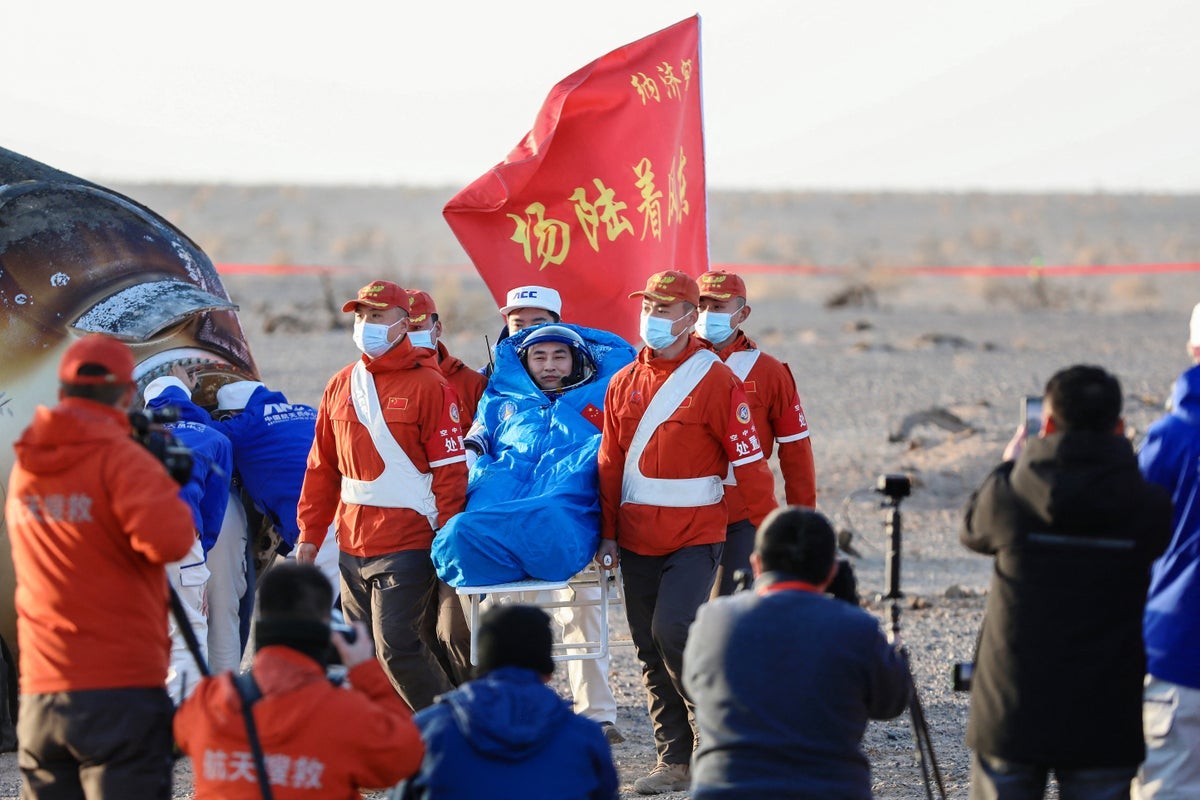
China is launching the Shenzhou-22 spacecraft on November 25th to provide a dedicated emergency return vehicle for the three astronauts currently stationed at its orbital outpost. This mission addresses a critical safety gap: the previous crew’s return in Shenzhou-21 left the current team with only a potentially damaged spacecraft as a backup in case of an urgent evacuation.
The Risk of Being Stranded
The situation highlights the inherent dangers of long-duration space missions. While the astronauts continue their work normally, relying on a compromised spacecraft for emergency descent carries unacceptable risks. Astronomer Jonathan McDowell of the Center for Astrophysics | Harvard & Smithsonian notes that while space agencies constantly balance risks, leaving astronauts with a known-damaged vehicle is not ideal.
“Everything in space flight is a balancing of risks,” says McDowell, “but there’s no not risky option.”
Growing Hazards in Orbit
This incident is a symptom of a broader problem: the increasing amount of orbital debris and the growing frequency of crewed space missions. As more activity occurs in space, the need for robust contingency plans becomes paramount. The current system relies on the assumption that a compromised craft might still function, which introduces unnecessary uncertainty.
The Need for International Cooperation
Experts suggest that enhanced international cooperation is essential to safeguard astronauts from all nations. The U.S. and Russia already share a standardized docking system at the International Space Station (ISS), which allows mutual emergency support. A similar partnership between the U.S. and China would demonstrate a clear ability to rescue astronauts from either country in critical situations.
Future Considerations
RAND analyst Jan Osburg proposes that governments could also delegate rescue operations to private companies or NGOs with the necessary rapid-response infrastructure. The rising number of crewed spaceflights makes improved human rescue protocols increasingly urgent.
The Shenzhou-22 launch is a direct response to a dangerous situation, but it also underscores the need for more comprehensive safety measures as space exploration continues to expand.