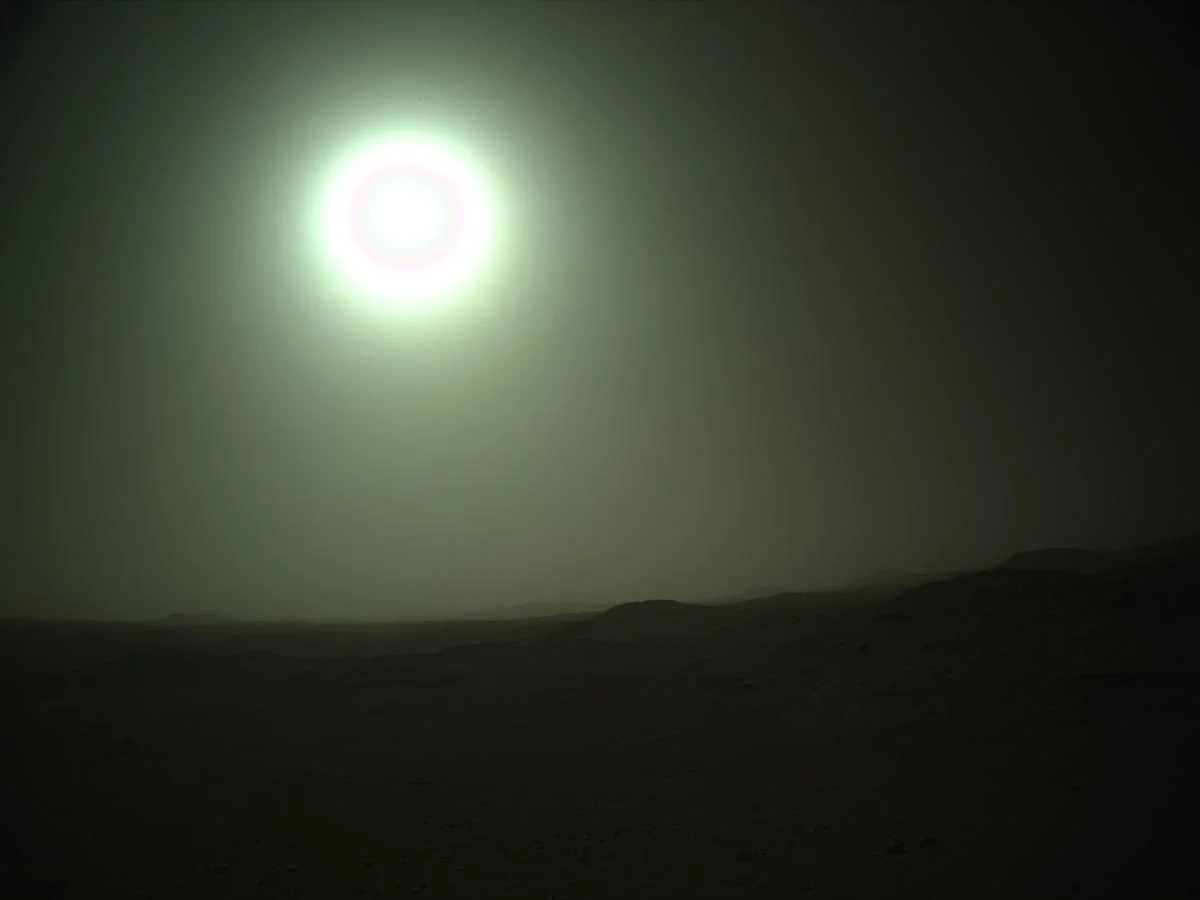
NASA is repurposing its Perseverance rover on Mars to monitor solar activity, offering a unique vantage point unavailable from Earth. For the next two months, the rover will daily photograph the sun using its Mastcam-Z cameras, gathering data on sunspots and other large solar features. This initiative provides crucial insights into the sun’s behavior, which directly impacts space weather and potentially Earth-based technologies.
Unique Martian Perspective 🔭
The timing is key: Mars is currently positioned behind the sun from Earth’s perspective, allowing Perseverance to capture images of the sun’s far side—a region we cannot directly observe from our planet. While Mastcam-Z wasn’t designed for solar monitoring, its sensitivity allows it to detect significant sunspots. The rover already uses the system to measure atmospheric dust on Mars, a vital component of Martian weather forecasting.
Why this matters: Sunspots are indicators of intense magnetic activity, which can trigger solar flares and coronal mass ejections (CMEs). These events release high-energy particles that disrupt satellites, power grids, and communication systems. Observing the sun’s far side gives scientists early warning of potential space weather events.
Past Observations & Future Implications 💡
NASA previously utilized Perseverance for similar solar observations in 2024, demonstrating the rover’s unexpected versatility. The current effort builds on this success, turning an existing instrument into a temporary but valuable solar observatory.
This approach highlights how existing planetary missions can contribute to multiple scientific goals, maximizing resource efficiency and yielding unexpected discoveries.
This method of repurposing assets underscores the adaptability of space exploration. By leveraging instruments already in place, NASA can gather valuable data without the need for dedicated solar missions. The findings will contribute to a better understanding of the sun’s complex behavior and improve our ability to predict—and mitigate—space weather risks.