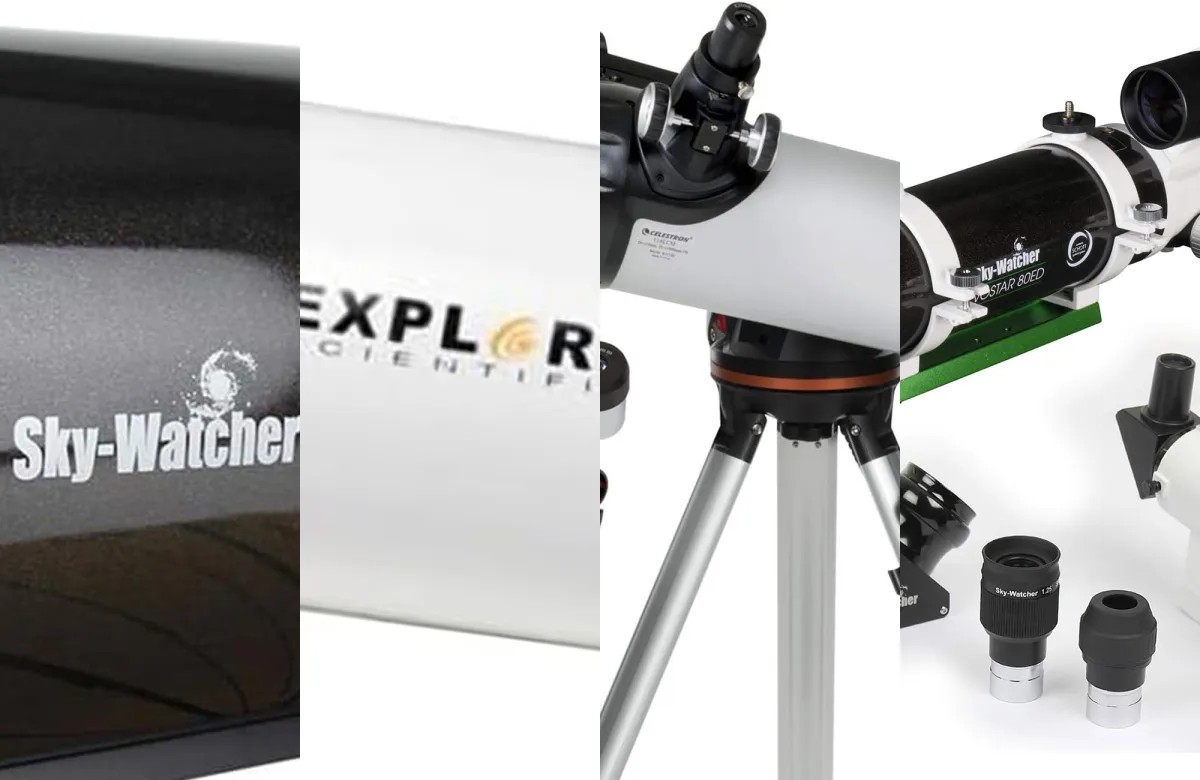
Astrophotography is a captivating blend of patience, skill, and the right equipment. Whether you’re a seasoned stargazer or just beginning to explore the night sky, selecting the correct telescope can make all the difference between blurry disappointment and breathtaking celestial images. This guide breaks down the best telescopes available, covering everything from budget-friendly options to professional-grade setups, ensuring you have the tools to capture the wonders of the universe.
Why Telescope Choice Matters: Understanding the Basics
Modern technology allows us to photograph stars with incredible detail, but the telescope itself remains a critical factor. The ability to stay aligned, the quality of the optics, and even the portability of the instrument all play a role in your success. The Earth’s rotation requires precise tracking, making a stable mount essential for long-exposure astrophotography. Different optical designs—refractors, reflectors, and catadioptric telescopes—offer varying strengths and weaknesses, influencing the clarity, field of view, and suitability for different celestial objects.
Our Top Picks: Telescopes for Every Level
We’ve evaluated telescopes based on build quality, optical performance, focal ratio, and user feedback. Here are our recommendations, categorized for clarity:
Best Overall: Sky-Watcher Skymax Maksutov-Cassegrain Reflector Telescope
This telescope strikes an excellent balance between portability and performance. Weighing 17.1 pounds with an f/15 focal ratio, it delivers bright, clear views of planets, the moon, and even brighter deep-sky objects. It’s compact enough to transport without sacrificing optical power, making it ideal for those who want versatility without bulk.
Note: This model does not include a mount, so budget accordingly.
Best Budget: Celestron AstroMaster 130EQ-MD Newtonian Telescope
For those starting out or looking for an affordable option, the Celestron AstroMaster 130EQ-MD offers excellent value. It excels at photographing the moon and planets, making it a great entry point into astrophotography. Its red dot finder simplifies target acquisition, though deep-sky imaging may be limited by its aperture.
Best Portable: Sky-Watcher EvoStar 80 APO Doublet Refractor
Serious astrophotographers who travel will appreciate the Sky-Watcher EvoStar 80. Weighing just 7.3 pounds, this refractor delivers professional-grade optical quality with minimal chromatic aberration, thanks to its doublet design. While expensive and not ideal for beginners, its portability and performance make it a worthwhile investment for dedicated enthusiasts.
Best for Beginners: Celestron 114LCM Computerized Newtonian Telescope
The Celestron 114LCM simplifies astrophotography for newcomers. Its computerized mount with a Sky Tour button guides you through the night sky, making object identification effortless. While it’s not suited for deep-sky photography, it provides an easy way to connect a webcam or smartphone for instant results.
Key Considerations When Choosing a Telescope
Before investing, consider these critical factors:
Mount Type: A stable mount is non-negotiable for long-exposure astrophotography. Equatorial mounts, which require only one axis adjustment to track objects, are preferred over alt-azimuth mounts, which need two. Automatic equatorial mounts are expensive but free up your hands for adjustments.
Focal Ratio: A faster focal ratio (f/5 or lower) gathers light quickly, ideal for deep-sky imaging. Slower focal ratios (f/8 or higher) provide greater detail for planetary and lunar shots.
Optical Design:
* Refractors offer excellent correction for chromatic aberration.
* Reflectors (Newtonian, Dobsonian) are affordable but may sacrifice optical quality.
* Catadioptric telescopes (Schmidt-Cassegrain, Maksutov-Cassegrain) combine lenses and mirrors for high detail in a compact design.
Final Thoughts: The Right Tool for the Job
The best telescope for astrophotography depends on your experience and goals. For all-around performance, the Sky-Watcher Skymax stands out. Beginners will find the Celestron 114LCM a user-friendly starting point, while serious enthusiasts will appreciate the portability and quality of the Sky-Watcher EvoStar 80.
Ultimately, choosing the right telescope is about finding a balance between optical quality, portability, budget, and your specific astrophotography ambitions. With the right equipment and a bit of patience, you can capture stunning images of the cosmos.