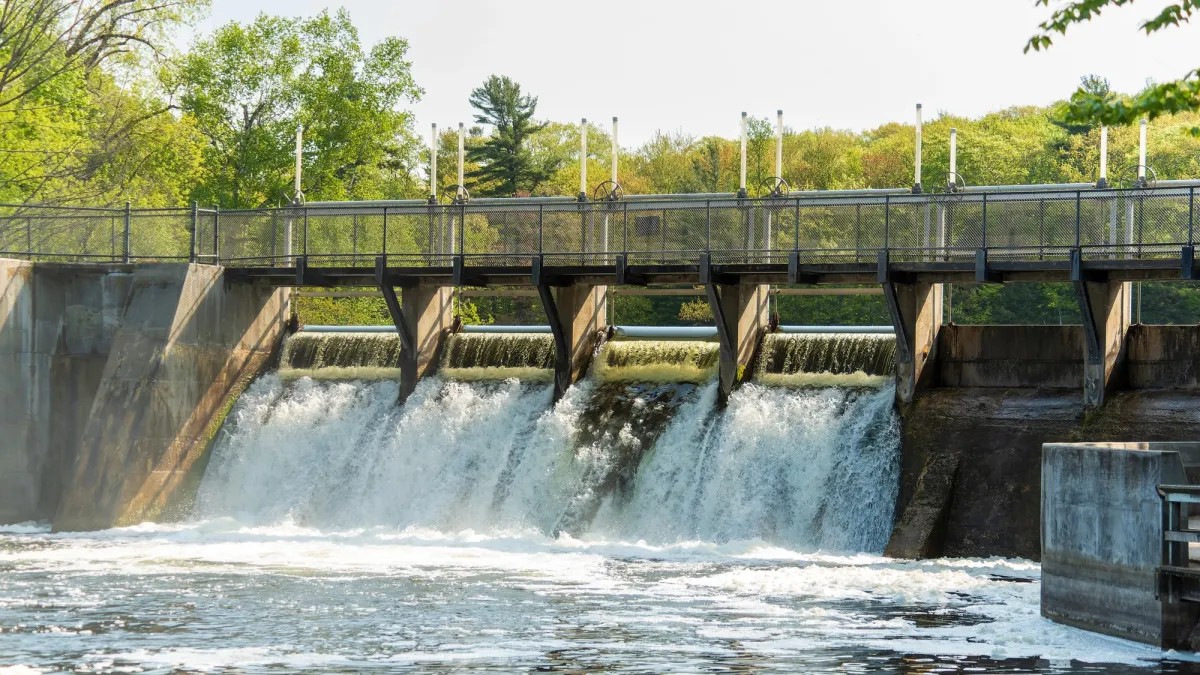
The United States faces a growing, largely unseen threat: over 2,500 high-hazard dams are in poor condition, and many are sinking into the ground. These structures, critical for water supply, power generation, and flood control, are quietly failing due to age, underfunding, and insufficient maintenance. The scale of the problem is larger than previously understood, with satellite data revealing deterioration that inspections alone may miss.
The Aging Infrastructure Problem
Most U.S. dams were built during the mid-20th century, between the 1950s and 1960s, meaning the average dam is now 61 years old. Seven out of ten dams are at least 50 years old. While there are over 92,000 dams nationwide, the majority haven’t received major updates. The American Society of Civil Engineers estimates that over $165 billion in repairs is needed, yet current federal funding falls far short.
This isn’t just about structural integrity; it’s about escalating risk. Dam failure can cause catastrophic loss of life and economic damage. The ASCE warns that without greater investment in dam safety, the costs will continue to rise and downstream communities will face increasing danger.
Invisible Decay: Radar Reveals Hidden Sinking
New research from Virginia Tech using Interferometric Synthetic Aperture Radar (InSAR) shows that many dams thought to be stable are still sinking. This technology allows scientists to measure ground movement from space, detecting deterioration that ground-level inspections might overlook. The study focused on hydroelectric dams, as their failure would impact both communities and critical infrastructure.
Mohammad Khorrami, a geoscientist at Virginia Tech, explains that some dams are undergoing “internal degradation.” While the findings are preliminary, they suggest that the problem is more severe than current assessments indicate. The Roanoke Rapids dam in North Carolina, for example, is confirmed to be sinking on its northern face, threatening the nearby town of over 15,000 residents.
Ripple Effects: Economic and Community Consequences
A catastrophic dam failure today would be disastrous. Beyond the immediate loss of life, it would disrupt agriculture, electricity production, and broader economic stability. Dams often serve as a buffer for water used in both sectors, so their collapse creates a ripple effect that can impact the national economy.
However, researchers emphasize that mitigation is possible. Around 40-50% of the risk comes down to poor local management and maintenance. By prioritizing repairs for the most critical structures, the worst outcomes can be avoided.
“If you cannot financially take care of all of these dams at the same time, we can provide the priority dams,” says Khorrami.
The deterioration of US dams is a slow-moving crisis that demands attention. Failure to address it will result in escalating costs and increasing danger for communities downstream.