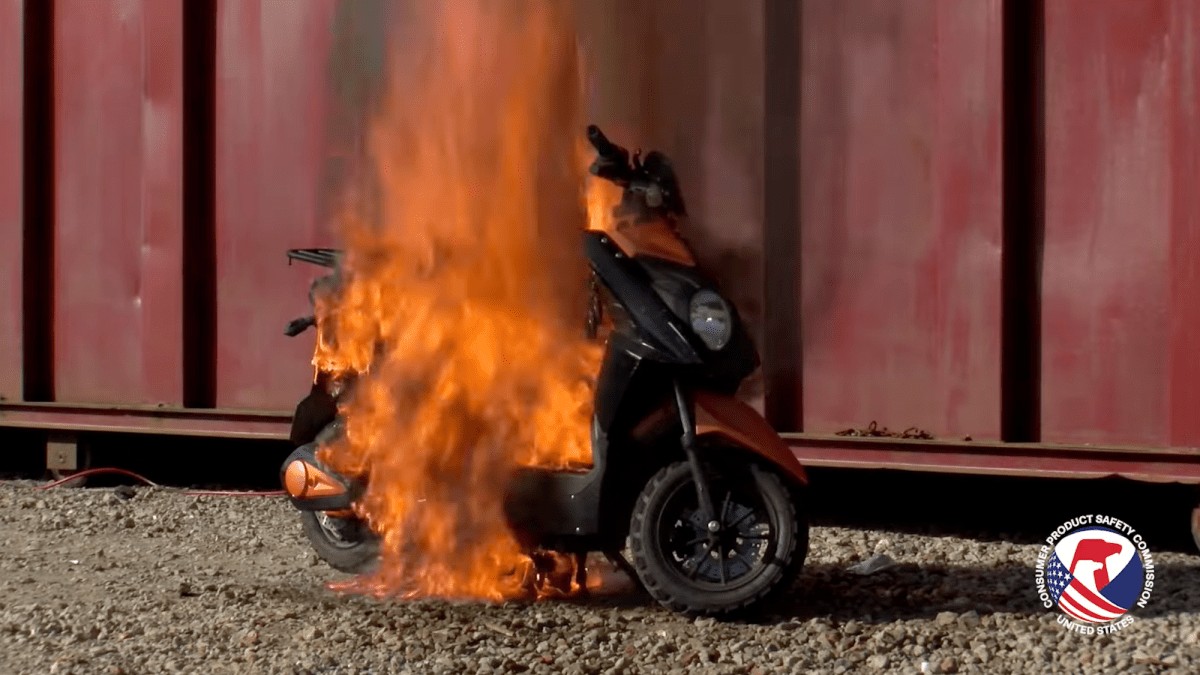
The U.S. Consumer Product Safety Commission (CPSC) is leveraging stark imagery this holiday season to raise awareness about fire risks associated with increasingly common products: lithium-ion batteries in e-scooters, e-bikes, and hoverboards, as well as dry Christmas trees. The agency is using unsettling demonstrations – including a 30-minute video showing a burning e-scooter battery and side-by-side comparisons of dry versus watered trees catching fire – to ensure the message hits home.
The Hidden Dangers of Lithium-Ion Batteries
The CPSC’s “Escooter Lithium-Ion Battery Yule Log” video illustrates a growing problem: lithium-ion batteries are highly flammable. Unlike traditional fires, these batteries undergo internal chemical reactions that can cause prolonged burning, often releasing toxic gases. Extinguishing them requires significantly more water than conventional fires – a single electric vehicle fire can demand over 30,000 gallons.
The agency advises consumers to:
- Purchase from reputable retailers: Ensuring quality control reduces the risk of faulty batteries.
- Follow manufacturer instructions: Improper charging can lead to overheating and fires.
- Avoid overnight charging: Prolonged charging increases the risk of malfunction.
- Use only approved replacement batteries: Third-party batteries may lack safety certifications.
These warnings are particularly relevant now, as lithium-ion batteries are increasingly integrated into popular gifts, including e-bikes, scooters, and hoverboards. The risk isn’t just hypothetical; faulty batteries can cause devastating fires.
Dry Christmas Trees: An Ancient Hazard, Renewed Concern
The CPSC also highlighted another familiar but often overlooked danger: dry Christmas trees are extremely flammable. Their video comparison clearly shows that a dry tree ignites in seconds, acting as a rapid accelerant for fire. A watered tree, while still combustible, takes significantly longer to catch and sustain flames.
The takeaway is simple: keeping a Christmas tree watered dramatically reduces its fire risk. This is not new information, but the agency’s graphic presentation underscores the urgency.
“These demonstrations are designed to be unforgettable,” said a CPSC spokesperson. “We’re not just issuing warnings; we’re showing you what can happen if safety precautions are ignored.”
The agency’s approach, reminiscent of its earlier fireworks safety PSA, aims to create a visceral understanding of fire hazards. While unsettling, the strategy is effective in driving home the message: safety requires awareness and responsible practices.
The CPSC’s holiday warnings serve as a critical reminder that even seemingly harmless gifts and traditions can pose serious fire risks if not handled with care.