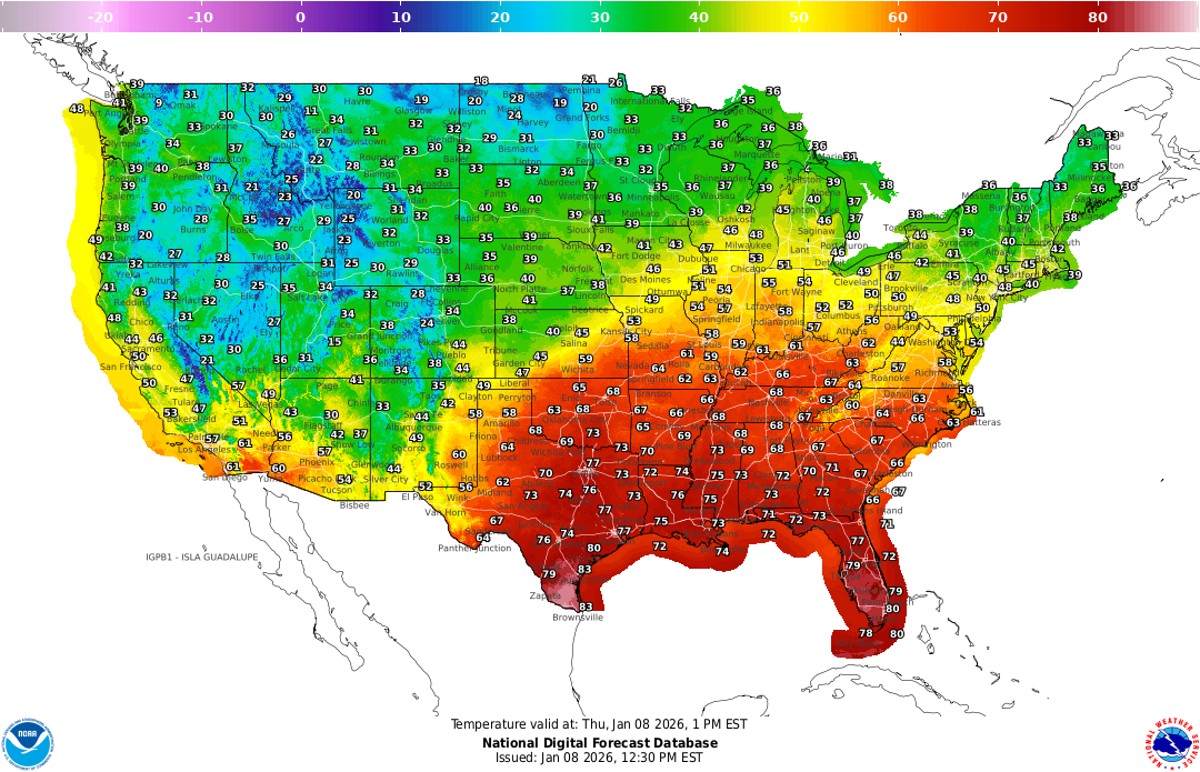
An unprecedented January heat wave is sweeping across the southern United States, with temperatures soaring far above seasonal averages and breaking records in multiple states. The phenomenon, driven by a persistent high-pressure system and unusually warm Gulf of Mexico waters, has pushed thermometers into summer-like readings in the middle of winter.
Record-Breaking Temperatures
Cities across Texas, Oklahoma, and Louisiana have already reported record highs. Houston, Texas, hit 82°F (28°C), Tulsa, Oklahoma, reached 74°F (23°C), and Baton Rouge, Louisiana, saw 81°F (27°C) on Tuesday alone. Forecasts predict even higher temperatures, with some areas in the Rio Grande Valley of Texas potentially reaching 90°F (32°C). The National Weather Service estimates that over 30 stations could tie or break historical records.
The Role of Climate Change
This heat wave is not an isolated event. Scientists at Climate Central have found that climate change has made these extreme temperatures 1.5 to five times more likely. The trend is particularly alarming when considering overnight lows, which are warming at twice the rate of daytime highs, offering little respite from the heat. The recent surge follows a record-breaking December 25th, where the U.S. experienced its hottest Christmas Day ever recorded, exceeding the previous high by a significant margin of 3°F (1.7°C).
Short-Term Relief, Long-Term Trends
The current heat wave is expected to be short-lived, with a cold front poised to move across the country and restore temperatures to normal levels. However, this brief respite does not diminish the broader pattern of increasingly frequent and intense extreme weather events. The fact that records were broken by such margins — especially over a large area — highlights how rapidly climate patterns are shifting.
The rising frequency of unseasonal temperatures underscores the accelerating effects of global warming, emphasizing the need for continued research and mitigation efforts to address the long-term consequences of climate change.
While a cold snap will bring temporary relief, the underlying trend of warming nights and increasingly extreme weather events suggests that this January heat wave is a harbinger of what could become the new normal.