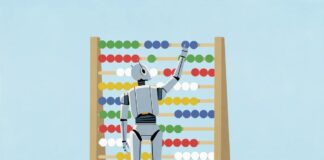
The fear of artificial intelligence overshadowing human intellect is understandable. However, educators and leaders now face a more urgent task: recognizing the potential for collaboration between human minds and intelligent machines. The future of education isn’t about AI replacing teachers – it’s about AI augmenting learning in ways we’ve never seen before.
Beyond the Traditional Classroom
Imagine a student in 2040, learning not through rote memorization or rigid schedules, but through a personalized, adaptive experience. This isn’t a futuristic fantasy; it’s a rapidly approaching reality. For decades, we’ve treated technology as a simple tool – a calculator, a search engine. But today’s AI is far more intimate, capable of understanding and responding to individual learning styles in real-time.
The AI Learning Companion
By 2040, learning will feel less like instruction and more like a dynamic conversation. Your AI companion won’t simply dump information into your brain; it will listen. It will analyze how you think, identify your strengths and weaknesses, and tailor its responses accordingly.
If you struggle with math, it won’t criticize; it will reframe the problem in a way that resonates with your storytelling mindset. If you learn best through movement, it will seamlessly integrate learning into physical activity. And if your curiosity strikes at midnight, it will be ready to engage, unlike most human teachers.
Humans and Machines: A Collaborative Advantage
The true benefit of this transformation isn’t just smarter machines. It’s freer humans. Machines excel at memory, speed, pattern recognition, and repetition – tasks where they outperform us. This allows humans to focus on what we do best: imagination, critical judgment, ethical reasoning, empathy, and creativity. In essence, AI becomes an exoskeleton for the mind. You still make the choices; you simply walk further, faster, and with less cognitive fatigue.
The Uncomfortable Questions
This paradigm shift raises vital questions:
- If a machine enhances your thinking, where does your intelligence truly begin and end?
- How do we measure merit in a world where effort looks different?
- If everyone has access to an AI thinking partner, what defines true exceptionalism?
The answer may be surprising: intelligence will be measured not by how much you know, but by how wisely you think, how ethically you act, and how creatively you solve problems that machines cannot. The focus will shift from memorization to evolution, from pressure to exploration.
Education Dissolves into Life
The traditional classroom won’t disappear entirely, but it will dissolve into the fabric of everyday life. Learning will become a continuous, organic process driven by curiosity, not fear or grades. This isn’t just about preparing for life; it’s about living a life of perpetual learning. The future lies in an era where minds and machines think as one, where education is no longer a preparation but the very essence of existence.