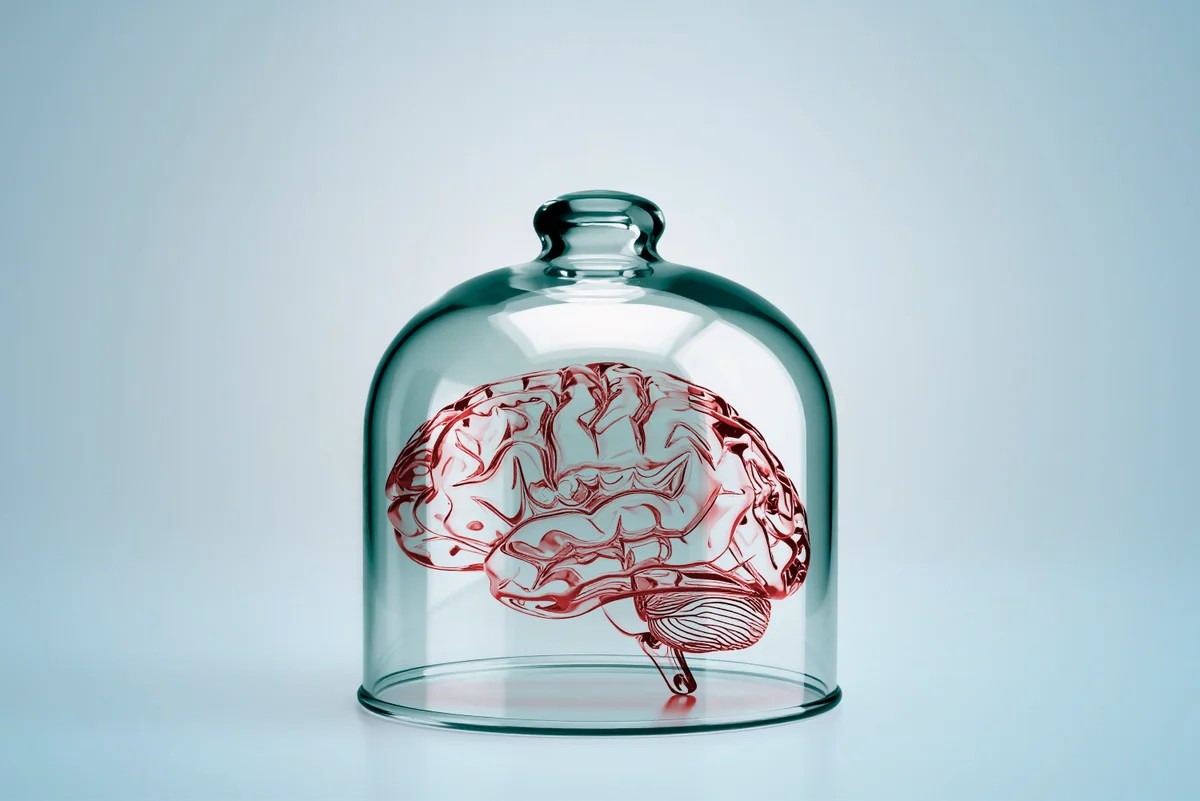
For decades, neuroscientists and philosophers have wrestled with a provocative question: can consciousness exist independently of a body and a physical world? This thought experiment—the “brain in a vat”—challenges our fundamental understanding of how experience arises. The core idea is simple: if a brain were sustained in a laboratory setting, disconnected from sensory input and motor output, would it still feel anything?
The Problem of Subjective Experience
The debate is not merely academic. It strikes at the heart of how we define consciousness: not just as a collection of neural firings, but as the subjective, internal experience of being. Our current understanding relies heavily on the interplay between the brain and the environment. However, scientists are pushing boundaries to determine whether external interaction is essential for consciousness to emerge.
Evidence from Extreme Cases: Hemispherotomy
Recent research offers a disturbing, yet illuminating, window into this question. In rare cases of severe epilepsy, surgeons perform a procedure called hemispherotomy: severing one brain hemisphere from the rest of the brain while maintaining blood flow. This creates an isolated “island” of neural tissue. Studies using fMRI show that even in this disconnected state, brain networks within the isolated hemisphere remain surprisingly organized. They mirror the structure found in healthy brains, raising the possibility that some form of activity persists.
However, simply having organized networks does not equal consciousness. Brain activity is observed during deep sleep and anesthesia, where consciousness is absent. Researchers turned to electroencephalography (EEG) to measure electrical activity directly. These studies reveal that the isolated hemisphere defaults to slow brain waves, a pattern associated with deep, dreamless sleep.
Is Disconnection Enough to Kill Consciousness?
The findings suggest that the isolated hemisphere is likely in a state of diminished or absent consciousness. The brain seems to default to a sleeplike state when cut off from external stimulation. The thalamus, a key regulator of consciousness, is disconnected, further diminishing the chance of awareness. The brain doesn’t simply shut down; it enters a kind of persistent, unresponsive slumber.
The Bigger Picture
This research doesn’t definitively “prove” that consciousness requires a body, but it strongly suggests that external interaction is deeply intertwined with experience. The brain seems predisposed to enter a state resembling deep sleep when disconnected, highlighting the importance of sensory input for maintaining awareness.
The implications extend beyond philosophy. As we develop increasingly sophisticated brain organoids in labs and explore artificial intelligence, understanding the minimal conditions for consciousness becomes crucial. If we can create a brain-like system without external connections, will it simply default to a sleeplike state? The answer may redefine how we understand the very nature of awareness itself.