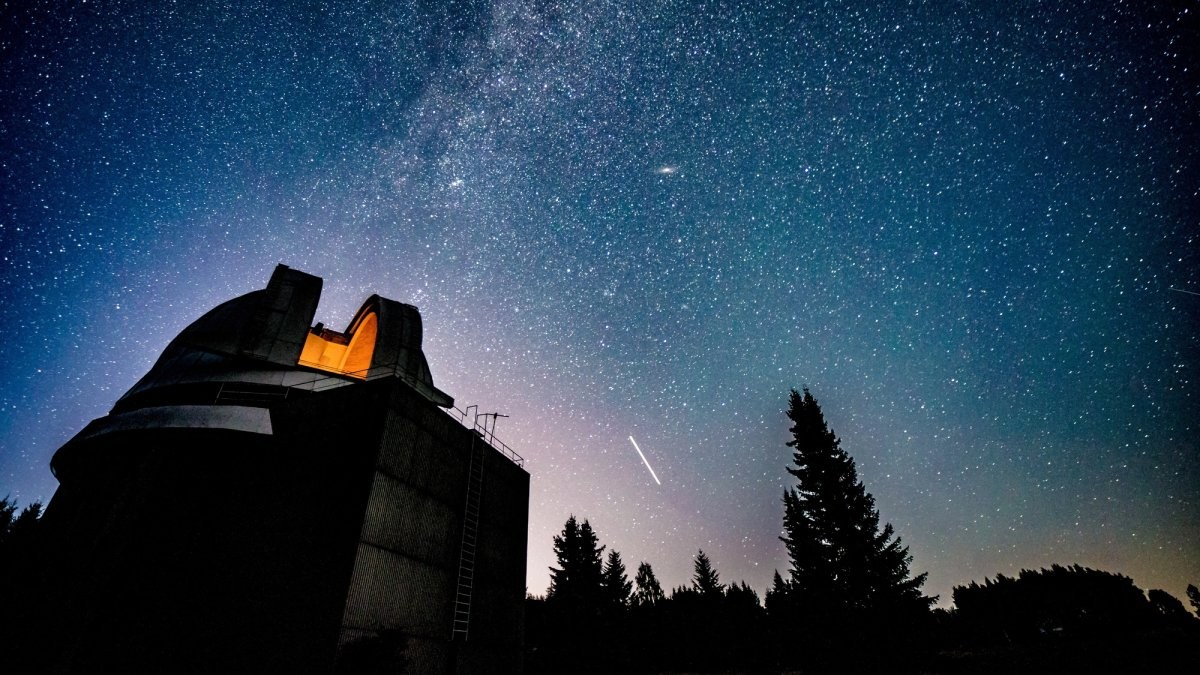
Amazon’s satellite internet venture, previously known as Project Kuiper and now rebranded as Leo, is rapidly expanding its constellation despite concerns about light pollution and disruption of astronomical observations. While aiming to compete with SpaceX’s Starlink, Leo’s current 180 operational satellites already exceed brightness limits recommended by the International Astronomical Union (IAU). The company has approval to launch 3,236 satellites, and early data suggests the problem will only worsen.
Brightness Limits and Scientific Interference
The IAU, the leading authority on celestial objects and space policy, has established clear brightness limits for orbiting satellites. These are designed to protect both professional research and the natural beauty of the night sky. Current standards dictate that satellites should not be visible to the naked eye, and brightness should remain below a magnitude of 7.15 to avoid hindering astronomical research. However, Leo’s satellites average a brightness magnitude of 6.28 – faint enough to sometimes avoid detection, but still frequently reflecting disruptive light.
92% of Leo satellites exceed the IAU’s research interference limit, and 25% detract from the aesthetic experience of observing the night sky. These figures are based on nearly 2,000 observations and raise serious questions about Amazon’s commitment to mitigating light pollution.
The Race for Dominance and Its Consequences
Amazon’s delay in entering the satellite internet market forced it to accelerate its deployment schedule. The company now faces a regulatory deadline to have half its constellation in orbit by July 30, 2026. This rush may explain why brightness mitigation efforts appear insufficient. Amazon claims to be developing a dark coating for its satellites, but this may not fully resolve the issue.
Furthermore, Amazon has FCC approval to operate satellites at lower altitudes, which could make the constellation even brighter. At an average altitude of 391 miles, Leo is already raising red flags; operating at 366 miles could exacerbate the problem, potentially drowning out the natural starlight that humans have observed for millennia.
Why This Matters
The rapid expansion of satellite internet constellations has broader implications. While providing global internet access is a worthy goal, the unchecked proliferation of bright satellites threatens to fundamentally alter our view of the night sky. This is not simply an aesthetic concern; it directly impacts astronomical research, which relies on dark, clear skies for accurate observations. The IAU’s warnings highlight a critical tension between commercial interests and the preservation of a shared scientific and cultural resource.
Ultimately, Amazon’s satellite deployment strategy underscores the need for stricter regulations and international cooperation to ensure that space remains accessible for both technological advancement and scientific exploration.