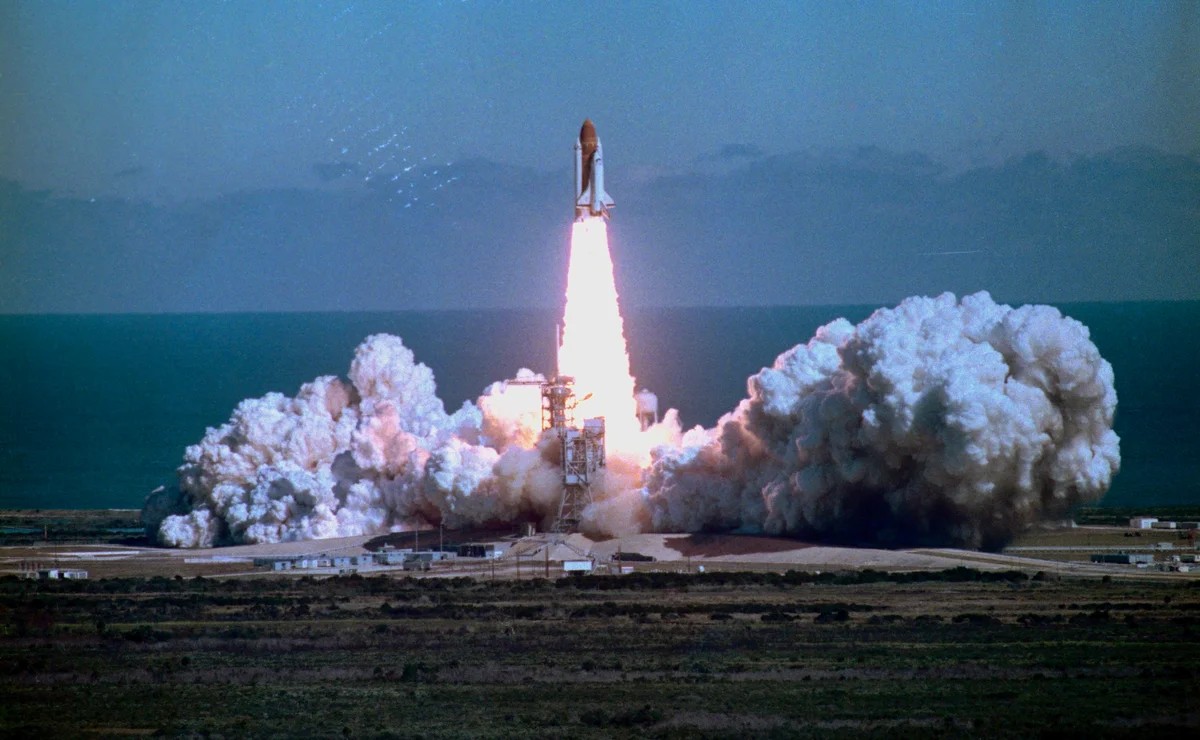
Forty years after the Challenger disaster, NASA prepares to launch Artemis II, its first crewed mission beyond Earth orbit since 1972. The ambitious program, designed to return humans to the Moon, carries the weight of past failures and renewed safety concerns. While NASA insists that lessons learned from Challenger and Columbia have fortified its processes, questions remain about whether cost pressures and timelines are compromising thoroughness.
The Shadow of Past Tragedies
The 1986 Challenger explosion, which claimed the lives of seven astronauts, exposed critical flaws in NASA’s decision-making and engineering oversight. The disaster stemmed from failed O-rings in the solid rocket boosters, exacerbated by a culture that prioritized launch schedules over safety warnings. The tragedy nearly derailed the Space Shuttle program, forcing a three-year pause for investigation and redesign.
Similar issues emerged after the 2003 Columbia disaster, reinforcing the need for rigorous risk assessment and transparent communication. Today, NASA asserts it has fundamentally changed, with Tracy Dillinger, NASA’s safety culture program manager, stating that “aspects of the agency which hopefully no longer exist” are continuously addressed. However, skepticism persists.
Heat Shield Concerns and Expedient Solutions
The most pressing current concern centers on Orion’s heat shield – vital for protecting astronauts during re-entry. An uncrewed test flight in 2022 revealed unexpected ablation, with chunks of the shield breaking off. NASA’s proposed solution is not a redesign, but an altered flight path: a steeper, faster descent into the atmosphere. Critics argue this avoids addressing the root problem, prioritizing speed over comprehensive safety measures.
The decision not to conduct further heat shield tests before committing astronauts raises questions about whether “launch fever” – a pressure to meet deadlines regardless of risk – is resurfacing. Jordan Bimm, a space historian at the University of Chicago, points out that Artemis, with its $93 billion price tag, creates inherent pressure to keep the program moving.
A Changing Landscape of Spaceflight
NASA operates in a dramatically different environment than it did during the Apollo or Shuttle eras. The agency now competes with commercial space giants like SpaceX and Blue Origin, while China and India aggressively pursue their own crewed missions. This competitive landscape adds pressure to demonstrate success and maintain funding.
The agency’s willingness to delay Artemis I to protect the SLS rocket from a hurricane set a positive example, showing a commitment to caution when warranted. But the heat shield issue suggests that similar prudence may not always prevail when faced with cost and schedule constraints.
The Human Factor
The Artemis II crew will be the first to venture beyond Earth orbit in decades. Their mission is a testament to human ambition, but also a stark reminder of the risks involved. NASA’s internal investigations, while thorough, often reveal systemic issues that extend beyond engineering failures – cultural biases, managerial pressures, and the normalization of deviance.
As Sandra Magnus, a former NASA astronaut, notes, these investigations are ongoing, but the fundamental question remains: can NASA truly balance innovation with uncompromising safety?
In conclusion, Artemis II represents both a leap forward in human space exploration and a critical test of NASA’s commitment to learning from its past. While the agency has made significant strides in safety culture, the pressure to deliver results in a competitive environment could once again compromise thoroughness. The success of Artemis II will depend not only on engineering prowess but also on whether NASA can resist the allure of expediency and prioritize astronaut safety above all else.