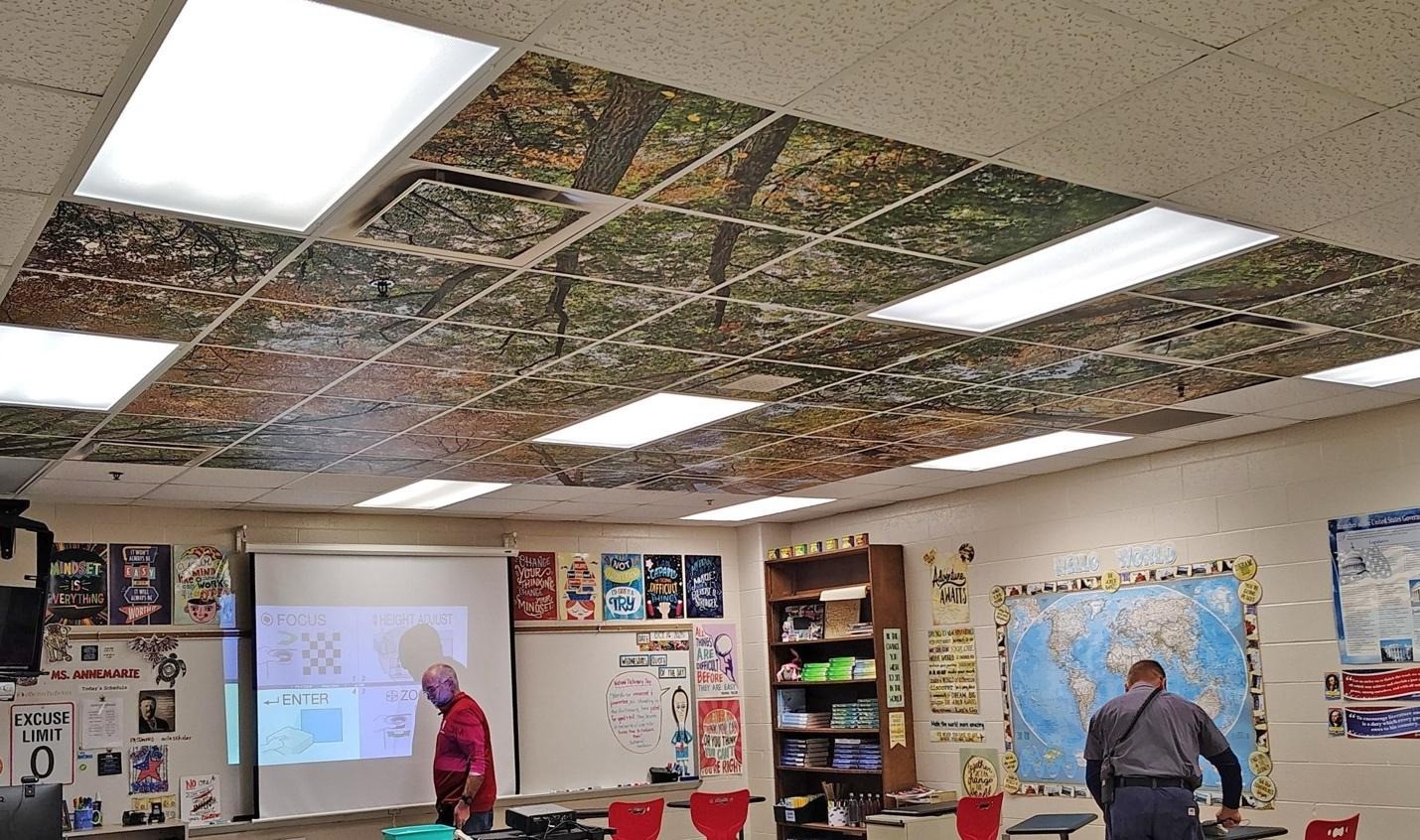
For decades, research in psychology has shown that exposure to nature has restorative effects on the human mind. Now, a growing movement called Nature In The Classroom is bringing those benefits indoors, using high-resolution tree canopy murals to improve focus, reduce stress, and enhance learning environments. This isn’t just about aesthetics; it’s about leveraging the brain’s natural response to greenery to create calmer, more effective spaces for students and teachers.
The Science of Calm: Attention Restoration Theory
The core principle behind this initiative is Attention Restoration Theory (ART). This established field of study demonstrates that simply viewing natural scenes – even images of trees – can lower stress levels, sharpen focus, and boost cognitive function. The effects are measurable, and the implications for education are significant.
Recent studies, like the “3-30-300 Rule” from Spain, reinforce this. That rule suggests that having access to greenery – three trees in sight, 30% green space in your neighborhood, and living within 300 meters of a park – is linked to better mental health. In contrast, many schools, particularly in underserved areas, lack these elements entirely. Students spend 90% of their time indoors, often in windowless classrooms or portable buildings, further exacerbating the problem.
Scalable Solutions: Tree Ceilings in Action
Nature In The Classroom addresses this by installing high-resolution tree canopy murals directly onto classroom ceilings. These aren’t just decorations; they’re designed to mimic the calming effects of a forest canopy, even in completely enclosed spaces. Currently implemented in over 20 school districts across nine states, serving more than 10,000 students, the program has yielded consistent positive results.
Teachers report improved classroom culture and attention spans. Students describe the ceilings as “relaxing,” “cool,” and “a place that feels like outside.” Even in a juvenile facility for at-risk youth, teachers observed fewer behavioral disruptions and better emotional regulation among students. One teacher noted, “It absolutely makes the room feel warmer, and students are more calm and focused sitting beneath it.”
Beyond Aesthetics: How Biophilic Design Works
Biophilic design – integrating natural elements into built environments – isn’t a passing trend; it’s a research-backed strategy for well-being. Exposure to trees has been shown to:
- Reduce cortisol levels and lower stress
- Improve sustained attention and focus
- Increase feelings of safety and belonging
- Support creativity and cognitive flexibility
- Improve mood and emotional regulation
The underlying reason is rooted in how the human brain processes visual information. Nature scenes, defined by fractal patterns, are easier for the mind to assess quickly compared to the linear structures of urban environments. By softening these lines in classrooms, educators can create a more conducive learning environment.
A Cost-Effective Approach to Better Learning
Nature In The Classroom is a 100% volunteer organization that donates tree ceilings when funding allows. Otherwise, they can be purchased at cost through grants, parent-teacher organizations, and other funding sources. The program’s scalability and low maintenance make it an accessible solution for schools facing budget constraints.
“The human mind is wired to view and interpret nature,” explains founder Ernesto Rodriguez. “Sometimes addressing students’ needs doesn’t require new programs—it requires reimagining the space itself.”
The initiative demonstrates that powerful educational innovations often lie in simple, overlooked solutions. By bringing the restorative power of nature indoors, Nature In The Classroom is quietly but effectively transforming learning environments for students and teachers alike.