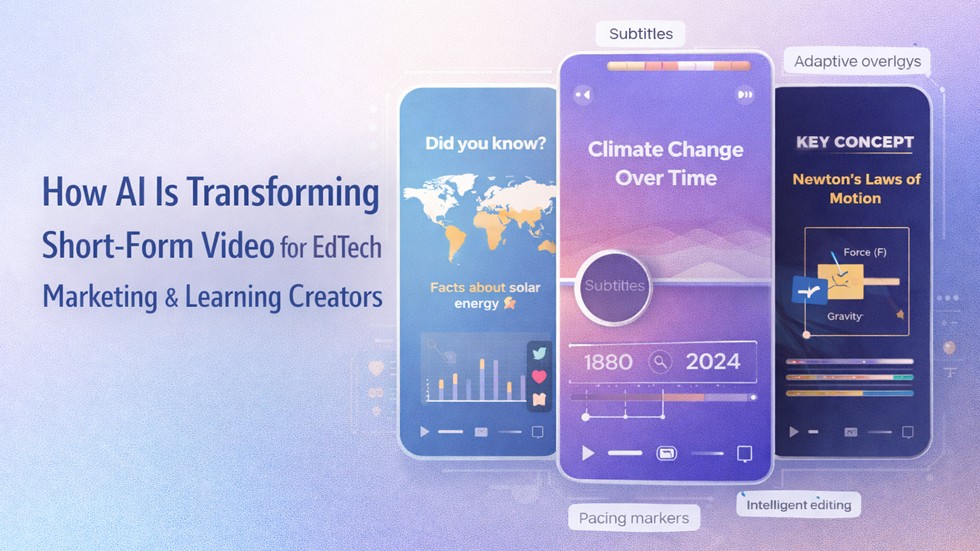
The rise of artificial intelligence (AI) in short-form video is fundamentally changing how education and training are delivered. In today’s fast-scrolling digital world, traditional methods like long webinars or classroom lectures are increasingly impractical. Instead, AI-powered tools now enable educators and edtech companies to create engaging, bite-sized learning content for platforms like TikTok, Instagram Reels, and YouTube Shorts. This shift isn’t just about convenience; it’s about meeting students where they already are.
The Challenge of Keeping Up with Short-Form Trends
Short-form video platforms move at an incredible pace. Trends, formats, and sounds change hourly. Conventional video production – scripting, filming, editing – simply can’t keep up. Many training teams struggle to remain relevant, often falling behind due to lengthy production cycles.
The core problem? Traditional methods lack the speed needed to capitalize on viral trends and maintain consistent content output. Educational content that doesn’t feel native to these platforms – slick corporate explainers or repurposed lectures – underperforms drastically. Data consistently shows that authentic, timely content drives higher engagement, better app discovery, and increased course enrollment.
How AI Solves the Speed Problem
AI-powered video tools address this directly by focusing on speed without sacrificing quality. These systems don’t just automate editing; they prioritize immediacy, relevance, and authenticity. Instead of recreating content from scratch, AI can adapt popular style elements (hooks, pacing, transitions) to educational material.
Teachers can integrate diagrams, screen recordings, or animated graphics into these tools to produce platform-native instructional videos in minutes. For example, platforms like TopView’s AI Ad Generator demonstrate how scalable, brand-safe educational content can now be created on demand.
Authenticity at Scale: AI UGC and Avatars
In education, trust is paramount. AI-generated user-generated content (UGC) can mimic real-world learning scenarios, peer testimonials, and relatable explanations. This approach bypasses the polished, often impersonal feel of traditional marketing.
AI avatars also offer a solution for consistent online instruction, making them ideal for onboarding, reaching international audiences, and delivering introductory training. These tools aren’t meant to replace teachers; they’re designed to augment their capabilities.
Data-Driven Iteration for Continuous Improvement
AI allows for rapid experimentation. Teams can test different hooks, visuals, and pacing before refining what works best. This iterative process – observe, adapt, improve – is crucial for maximizing engagement. By leveraging data, educators can optimize their content in real-time, ensuring it resonates with their target audience.
The future of education isn’t about replacing human instruction with AI; it’s about intelligently blending human creativity with AI efficiency to deliver learning experiences that are both effective and engaging.
Ultimately, AI is changing short-form video from a marketing tactic into a transformative learning tool. By understanding this shift, educators can harness the power of AI to reach students where they already spend their time, fostering a more dynamic and accessible learning environment.