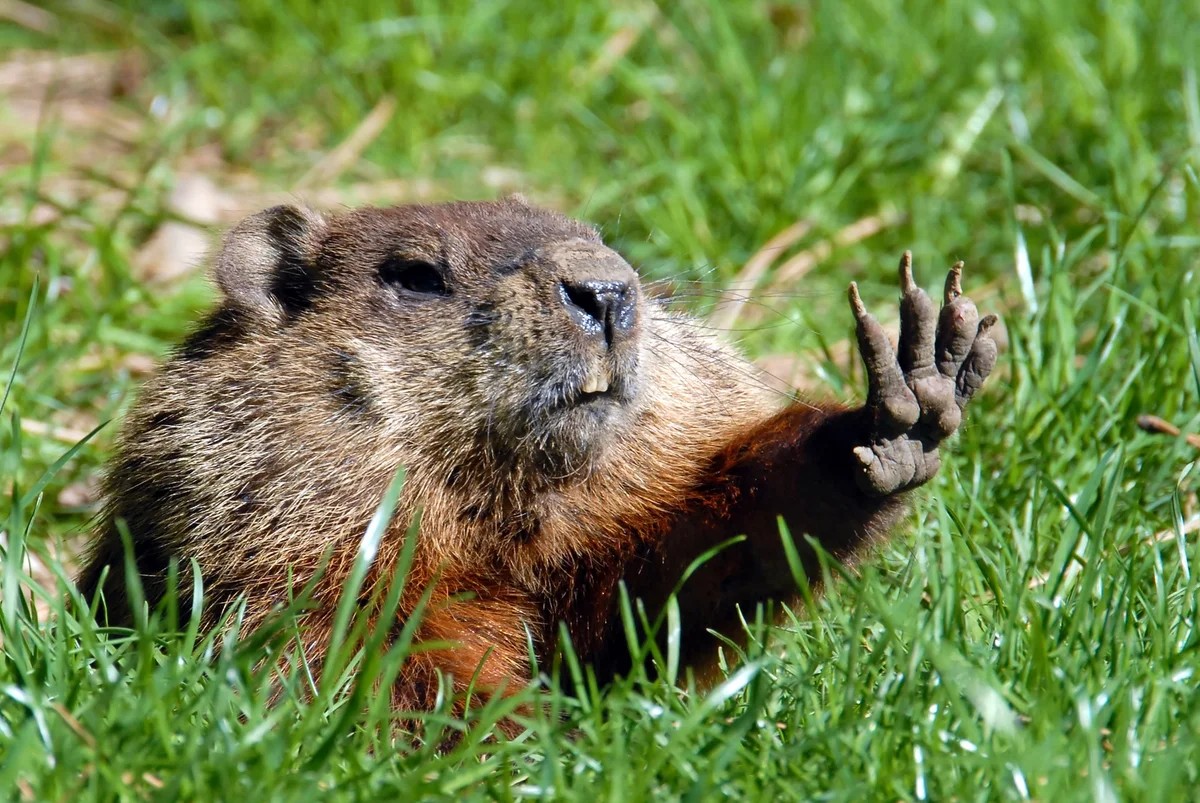
Groundhog Day, celebrated annually on February 2nd, is steeped in folklore, with the tradition of Punxsutawney Phil (and other groundhogs) “predicting” the length of winter. While these forecasts hold no scientific validity, the event draws crowds eager for a unique spectacle. But beyond the ritual, groundhogs are fascinating creatures with surprising biology and a hidden impact on science. Here are six of the strangest facts about Marmota monax, the largest member of the squirrel family, that you probably didn’t know.
Mating Minds, Not Meteorological Ones
The first groundhogs to emerge in early February aren’t thinking about spring – they’re looking for love. Male groundhogs venture out to assess potential mates and mark territory before retreating for another month of hibernation. Their “predictions” are driven by hormones, not climatology. This highlights how cultural traditions often overlay natural behaviors, transforming biological urges into symbolic events.
Ever-Growing Teeth: A Rodent’s Reality
Groundhogs’ teeth never stop growing. To prevent overgrowth, they constantly gnaw on wood, roots, and other materials. This continuous wear is essential for survival, as their powerful teeth are used for feeding, defense, and nest-building. The fact that teeth regenerate indefinitely illustrates the remarkable adaptation of rodents to harsh environments.
Underground Architects: Complex Burrow Systems
A groundhog burrow isn’t just a hole in the ground. These systems can be elaborate, featuring separate chambers for bathrooms, sleeping areas, and multiple entrances. Tunnels can stretch over 65 feet, creating an intricate underground network. The scale of these burrows demonstrates a level of behavioral complexity often underestimated in rodents.
Accidental Archeologists: Unearthing History
Groundhogs have unintentionally aided archaeological discoveries. Their digging has exposed historical artifacts, including at Meadowcroft Rockshelter in Pennsylvania, one of the oldest known sites of human habitation in North America. This unexpected contribution underscores how even seemingly random animal activity can play a role in scientific breakthroughs.
Medical Models: Groundhogs and Hepatitis B Research
Groundhogs are surprisingly valuable in medical research. Their version of the hepatitis B virus (HBV) closely resembles the human strain, allowing scientists to study the link between HBV and liver cancer more effectively. Using groundhogs as a model helps advance understanding of human diseases, showing how animal biology can directly benefit medical progress.
Many Names for One Creature: Cultural Impact
Groundhogs are widespread across North America, and Indigenous communities have long recognized them. Besides “groundhog,” they’re also known as woodchucks and whistle-pigs, referencing their distinctive vocalizations and stout bodies. This cultural diversity highlights the enduring relationship between humans and these ubiquitous rodents.
Groundhogs are more than just weather forecasters. They’re complex creatures whose biology, behavior, and even accidental actions contribute to science, history, and folklore. The Groundhog Day tradition may be rooted in superstition, but the animal itself is a testament to the surprising connections between nature and human society.