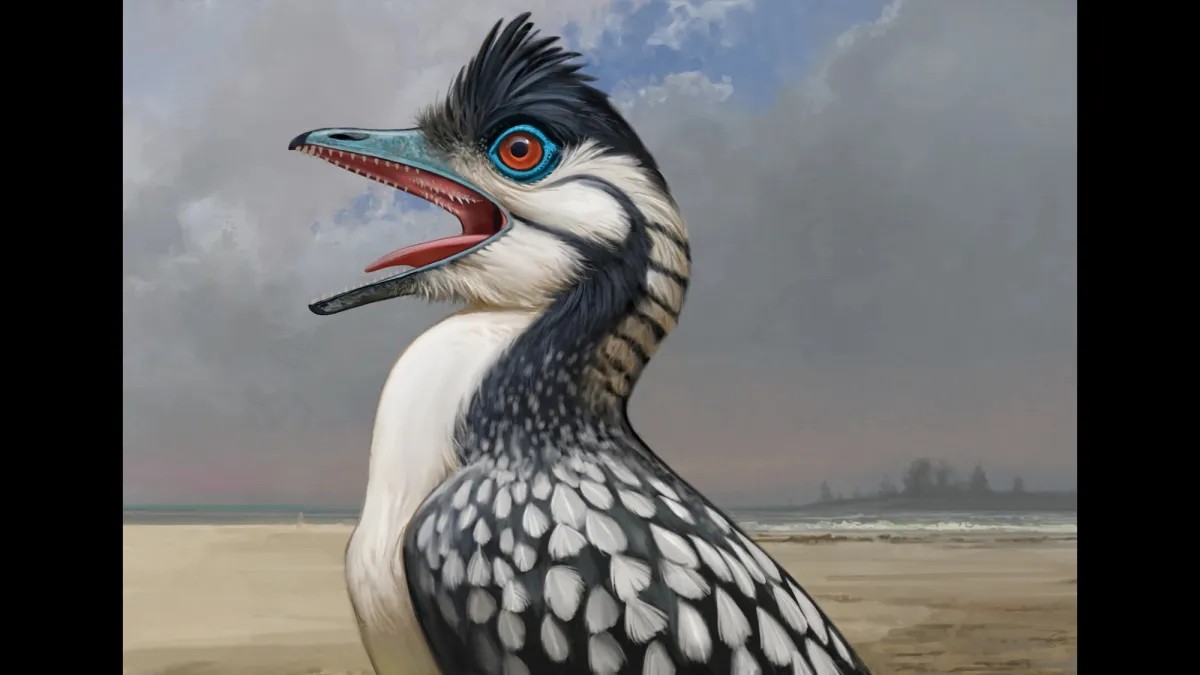
The earliest known bird, Archaeopteryx, a 150-million-year-old dinosaur from the Jurassic Period, possessed surprisingly modern features in its mouth, offering new insights into the evolution of birds from their terrestrial dinosaur ancestors. A recent study published in The Innovation details the discovery of structures previously unseen in fossils of this age, including oral papillae (fleshy bumps that act like teeth to guide food) and a small tongue bone. These findings confirm that key avian traits aren’t recent developments, but have been present since the very first birds emerged.
The Puzzle of Archaeopteryx
Archaeopteryx has always been a challenging species for paleontologists. While unequivocally a dinosaur, its status as the “first bird” is complicated by the presence of other feathered dinosaurs that weren’t capable of true flight. Distinguishing between these transitional forms has been difficult – until now. Jingmai O’Connor, associate curator at Chicago’s Field Museum, explains, “For a long time, there have been very few things that we could say really characterize the transition from terrestrial dinosaurs to flying bird dinosaurs.”
Unearthing Hidden Details
The research team spent over a year meticulously preparing a museum specimen of Archaeopteryx, using UV light to reveal fossilized soft tissues like feathers and skin. Through this painstaking process, they identified minuscule details previously overlooked, including what appeared to be glowing dots on the roof of the mouth. These turned out to be the first documented oral papillae in the fossil record – a feature found in modern birds that helps direct food toward the esophagus and away from the windpipe.
Beyond Papillae: A Mobile Tongue and Sensitive Beak
Further examination via CT scans revealed additional avian traits. The presence of a splinter of a tongue bone suggests Archaeopteryx had a highly mobile tongue, similar to that of many birds today, enabling it to grab and manipulate food effectively. The fossil also showed nerve endings at the tip of its beak, indicating a “bill-tip organ,” another common adaptation in modern birds used for foraging.
Why This Matters
These discoveries aren’t just about identifying archaic features; they illuminate the energetic demands of flight. Birds require highly efficient digestive systems to sustain their high metabolisms. The development of oral papillae, tongue bones, and bill-tip organs would have all supported Archaeopteryx in meeting the caloric requirements of powered flight – traits so advantageous they persisted through millions of years of avian evolution.
As O’Connor concludes, “These discoveries show this really clear shift in how dinosaurs were feeding when they started flying and had to meet the enormous energetic demands of flight.”
The Archaeopteryx study underscores that what we consider “weird” about modern bird mouths isn’t new at all, but an ancient adaptation refined over 150 million years.