


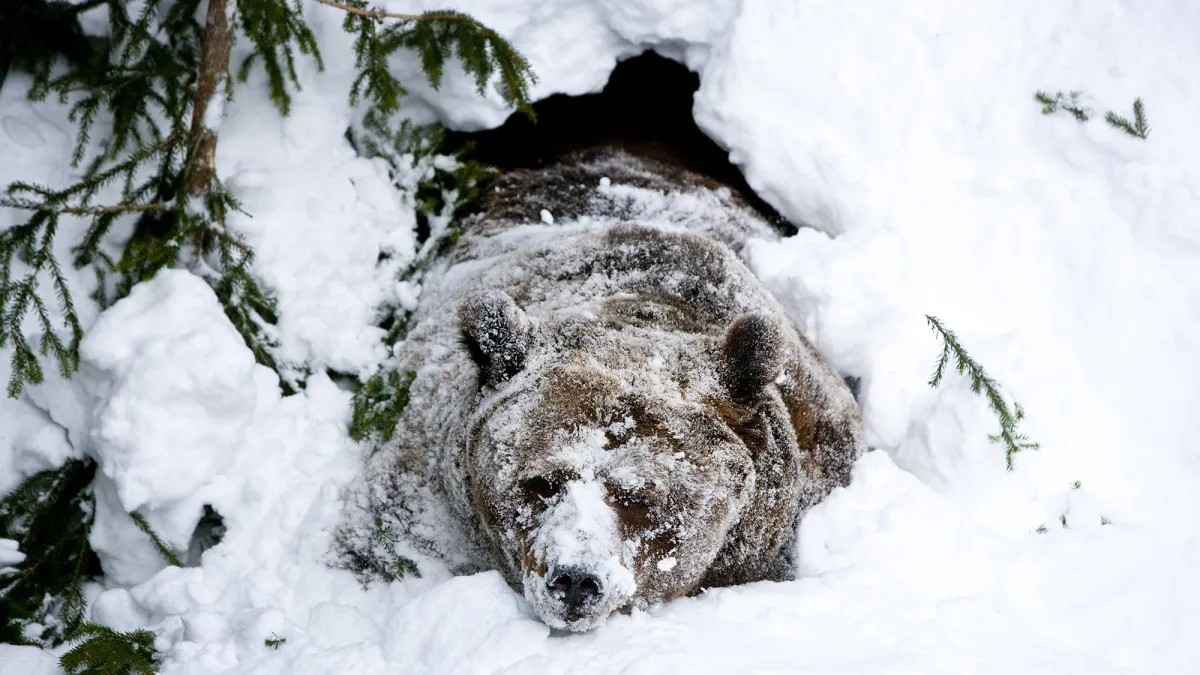
For centuries, the image of bears sleeping through winter has been ingrained in our minds. But the truth is far more nuanced: bears don’t actually hibernate in the way many other animals do. Instead, they enter a state called torpor, a fascinating adaptation with implications for both animal biology and even human health.
The Difference Between Hibernation and Torpor
True hibernation, seen in animals like ground squirrels, involves a drastic slowdown of bodily functions. Heart rate, breathing, and body temperature plummet to near-freezing levels, conserving energy to survive months of scarcity. Bears, however, experience a milder form of energy conservation. While their heart rate and body temperature drop, they remain far more alert and mobile.
Torpor is involuntary, triggered by food shortages, while hibernation is a more deliberate response to environmental cues like shortening days. Bears in regions with year-round food availability, such as sun bears in Southeast Asia, don’t enter torpor at all. This highlights the crucial role of diet in dictating survival strategies.
How a Bear’s Body Changes During Torpor
Unlike hibernators that store food, bears rely heavily on fat reserves—sometimes making up 30% of their body weight—to fuel their winter slowdown. Their heart rate decreases by roughly 77%, compared to the 99% drop seen in hibernating chipmunks. Body temperature falls by a modest 8-12°F, not the drastic plunges seen in smaller mammals.
This allows bears to remain relatively responsive. They periodically shift positions in their dens to prevent pressure sores and conserve heat, demonstrating a level of awareness absent in deep hibernation.
Why Bears Don’t Really Sleep All Winter
Female bears, uniquely, give birth and nurse cubs during torpor. Remarkably, bears don’t become truly pregnant until winter. Fertilized eggs remain dormant until the female has accumulated sufficient fat reserves, ensuring a successful gestation.
The length of torpor varies: Alaskan bears in warmer areas may enter it for just two months, while those in harsher climates can remain in this state for seven. Captive bears fed consistently often skip torpor entirely, sometimes leading to obesity. Giant pandas, despite relying on low-calorie bamboo, avoid torpor by migrating to lower elevations rather than storing fat.
Torpor and Human Health: What We Can Learn
Scientists are increasingly interested in bear torpor for its potential medical applications. The mechanisms allowing bears to gain weight without metabolic damage, endure prolonged inactivity without blood clots, and maintain muscle mass could hold keys to treating human conditions.
Studying bear blood proteins and circadian rhythm shifts during torpor could lead to therapies for long-term hospital patients, shift workers, and even those with heart conditions.
In conclusion, while the image of hibernating bears persists, the reality is a more complex—and scientifically fascinating—process. Bears don’t sleep through winter; they survive it through a unique adaptation that may hold valuable lessons for human medicine.


