


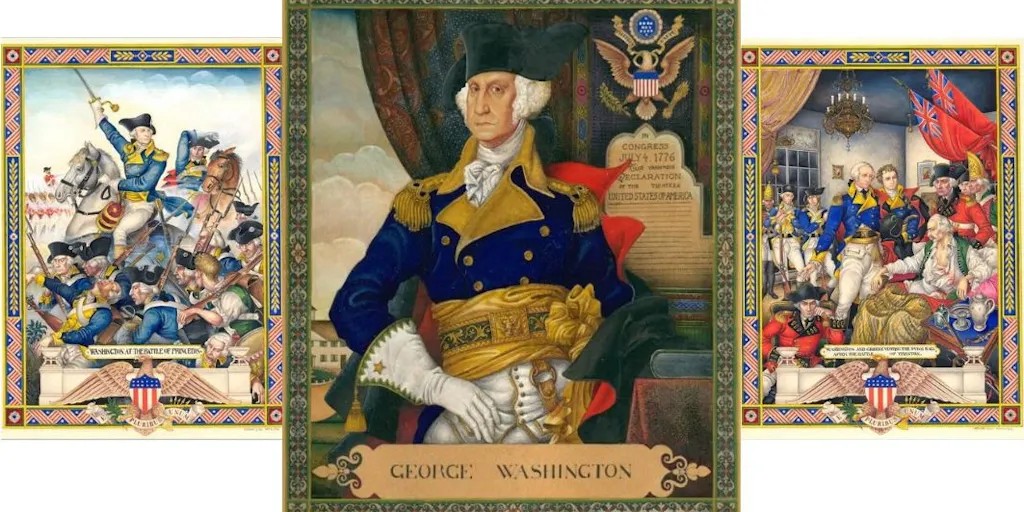
The United States is currently observing the 250th anniversary of the Declaration of Independence, a document forged in the crucible of armed conflict. From the first shots fired at Lexington and Concord to the siege of Boston, the nation’s birth was marked by violence and division. Yet, amidst this chaos, George Washington emerged as a leader who not only defended the country in war but also governed it with wisdom and restraint. His example remains profoundly relevant today, particularly as Americans grapple with increasing political polarization.
Recent events, including the tragic assassination of Charlie Kirk in October 2025, have exacerbated this tension. Rather than fostering open dialogue, Kirk’s death has reportedly intensified self-censorship among college students: nearly half now express discomfort sharing controversial opinions in classrooms, campus spaces, and online. This climate of fear underscores the urgent need for leaders who can navigate disagreement with grace and courage.
Washington’s Model for Civil Discourse
Washington’s legacy extends beyond military victory; he demonstrated an unwavering commitment to the rule of law and constitutional self-government. Even in the face of dissent, he twice relinquished power—first as commander-in-chief and later as president—setting a precedent for peaceful transitions and respect for constitutional limits. His farewell address emphasized that the Constitution, “till changed by an explicit and authentic act of the whole people, is sacredly obligatory upon all.”
His ability to navigate opposition with composure is equally instructive. As president, he managed a deeply divided cabinet while still fostering a sense of shared national identity. His letter to the Hebrew Congregation at Newport exemplifies this approach, reminding citizens of their common humanity even amid fundamental disagreements.
Cultivating Courage and Humility
Today, educators face the challenge of fostering civil discourse in an increasingly hostile environment. The key lies in cultivating courage, humility, and civic charity among students. This can be achieved by:
- Scaffolding debate : Starting with low-stakes discussions before tackling more contentious issues.
- Prioritizing understanding : Framing debates as collaborative problem-solving rather than adversarial confrontations.
- Practicing “steel manning” : Encouraging students to articulate opposing arguments with fairness and accuracy, sharpening reasoning skills and fostering intellectual humility.
Intellectual integrity requires rigorous engagement with facts, not dismissive labeling. Washington himself embodied this principle, contending for his beliefs without sacrificing respect for those who disagreed. He understood that civil discourse does not mean avoiding disagreement but rather engaging with it constructively.
Beyond Partisan Divides
Ultimately, the most important lesson we can impart to students is the recognition that our founding principles transcend contemporary partisan divides. By examining historical debates through a pre-partisan lens, we remind them of the common constitutional inheritance they share as Americans. Washington sought to do the same in his farewell address, urging citizens to remember their shared identity despite their differences.
The Constitution provides the framework for navigating disagreement, but it is up to us to cultivate the virtues necessary to sustain civil discourse. Only through courage, humility, and a commitment to shared principles can we bridge our divides and strengthen our republic.


