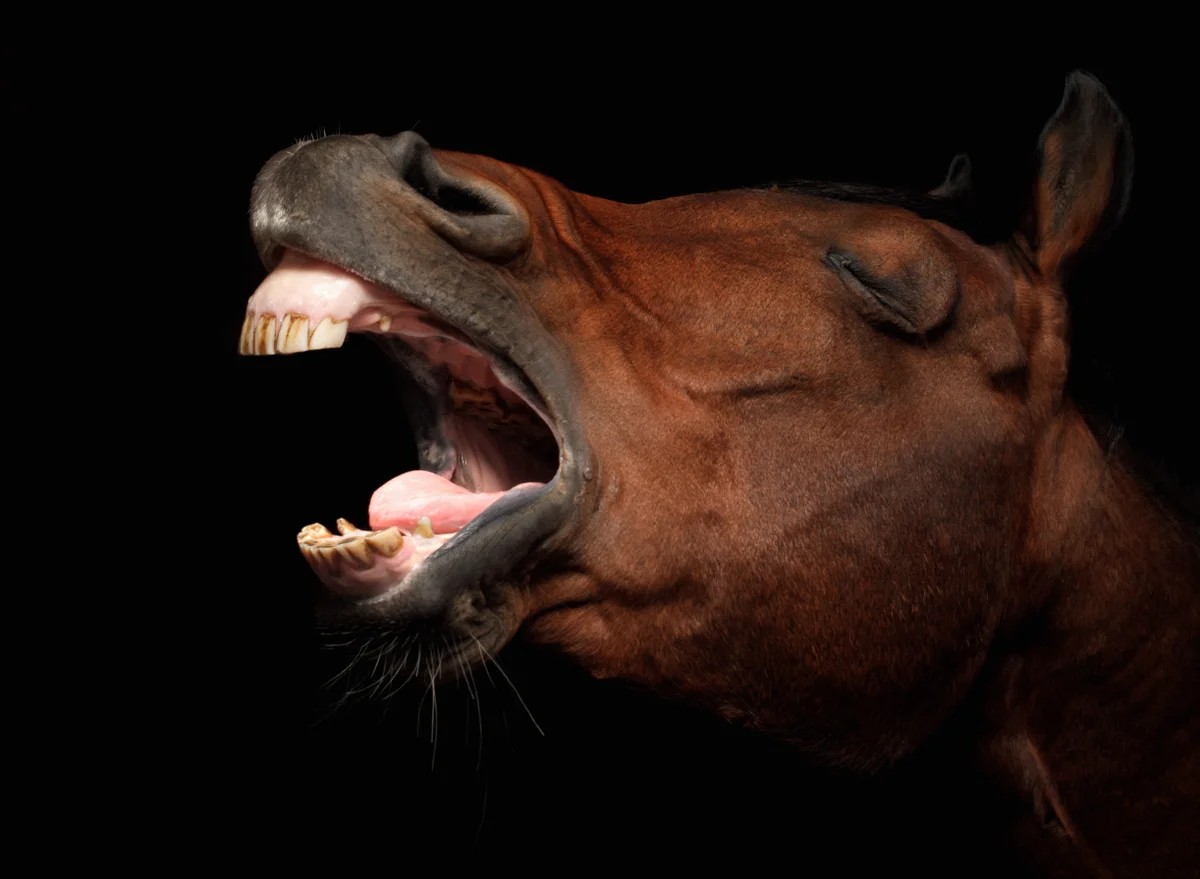
For decades, the distinctive sound of a horse’s whinny has puzzled scientists. Now, a new study reveals that horses produce this unique call by combining two distinct vocal mechanisms: simultaneous singing and whistling. The findings, published in Current Biology, explain how horses generate both low-frequency rumbles and high-pitched whistles within their larynx, or voice box, at the same time.
How Horses Produce Whinnies
Researchers discovered that horses create whinnies by vibrating their vocal cords (producing a low-frequency sound around 200 hertz) while also whistling within the larynx (generating a high-frequency sound exceeding 1,000 hertz). This is unusual: larger animals typically produce lower frequencies, while smaller ones whistle. Horses, however, seem to be uniquely capable of doing both at once.
“We now finally know how the two fundamental frequencies that make up a whinny are produced by horses,” explains Élodie Briefer, a co-author of the study from the University of Copenhagen.
Why This Matters
The ability to produce two frequencies simultaneously may allow horses to transmit multiple messages within a single call. This could explain why whinnies convey complex emotional signals: the different frequencies might represent urgency, location, or even individual identity. The research supports the idea that horse vocalizations are more sophisticated than previously understood.
Sue McDonnell, an expert in equine behavior at the University of Pennsylvania (who was not involved in the study), calls the findings a “landmark paper” that will inspire further research on horse communication.
In essence, horses aren’t just making noise; they’re speaking in a complex, layered language that we are only beginning to understand.
This discovery underscores the importance of continued study into animal vocalizations, as it reveals that even seemingly simple sounds can carry surprisingly rich information.