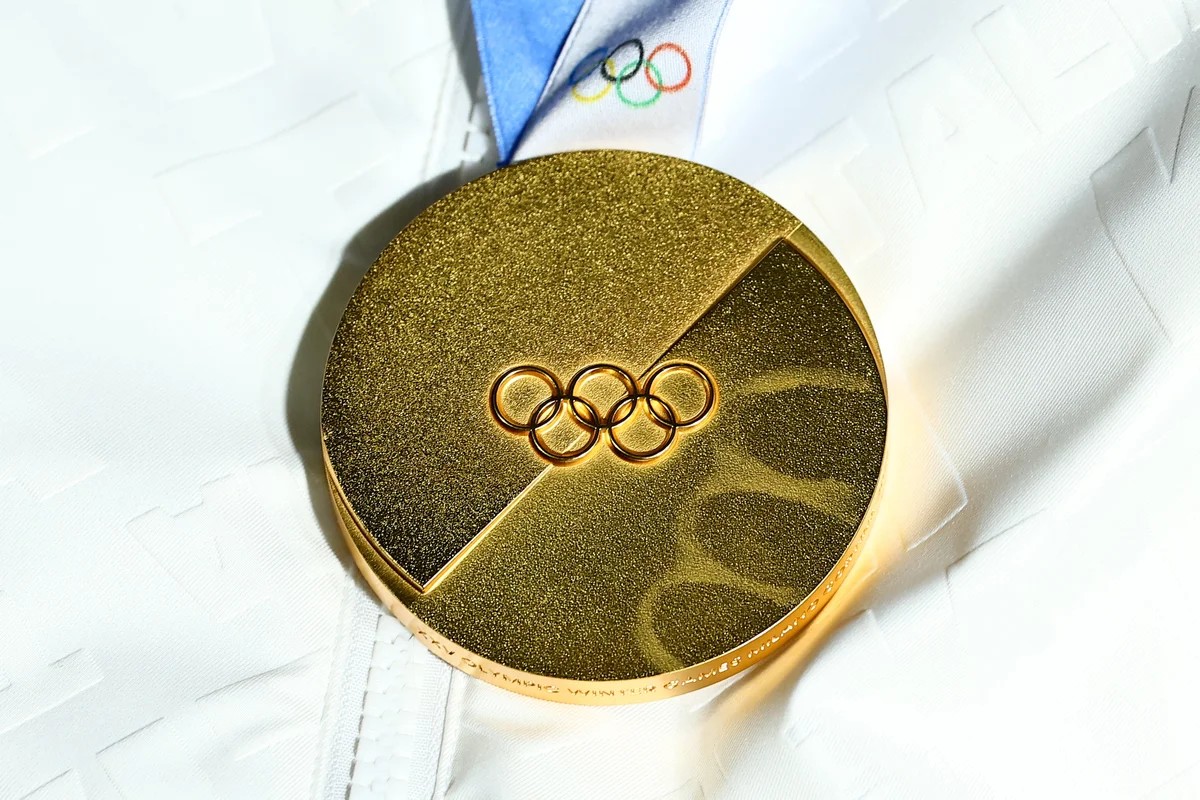
The 2024 Winter Olympics in Italy saw a series of embarrassing incidents: gold medals breaking apart during victory celebrations. Athletes like Breezy Johnson and Justus Strelow had their medals snap or fall off, sparking social media mockery and an investigation by the organizing committee. This wasn’t just bad luck; it was a design flaw exacerbated by the Games’ ambitious sustainability goals.
The Broken Design
The medals, crafted from recycled metals in renewable-energy furnaces, featured an asymmetric design representing Milan and Cortina d’Ampezzo. While aesthetically striking, the ribbon attachment was weak. Unlike traditional loops, the ribbon fed into an internal cavity secured by a breakaway safety clasp to prevent strangulation. This clasp, intended as a safety feature, proved to be the point of failure.
Why Did They Break?
Metallurgical analysis points to several likely causes. According to Laura Bartlett, an associate professor of metallurgical engineering, the problem could be as simple as undersized parts or weak joints. The slender cross-section supporting the heavy medal might have been insufficient, or contamination during soldering could have introduced microscopic weaknesses.
The cold wasn’t a factor; silver and gold remain ductile even at sub-zero temperatures. A true crack suggests a preexisting casting defect, like a “hot tear” from internal stress during cooling. The medals were made using investment casting—a process ideal for detail but prone to flaws if not executed perfectly.
Recycled Metal? Not the Problem
Despite the use of recycled materials, metallurgy experts confirm this wasn’t the issue. Modern foundries can refine scrap metal to near-virgin quality, and the mint used induction melting, a common and reliable process. The problem wasn’t the material, but the mechanics of the design.
A History of Olympic Medal Problems
This isn’t new. Olympic medals have always presented design challenges. The transition to ribbon-hung medals in 1960 introduced engineering issues that Games organizers have struggled with ever since. The Turin 2006 Games solved it by threading the ribbon directly through the medal, while Paris 2024’s medals suffered from chemical corrosion due to a flawed protective varnish.
The Price of Ambition
The 2024 Winter Olympics medals represent the growing tension between aesthetic ambition and functional design. Complex designs, ambitious sustainability goals, and the relentless demands of high-performance sports create a harder engineering problem. The broken medals were a reminder that even well-intentioned innovations can fail if not rigorously tested and executed.