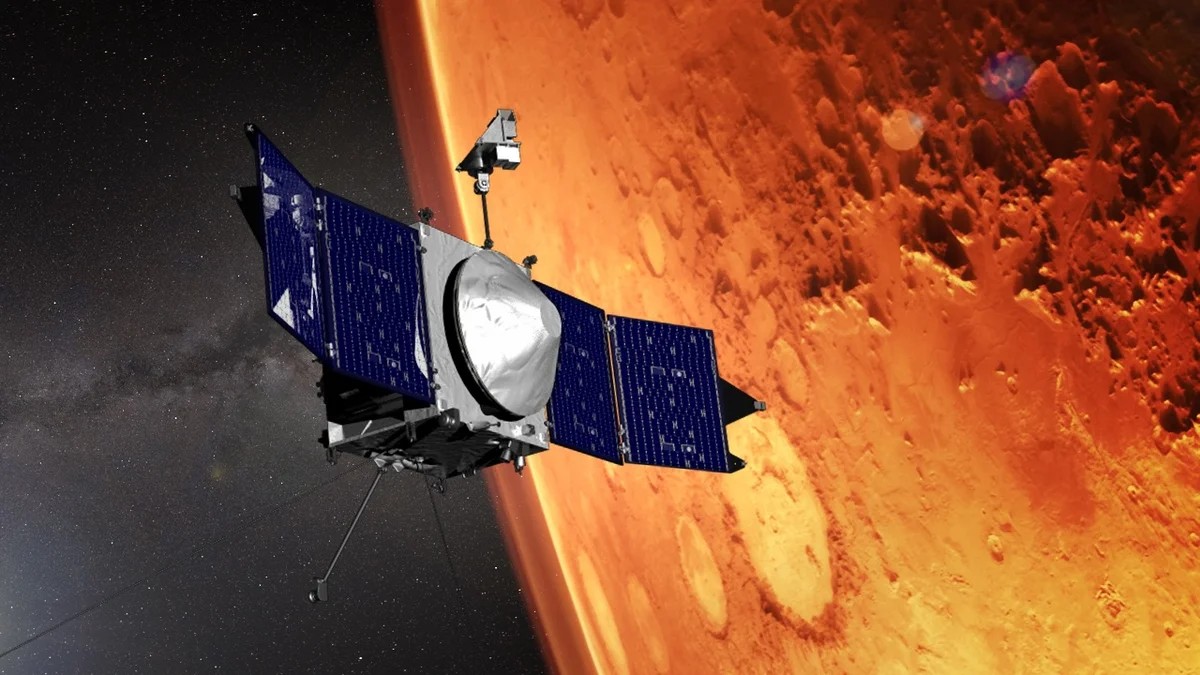
New research suggests that lightning may occur on Mars, though it manifests differently than on Earth. While dramatic electrical arcs are unlikely given the planet’s thin atmosphere and weak magnetic field, scientists are detecting signals consistent with electrostatic discharges. The findings come from two independent studies: one analyzing data from NASA’s MAVEN orbiter, and another examining audio recordings from the Perseverance rover.
The Search for Martian Lightning
Confirming lightning on Mars isn’t merely academic; it has implications for both space technology and the potential for life. Lightning-like events could disrupt future missions, while electrical discharges have been linked to chemical reactions that might contribute to prebiotic processes.
The MAVEN study, published in Science Advances on February 27, focused on identifying “whistlers”—radio waves generated by lightning strikes that propagate through a planet’s atmosphere. Researchers sifted through over 108,000 data snapshots, eventually finding one potential signature from an event in June 2015. The team spent a year verifying that the observation matched theoretical predictions for Martian lightning.
Complementary Evidence from the Surface
Meanwhile, the Perseverance rover has detected dozens of crackling sounds during dust storms, indicating smaller electrical discharges at ground level. These findings don’t contradict the MAVEN data but likely represent a different type of phenomenon. Earth also exhibits various electrical events, from thunderstorm lightning to the glow of Saint Elmo’s fire, demonstrating that lightning isn’t a singular process.
Challenges and Lost Opportunities
Detecting Martian lightning remains difficult, and future observations are uncertain due to NASA’s current lack of contact with the MAVEN orbiter. Furthermore, a dedicated lightning detector built for the European Space Agency’s Rosalind Franklin rover is unlikely to ever fly to Mars. The international partnership that planned the 2022 launch dissolved after Russia’s invasion of Ukraine, and ESA opted not to include additional instruments in its revised 2028 mission to accelerate construction.
Despite these setbacks, the combined evidence from MAVEN and Perseverance suggests that electrical activity is indeed present on Mars, albeit in forms adapted to the planet’s unique conditions. The ongoing search for Martian lightning highlights the complexities of studying extraterrestrial phenomena and the challenges of international space exploration.