


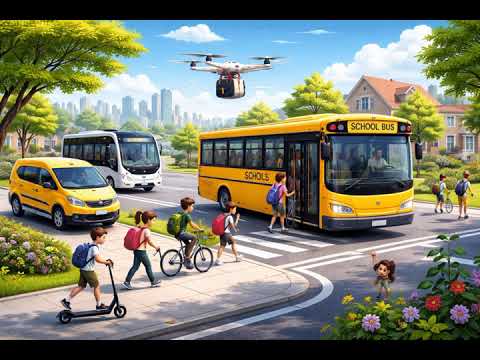
The American school bus system is quietly collapsing under a confluence of rising costs, declining ridership, and systemic underfunding. While only accounting for roughly 4% of most school district budgets, pupil transportation is becoming a critical bottleneck for educational equity and operational stability. The issues are multifaceted: budget pressures, service dissatisfaction, and unequal access are converging to create a crisis point that demands immediate attention.
The Unfolding Financial Strain
National spending on pupil transportation exceeds $28 billion annually — nearly $600 per student, or $1200 per transported rider, given that only half of students use the service. However, costs have more than doubled over the last 50 years, outpacing increases in other education expenses. Districts now bear 60-70% of these costs, effectively turning transportation into an unfunded mandate. This financial burden is particularly acute for special needs transport, which is the fastest-growing and least-reimbursed sector, often costing ten times more per student than general education transport. With special needs riders increasing to 22% of the total, districts are left covering 40-60% of those costs from local funds.
Declining Ridership & Inefficient Systems
The situation is exacerbated by falling ridership rates, which hit a ten-year low of 50% nationally. This decline is driven by shrinking enrollments, families opting out, and the expansion of school choice programs. Ironically, most districts operate their own buses (with only a third contracting out) and struggle to adjust fleet size to match reduced demand. Maintenance, insurance, and depot staffing remain fixed costs even as ridership declines, resulting in a system where aging neighborhoods still receive full-sized buses despite diminished student populations. The problem is not just scale but also the fact that walking and biking rates have plummeted from nearly half of students fifty years ago to just 12% today.
The Asymmetry of Failure
Pupil transportation is a fragile system where success is capped at neutral (students arrive safely), while failure carries virtually limitless consequences. A single delay can cascade into missed breakfasts, tardiness, and parental stress. The system operates on a binary: broken or invisible. This asymmetry is compounded by the fact that performance is not rewarded; only failures are punished.
Strategic Shifts and Emerging Solutions
To survive these pressures, districts are making several key shifts:
- Special Needs Transport Alternatives: 37% of districts now utilize private transportation companies like HopSkipDrive for special education routes, which can be cheaper than running nearly empty buses. Mainstreaming students onto regular routes with specialized equipment is also increasing efficiency.
- Electric Bus Adoption: The EPA’s Clean School Bus Program (CSBP) spurred growth in electric buses, from 1,000 to over 5,100 (with orders for 14,000), but the program’s future is uncertain. Electric buses cost triple the price of diesel but can break even in 7-12 years with fuel and maintenance savings. Several states, including New York, are mandating zero-emission buses by 2027.
- Smart Routing & Communication: Software giants like Tyler and Transfiners dominate traditional routing, but new players like Busology Tech and Samsara are integrating AI-driven adjustments for traffic and shortages. Real-time tracking apps like Safe Fleet’s Here Comes the Bus are becoming standard to reduce parent calls.
- Unified Transportation Systems: Cities like Seattle and Washington D.C. are experimenting with free public transit for students, while Dallas ISD has refined a “hub-and-spoke” model to provide equitable access to specialty programs regardless of location.
The Path Forward: Equity Through Access
The erosion of attendance boundaries due to open enrollment laws adds another layer of complexity. While more than one-third of states now have open enrollment, students exercising choice often forfeit transportation, creating inequitable access. Districts like Dallas ISD are leading the way by strategically locating programs and investing in transported choice as an equity measure, spending up to $2,000 per student to ensure equal access.
The future of pupil transportation hinges on recognizing the asymmetric risk, embracing strategic shifts, and prioritizing equity. Without systemic reform, the system will continue to crumble, leaving vulnerable students behind.


