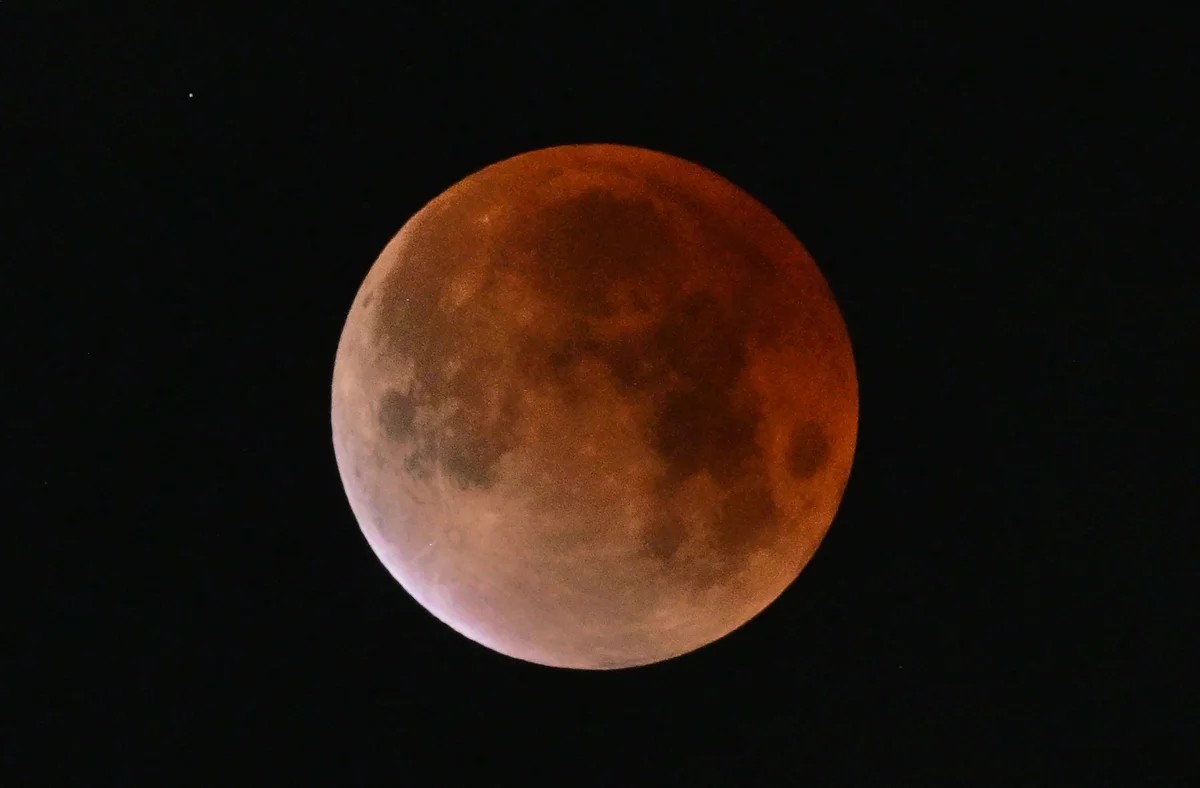
A striking total lunar eclipse, often called a “blood moon” due to its deep red hue, captivated observers around the globe early Tuesday. This event marked the sole total lunar eclipse of 2026, offering a rare and visually stunning spectacle for those in the right location.
How the Blood Moon Works
Total lunar eclipses happen when the Earth aligns directly between the Sun and the Moon, casting our planet’s shadow onto the lunar surface. Unlike solar eclipses, which require special eye protection, lunar eclipses are entirely safe to view with the naked eye. The reddish coloration isn’t due to the Moon itself changing, but rather the way sunlight filters through Earth’s atmosphere during the eclipse.
The atmosphere scatters away blue light, leaving behind longer wavelengths of red and orange – the same reason sunsets appear crimson. The Moon effectively turns into a giant, airborne sunset.
Global Visibility
The eclipse was visible in varying degrees across Asia, Australia, North America, and South America. Observers fortunate enough to be in the path of totality – where the Moon was entirely within Earth’s shadow – witnessed the blood moon for nearly an hour. Photographers worldwide documented the event, capturing the eerie, red-tinted lunar disk against the night sky.
Why Lunar Eclipses Matter
Lunar eclipses aren’t just beautiful; they provide valuable insights into Earth’s atmosphere. Scientists study the way sunlight bends and changes color during an eclipse to learn more about atmospheric composition and dust levels. These events also serve as a reminder of the delicate celestial mechanics that govern our solar system.
This blood moon eclipse was a fleeting, natural wonder that reminded us of the beauty and complexity of the cosmos. The next total lunar eclipse will not occur until 2028, making this event a unique spectacle for those who witnessed it.