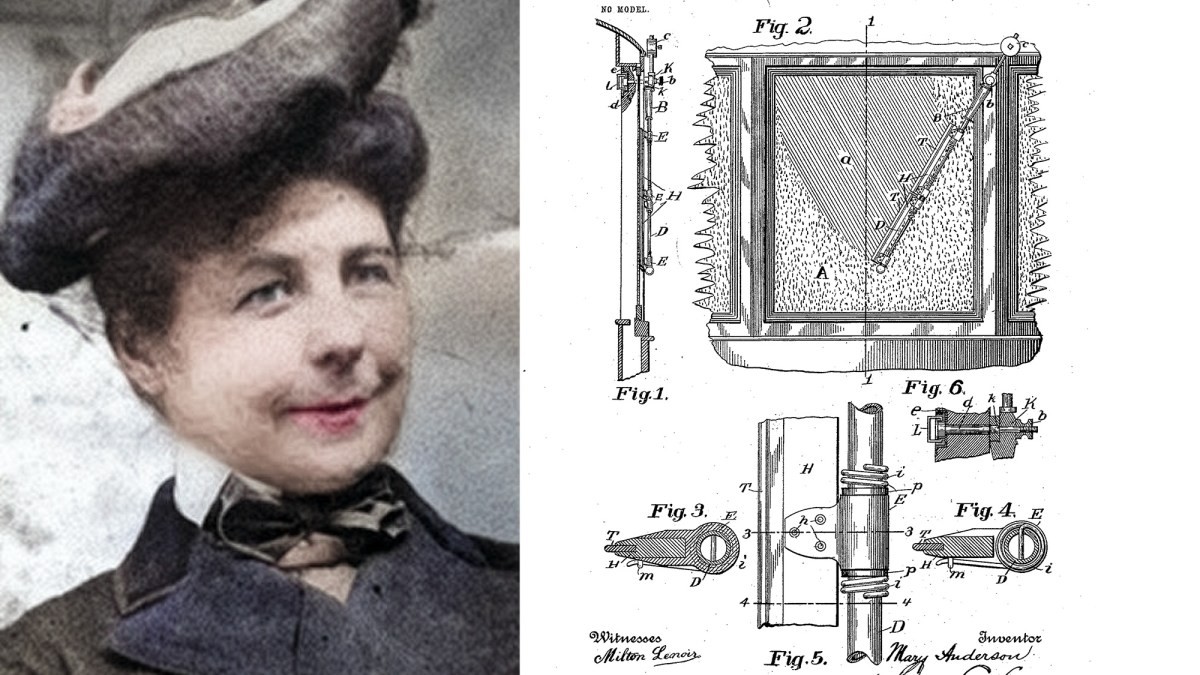
Before modern vehicles dominated roads, early streetcars and automobiles faced a simple but critical problem: visibility in inclement weather. Passengers and drivers alike endured freezing conditions and obscured views until businesswoman Mary Anderson conceived of a solution in 1902 – the first manually operated windshield wiper. Her invention, patented in 1903, was initially dismissed by manufacturers, yet it would eventually become a standard feature on vehicles worldwide.
From Streetcar Struggles to a Breakthrough Idea
The early 20th century saw transportation evolving rapidly. Streetcars, while popular, lacked heating and faced severe visibility issues during winter. Drivers either braved frigid air by leaning out windows to clear the glass or stopped frequently for manual cleaning. Anderson, during a trip to New York City, observed this firsthand and realized the need for an internal cleaning mechanism.
Her prototype consisted of a wooden arm with a rubber edge activated by an internal lever. This design allowed operators to clear windshields from inside the vehicle without exposure to the elements. While simple, it was revolutionary.
A Life of Entrepreneurship and Privilege
Mary Anderson’s background was unique. Born in 1866 on an Alabama plantation, she grew up with financial stability from her father’s estate. After moving to Birmingham, she entered real estate development, a male-dominated field, and later managed a cattle ranch and vineyard in California. Her entrepreneurial spirit was fueled in part by inherited wealth, including undisclosed gold and jewelry discovered after her aunt’s death.
This financial independence enabled her to pursue inventions like the windshield wiper, but it didn’t guarantee success.
Why Women Inventors Face Systemic Barriers
Anderson’s story highlights a broader issue: the historical underrepresentation of women in invention. Today, women hold only 12% of U.S. patents, a disparity linked to both systemic obstacles and individual choices. Economic barriers – such as restrictions on property ownership and banking access – historically limited women’s ability to commercialize their ideas.
However, as Bowdoin College economics professor Zorina Khan notes, some of the gap stems from differing interests. Many patented technologies don’t align with inventions women prefer to create, and the patent system itself may not suit those who don’t intend to sell or market their creations.
The Rejection of a Visionary Design
Despite Anderson’s persistence, manufacturers rejected her invention for over a year. One firm in Montreal dismissed it as lacking “commercial value.” Some even argued it was dangerous, claiming the sweeping motion was more distracting than obstructed visibility.
Her gender likely contributed to the dismissal, as an unmarried, independent woman without a male patron faced additional skepticism. The patent expired in 1920 without Anderson earning royalties.
The Eventual Adoption and Legacy
Five years after her patent, Henry Ford introduced the Model T, and within another five years, the assembly line transformed auto production. Manufacturers realized the value of windshield wipers, and by the 1920s, a version of Anderson’s design became standard. Later inventors, like Charlotte Bridgewood, further refined the technology with electric wipers.
Though she didn’t profit from her invention, Anderson lived to see it become ubiquitous. She continued managing her real estate business until her death at age 87, likely driving a car equipped with the device she pioneered. She was posthumously inducted into the National Inventors Hall of Fame in 2011.
Mary Anderson’s story serves as a reminder that innovation often faces resistance, and that even groundbreaking ideas can be overlooked due to prevailing societal biases. Her invention, now essential, stands as a testament to her foresight and resilience.