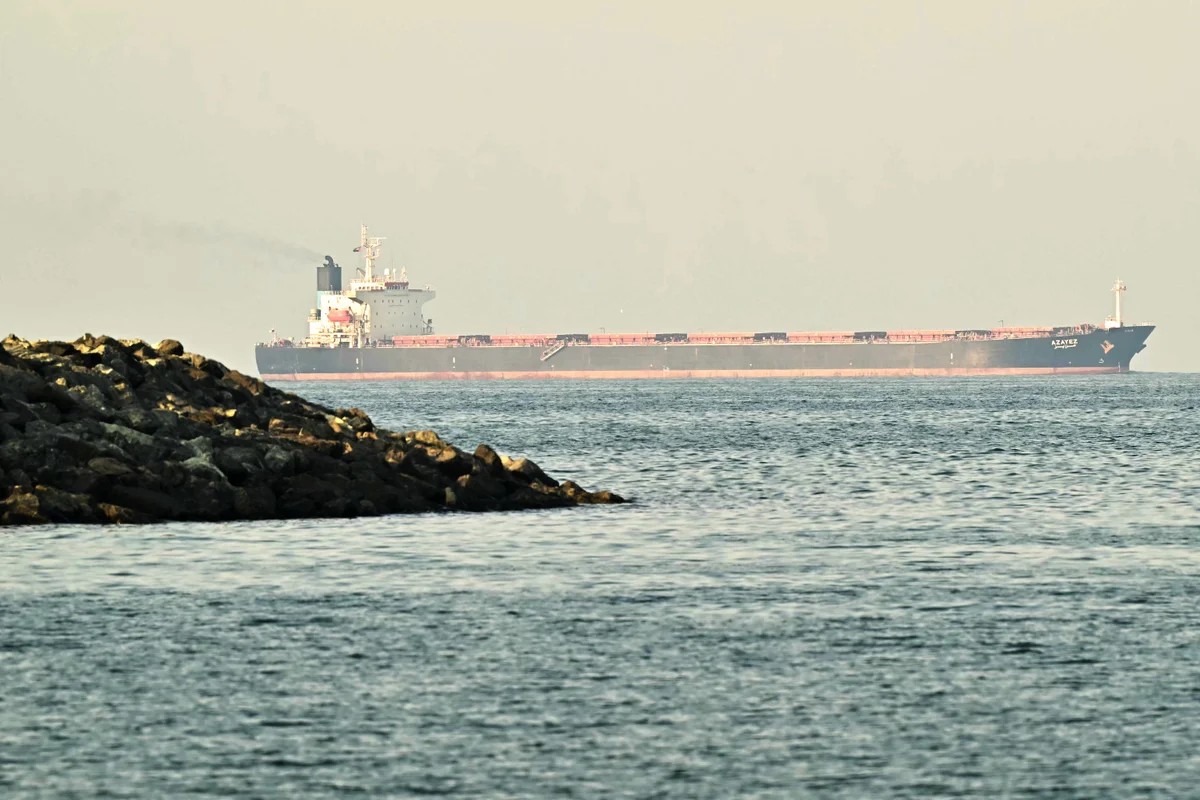
The Strait of Hormuz, a critical waterway for global oil transport, is experiencing widespread GPS interference, forcing ships to navigate by sight instead of relying on modern technology. Over the past two weeks, coinciding with increased tensions in the region, thousands of vessels have reported impossible readings – supertankers appearing inland, cargo ships crossing airports, and container vessels drifting through nuclear facilities. This disruption has brought commercial shipping through the strait, which handles roughly 20% of the world’s oil, to a near standstill.
The primary cause isn’t just physical attacks, but GPS spoofing : the deliberate transmission of false satellite signals. This exposes a fundamental weakness in global infrastructure. The technology that underpins modern navigation is surprisingly vulnerable, and the recent escalation of conflict has exacerbated the problem. Crews have been forced to revert to older methods, but the real danger lies in the cascading effect on other ships relying on compromised AIS (Automatic Identification System) data.
The Mechanics of Deception
Todd Humphreys, an aerospace engineering professor at the University of Texas at Austin, believes Iran is responsible for much of the spoofing. The tactic doesn’t just affect a ship’s own GPS; it manipulates the AIS, broadcasting false locations. These patterns, sometimes described as “crop circles,” are likely a default setting in inexpensive spoofing devices. The equipment itself is likely deployed from towers or tethered balloons along the Iranian coast, broadcasting signals that mimic legitimate satellites.
The issue isn’t that captains can’t navigate without GPS – seasoned crews can use visual cues, radar, and shoreline matching. The critical problem is that every ship’s AIS is also compromised, feeding incorrect data to other vessels. In the narrowest part of the Strait, where 130–150 large ships transit daily, this creates chaos. Captains cannot accurately assess the position, speed, or trajectory of other vessels, making navigation too risky for many.
A Weaponized Vulnerability
GPS spoofing has evolved into a potent tool in recent years. What began as a theoretical vulnerability demonstrated in 2008 has become a deployed tactic. Russia began using spoofing around 2016 to protect against drone assassinations, while Israel deployed it extensively in 2024 to counter missiles, disrupting services from dating apps to deliveries.
The situation in the Strait of Hormuz is unique because the shipping industry relies on outdated technology. Many GPS receivers are over a decade old, using single-frequency U.S. GPS signals, while smartphones now access multiple satellite constellations and frequencies. Newer ships are adopting more resilient systems, but retrofitting existing fleets is slow and costly.
Alternative Navigation Systems
Researchers are exploring alternative navigation methods, such as exploiting “signals of opportunity” from cellular towers, Starlink satellites, and even weather satellites. Zak Kassas of Ohio State University has demonstrated submeter accuracy with cellular signals alone, navigating a drone and ground vehicle during intentional GPS jamming. This approach, termed “security by diversification,” leverages the wider spectrum and higher power of these alternative signals.
However, practical implementation is hindered by regulatory constraints. Insurance companies may deny payouts for accidents if crews rely on unapproved systems, leaving potentially reliable solutions unused.
International law prohibits harmful interference with radio navigation signals, but militaries retain loopholes for tactical necessity. Israel, Russia, Ukraine, and the U.S. have all engaged in GPS jamming and spoofing, indicating a growing disregard for established norms.
The current situation amounts to a “free-for-all,” weakening transportation security worldwide.
The reliance on outdated and vulnerable GPS technology poses a long-term threat to global shipping. Until the industry adopts more resilient systems, the Strait of Hormuz – and other critical waterways – will remain susceptible to disruption.