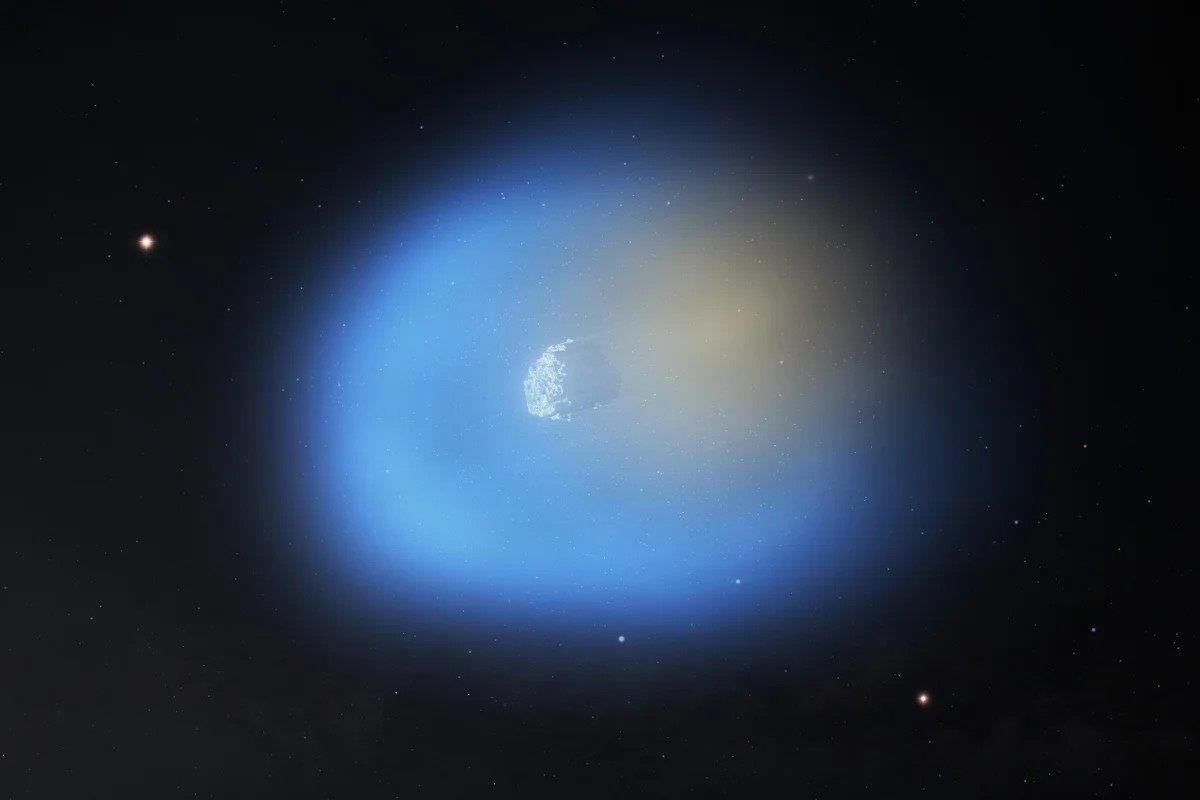
An interstellar comet, 3I/ATLAS, has revealed an unexpectedly high concentration of methanol, an alcohol, in its composition. This discovery offers a unique opportunity to study the chemical makeup of objects originating from outside our solar system, potentially shedding light on the conditions in other star systems. Only three interstellar objects have been observed passing through our cosmic neighborhood, making each one a valuable source of data.
Comet’s Unusual Composition
The comet, which reached speeds of over 150,000 miles per hour during its closest approach to the sun, was found to contain “heavily enriched” levels of methanol. This is significantly higher than typical comets found within our solar system, which usually contain traces of methanol alongside other gases like carbon monoxide, methane, and ammonia.
“Observing 3I/ATLAS is like taking a fingerprint from another solar system,” explains Nathan Roth, a research assistant professor at American University. The presence of such high methanol concentrations is unusual and suggests unique formation conditions in the comet’s origin system.
Significance of the Discovery
The finding could help pinpoint the comet’s birthplace, a question that has intrigued scientists since its discovery in July 2025. The chemical composition of 3I/ATLAS provides clues about the environment in which it formed, including temperature, pressure, and the availability of certain molecules.
The research, currently available on the preprint server arXiv.org, has yet to undergo peer review. However, the initial findings are already sparking discussion within the scientific community.
Broader Implications
The study of interstellar objects like 3I/ATLAS is critical to understanding the diversity of planetary systems beyond our own. These “traveling fingerprints” can reveal whether other stars host similar chemical environments or vastly different ones. Further research into the comet’s origin could refine models of star and planet formation, expanding our knowledge of galactic evolution.
The unexpectedly high methanol content in 3I/ATLAS serves as a reminder that the universe is full of surprises, and even seemingly mundane objects can hold extraordinary clues to its mysteries.