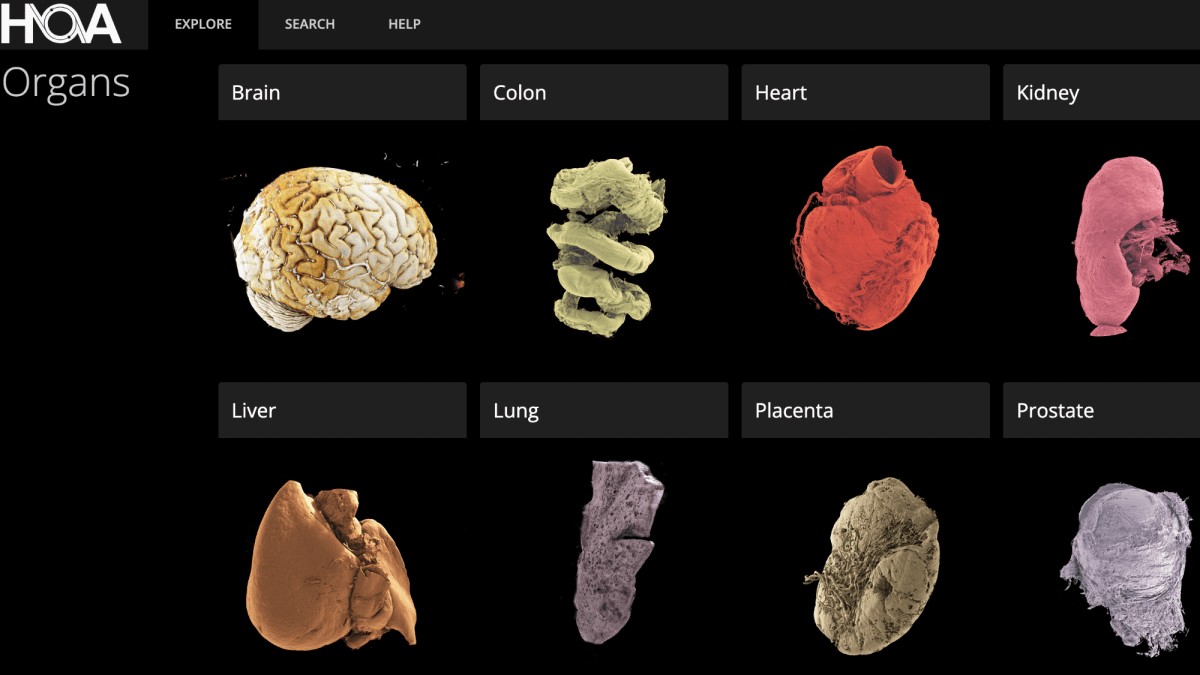
A groundbreaking new online tool, the Human Organ Atlas (HOA), allows detailed exploration of the human body in stunning 3D. Developed by an international team of scientists, this open-access platform provides unprecedented insight into human anatomy and disease, making complex biological structures accessible to researchers, educators, and the public.
Unprecedented Imaging Technology
The HOA is powered by Hierarchical Phase-Contrast Tomography (HiP-CT), an advanced imaging method utilizing the exceptionally bright beams of the European Synchrotron Radiation Facility. This technique allows for scanning entire intact organs at a resolution down to less than one micron – 50 times thinner than a human hair – without damaging the tissue. This bridges a century-old gap between radiology and biological tissue study, offering a level of detail previously unattainable.
Key Features and Data
The platform currently offers access to a vast library of biological data:
- 56 organs from 25 donors
- 11 organ types, including the brain, heart, lungs, kidneys, liver, and reproductive organs
- Multiscale scans ranging from whole-organ views to near-cellular resolution
Impact and Applications
The HOA is already yielding significant results. During the COVID-19 pandemic, the technology revealed previously unseen microscopic vascular injuries in the lungs of deceased patients. Cardiologists now use it to differentiate between healthy and diseased hearts, while gynecologists probe the progression of disorders. The project’s ability to visualize structures at this level is a game-changer for medical research.
Expanding Medical Education and AI Training
Beyond research, the HOA offers immersive learning opportunities. Students can now interactively explore organs in 3D, gaining a spatial understanding far superior to traditional anatomy diagrams. Moreover, the large, high-quality datasets are poised to train advanced medical AI systems for disease detection and super-resolution analysis.
“From the beginning, we wanted these data to be accessible to everyone and build an open, shared scientific infrastructure at a global scale.” —Paul Tafforeau, European Synchrotron (ESRF) beamline scientist.
The team plans to continually expand the atlas with additional organs, samples, and data. This tool represents a pivotal step towards democratizing anatomical knowledge and accelerating medical innovation.