


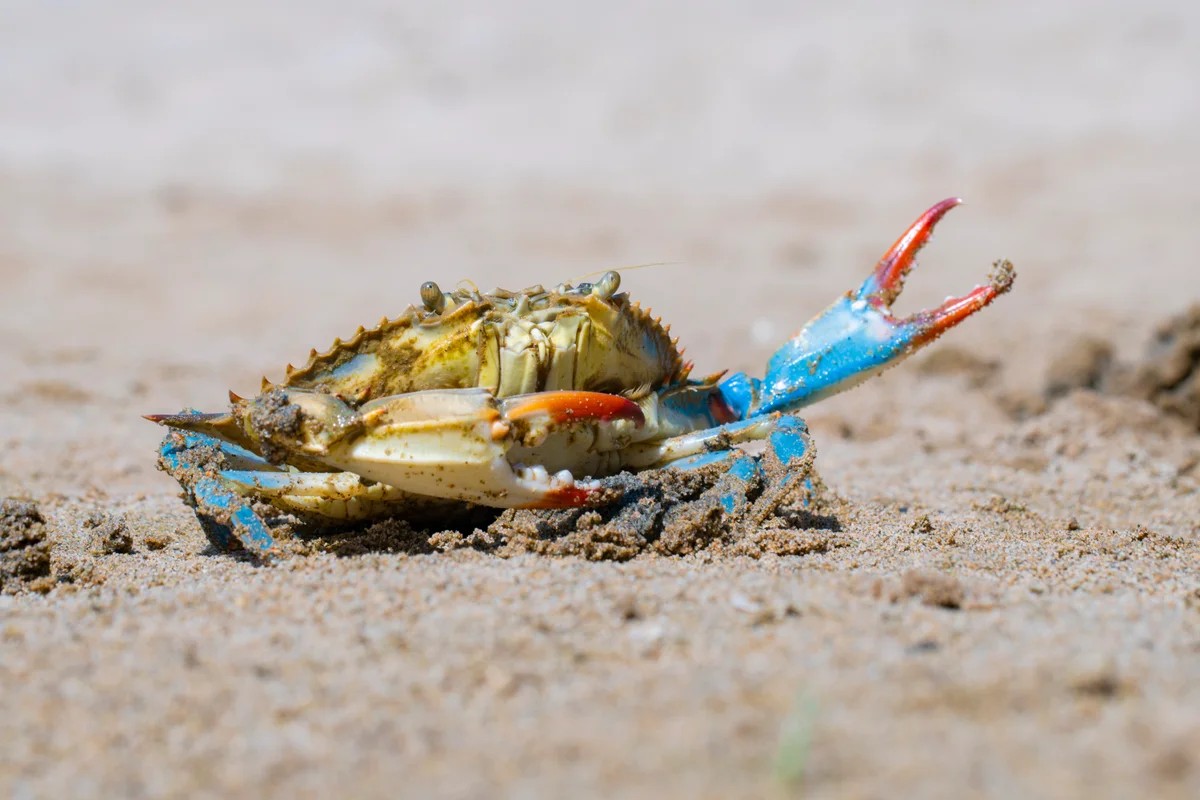
A long-term study spanning decades reveals a startling truth about Maryland’s blue crab population: cannibalism is the primary driver of juvenile crab mortality. Researchers found that nearly 97% of predation on young crabs in the Rhode River estuary is carried out by other crabs, with fish playing a negligible role.
The Decades-Long Observation
From 1989 to 2025, scientists tethered over 2,600 juvenile crabs at various depths and times of year. The method was simple but revealing: after 24 hours, they checked for signs of predation. Instead of fish attacks, the overwhelming majority of deaths or injuries were clearly caused by crab pincers crushing shells. This wasn’t about a rare occurrence; cannibalism was the dominant predatory force.
Why This Matters
Crab cannibalism isn’t a new phenomenon, but this study quantifies its dominance in the Chesapeake Bay. The fact that fish predation was almost nonexistent is the key takeaway. This has implications for how we understand the bay’s ecosystem:
- Survival Strategies: Juvenile crabs may rely on burrowing into sediment as a defense, but this doesn’t eliminate predation.
- Predation Style: Crabs hunt by chemical and tactile cues, making them highly effective at finding hidden prey. Fish are visual hunters, giving crabs an advantage in murky waters.
- Population Dynamics: High cannibalism rates mean that the crab population is essentially regulating itself through internal predation, influencing overall numbers and growth patterns.
The Evidence in the Remains
The researchers didn’t just observe deaths; they analyzed the evidence. Crab remains on the tether line indicated shell crushing, while missing crabs (without fish present) were presumed victims of adult crabs. Of the crabs showing predation signs:
- Roughly 40% were affected.
- 56 were killed with remains.
- 41% survived injured.
This level of direct evidence confirms that cannibalism is not just present, but overwhelming.
The Bigger Picture
The Rhode River may offer a refuge for young crabs, but survival still depends on evading their own species. This study underscores the brutal reality of nature: even within a single species, predation is relentless. The Chesapeake Bay’s blue crabs are a stark example of how ecosystems can function with high internal mortality rates.
Ultimately, this research highlights that crabs are not just prey to other animals, but also their own most dangerous predator. The cycle of cannibalism shapes the population dynamics in ways that demand further study and conservation efforts.


