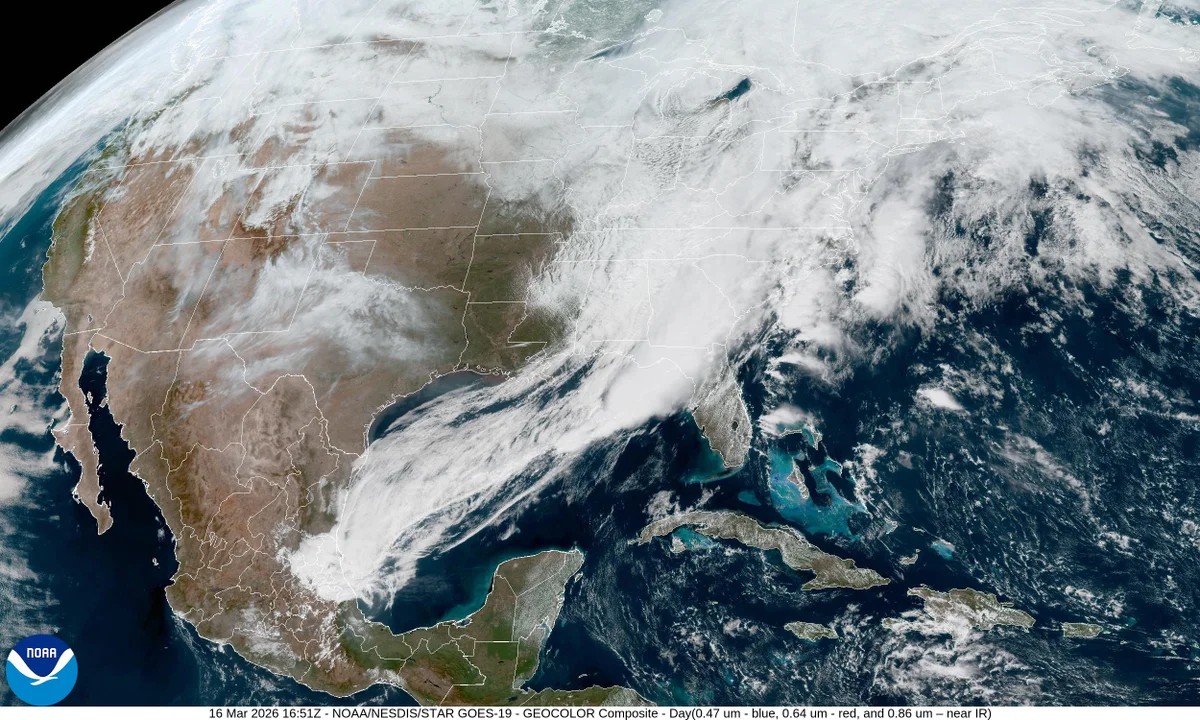
The United States is experiencing a rare convergence of extreme weather events this week: devastating floods in Hawaii, blizzards in the Midwest, a tornado threat in the East, and record-breaking heat in the West. This isn’t a new phenomenon, but rather a typical – though increasingly severe – outcome of seasonal weather patterns colliding with a changing climate.
The Science Behind the Chaos
The root cause is the transitional nature of March. As cold air masses from the north linger while warm, moist air pushes northward from the Gulf of Mexico, the resulting clash creates highly unstable atmospheric conditions. This sets the stage for powerful storms and dramatic weather swings. Early spring is a time when these air mass collisions are at their most frequent and intense.
Midwest Blizzards and Record Snowfall
The upper Midwest is currently buried under over two feet of snow, with some areas experiencing blizzard conditions. This is driven by a strong low-pressure system pulling moisture from the Gulf and colliding it with frigid Canadian air. Meteorologist Brian Hurley of the National Weather Service (NWS) explains that the storm’s high moisture content is responsible for the heavy, wet snowfall, and rates up to three to four inches per hour. Some locations are on track to shatter March snowfall records.
Eastern Tornado Threat: The Role of QLCS
The same low-pressure system fueling the Midwest blizzard is also driving a dangerous threat of tornadoes in the eastern U.S. A feature called a quasi-linear convective system (QLCS) – a long line of powerful thunderstorms – is trailing behind the storm. This setup, characterized by strong winds and abundant moisture, creates an unstable atmosphere ripe for tornado development. Wind gusts of up to 60-70 mph are possible in the mid-Atlantic.
Western Heat Wave: An Early-Season Blast
While the East braces for tornadoes, the West is bracing for a heat wave that could break March temperature records. A high-pressure system settling over the Southwest will push temperatures well above 100°F (38°C) in some areas. Although not as extreme as summer heat domes, this early-season blast is significantly warmer than normal. This event highlights a trend of increasingly erratic and intense weather patterns.
Hawaiian Floods: The Kona Low Effect
Hawaii is reeling from flash floods and mudslides caused by a “Kona low” – a low-pressure system that draws deep moisture over the islands. Rainfall totals in some areas have exceeded 15 inches in just five days, surpassing typical monthly averages. Meteorologist Thomas Vaughan of the NWS in Honolulu notes that while Kona lows occur annually, this event was particularly intense.
The convergence of these extreme weather events across the U.S. serves as a stark reminder of the power and unpredictability of nature, amplified by the effects of climate change. These events showcase the growing need for improved forecasting and disaster preparedness. The volatile weather patterns observed this March will likely become more frequent and severe in the years ahead.