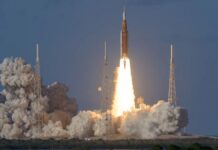
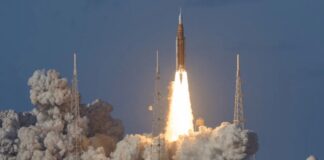
NASA has initiated the final countdown for the Artemis II mission, marking a pivotal moment in lunar exploration. As of 4:44 PM Eastern time on Monday, preparations are underway for a scheduled launch on Wednesday, April 1, at approximately 6:30 PM EDT. This mission will send four astronauts – Reid Wiseman, Victor Glover, Christina Koch, and Jeremy Hansen – on a ten-day journey around the moon aboard the Space Launch System (SLS) rocket and Orion crew capsule, with an anticipated splashdown on April 10.
Historic Significance and Testing Objectives
This mission is not simply a return to the moon; it represents the first crewed flight beyond Earth’s orbit in over half a century, since Apollo 17 in 1972. The Artemis II crew may reach record distances from Earth and observe the moon’s far side with unprecedented clarity.
The primary goal is to rigorously test both the SLS rocket and the Orion capsule, validating technologies and maneuvers critical for future lunar missions. NASA plans to deploy uncrewed lunar landers as early as next year, building towards a permanently staffed lunar base. This mission’s success will pave the way for sustained human presence on the moon, which could serve as a stepping stone for deeper space exploration.
Countdown Procedures and Contingency Plans
The final stages of preparation involve fueling and powering up the rocket and capsule, a process that began Monday. The astronauts will board Orion roughly four hours before launch, allowing time for final briefings and family farewells.
Despite confidence in the current trajectory, NASA officials acknowledge that delays remain possible if unforeseen issues arise. Alternative launch windows are available between April 2 and April 6. The agency’s approach relies heavily on lessons learned from the uncrewed Artemis I mission and decades of experience operating the International Space Station.
“Twenty-five years of flying space station has given us reliability and understanding of the elements of the machines that we’re flying around the moon, to a large extent, which is why we’re comfortable taking the risks,” stated Amit Kshatriya, NASA’s associate administrator.
The Artemis II mission underscores the ongoing investment in space exploration and NASA’s commitment to pushing the boundaries of human spaceflight. This mission will not only advance scientific knowledge but also solidify humanity’s presence in the cosmos.