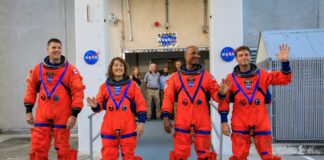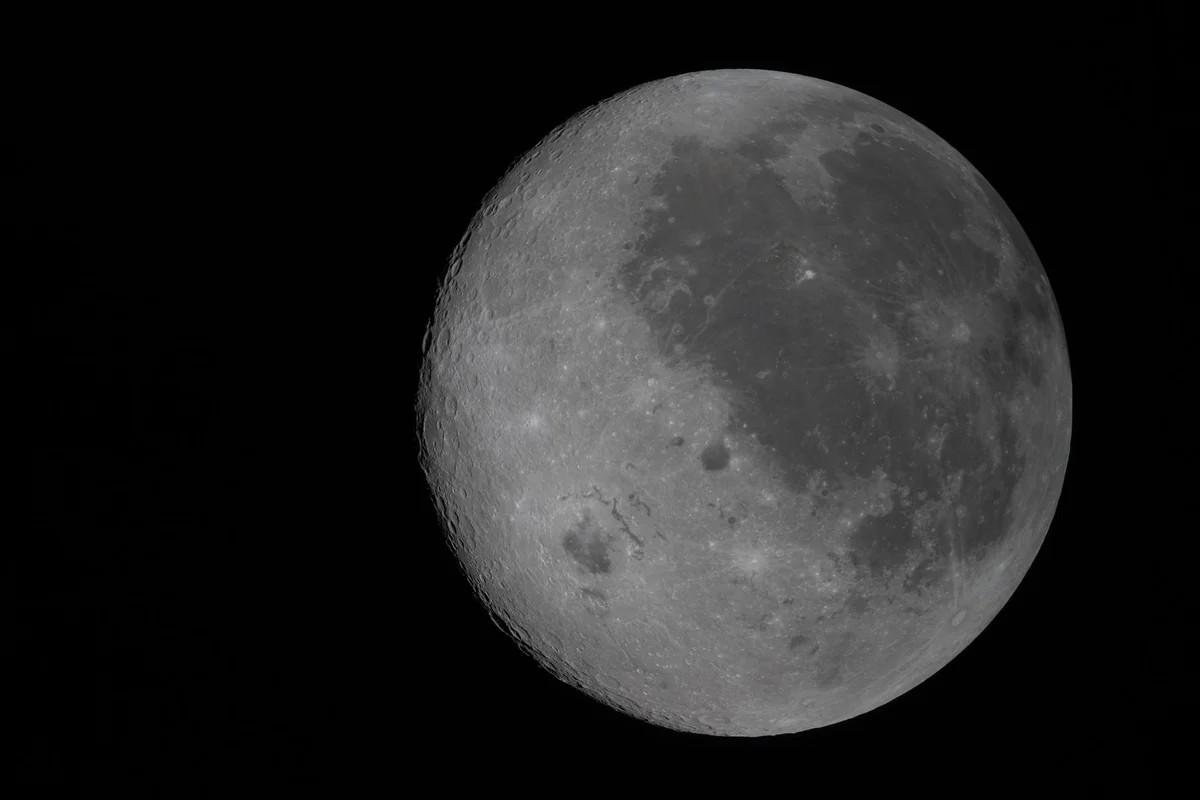
The Artemis II mission has reached its most significant milestone yet, as the Orion spacecraft completes its high-speed flyby of the Moon. This mission marks the first time humans have ventured near our natural satellite in over half a century, signaling a major turning point in deep-space exploration.
Breaking Records and Making History
As the mission progressed, the crew officially surpassed the distance record previously held by the Apollo 13 mission of 1970. By pushing further into deep space than any human in history, astronauts Reid Wiseman, Victor Glover, Christina Koch, and Jeremy Hansen have effectively opened a new chapter in lunar science and human endurance.
The flyby was not merely a feat of navigation but a period of intense scientific observation. For several critical hours, the crew utilized Orion’s windows to study the lunar far side as it moved into sunlight.
New Eyes on an Ancient World
Because the far side of the Moon is never visible from Earth, this mission provides a rare opportunity to observe lunar features that have remained hidden from human eyes for millennia.
The crew focused their observations on several key areas:
– Lunar Albedo and Texture: Studying the brightness, darkness, and surface composition of the Moon.
– The Orientale Basin: A massive impact crater nearly 600 miles wide that has never been directly witnessed by humans.
– Fresh Impact Craters: Astronaut Christina Koch noted the striking brightness of new, small craters, comparing their appearance to light shining through a “lampshade with tiny holes.”
“It’s very apparent, all the really bright new craters… They are so bright, compared to the rest of the moon.” — Christina Koch
A Human Touch on Lunar Geography
Beyond the science, the mission has carried a deeply personal dimension. During the flyby, Jeremy Hansen proposed names for two previously unnamed lunar features to honor the crew’s experience and personal histories:
– Integrity Crater: Named after the Orion spacecraft itself.
– Carroll: A bright spot located on the boundary between the near and far sides of the Moon, named in memory of the late Carroll Taylor Wiseman, wife of commander Reid Wiseman.
The Journey Home
The mission timeline included a period of radio silence, with the crew losing communication with Earth for approximately 40 minutes as they rounded the lunar far side. Following this, the astronauts witnessed a solar eclipse caused by the Moon blocking the Sun—a dramatic celestial event to cap their lunar observations.
As the crew transitions from lunar study to the return phase of the mission, the focus shifts to the long journey back to Earth. The Artemis II crew is scheduled to splash down on April 10.
Conclusion
The Artemis II flyby serves as a bridge between the Apollo era and a future of sustained lunar presence. By breaking distance records and observing previously unseen lunar landscapes, the crew has provided invaluable data that will shape the next generation of space exploration.