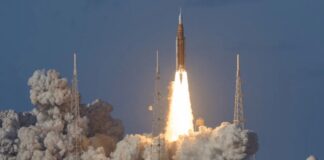
While government funding for basic science on Earth faces increasing scrutiny and budget cuts, NASA’s Artemis program is carving out a different path. The push to return humans to the lunar surface is doing more than just fulfilling a geopolitical goal; it is providing a stable, high-tech platform for some of the most ambitious astronomical research in history.
As NASA prepares for crewed missions and robotic follow-ups, astronomers are eyeing the Moon not just as a destination, but as a sophisticated laboratory capable of observing parts of the universe that remain invisible from Earth.
The Lunar Far Side: A Silent Sanctuary for Radio Astronomy
One of the greatest hurdles for radio astronomers on Earth is “noise.” Our atmosphere contains an ionosphere—a layer of charged particles that acts like a giant mirror, reflecting many cosmic radio waves back into space. Even if we launched a telescope into orbit, it would still be deafened by the “terrestrial chatter” of our own telecommunications satellites and radio broadcasts.
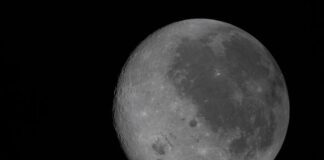
The Moon offers a unique solution: the lunar far side. Because the Moon is tidally locked to Earth, one side always faces us, while the other remains permanently turned away. This creates a natural shield, blocking Earth’s radio interference and providing one of the quietest environments in the solar system.
Mapping the “Dark Ages” of the Universe
Physicist Anže Slosar and his team are working on the LuSEE-Night (Lunar Surface Electromagnetics Experiment–Night) project, slated for a 2026 launch. This mission aims to use the far side to listen for a specific, faint signal: the 21-centimeter radio emission from hydrogen atoms.
This signal is a key to understanding the “Cosmic Dark Ages”—the period after the Big Bang when the universe was filled with cool hydrogen, long before the first stars ignited. By capturing these signals from the lunar far side, scientists hope to map how matter first coalesced into the massive cosmic structures we see today.
Bridging the Gap in Gravitational Wave Detection
Beyond radio waves, the Moon is poised to revolutionize our understanding of gravitational waves —the ripples in spacetime caused by cataclysmic cosmic events.
Currently, we have two main ways to detect these waves:
1. LIGO (Earth-based): Excellent at detecting waves from relatively small black hole mergers.
2. LISA (Space-based): An upcoming ESA mission designed to detect much larger, slower waves from supermassive black holes.
However, there is a massive “frequency gap” between these two methods. The Laser Interferometer Lunar Antenna (LILA) project aims to fill that void. By placing mirrors on lunar rovers to form a massive laser-linked triangle, astronomers could detect “mid-band” waves—such as those from white dwarf mergers—that are too large for Earth-based tools and too small for deep-space observatories.
“There is no other place in the solar system that you can detect gravitational views in this mid-band,” says astrophysicist Karan Jani. “There is only the moon.”
Breaking Through the Ozone Layer with Optical Interferometry
The Moon also offers a clear view of the ultraviolet (UV) spectrum. On Earth, our ozone layer protects us from harmful UV rays, but it also blocks much of the UV light that astronomers need to study stellar activity.
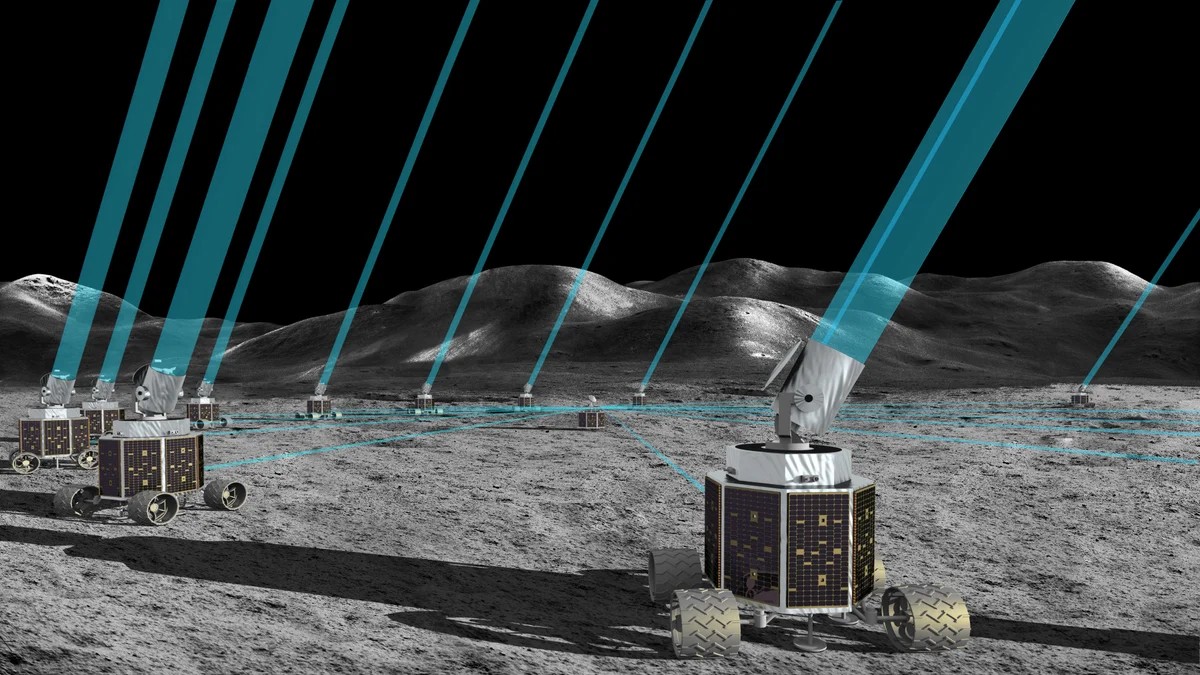
The proposed Artemis-Enabled Stellar Imager (AeSI) would use a technique called optical interferometry. Instead of one massive mirror, the project would deploy a fleet of 15 to 30 rover-mounted mirrors across the lunar surface. By linking these mirrors together, scientists can effectively create a “virtual telescope” much larger than any single instrument ever built.
This setup would allow researchers to:
– Monitor star activity across the Milky Way.
– Collect high-resolution UV data to improve solar models.
– Better predict solar flares and other stellar events that impact Earth.
The Human Element: Maintenance and Evolution
A recurring theme in these lunar ambitions is the necessity of human presence. Whether it is troubleshooting a complex sensor during a 14-day lunar night or maintaining a delicate array of mirrors, the history of space exploration—specifically the repair of the Hubble Space Telescope—proves that human intervention is often the difference between mission success and failure.
As the Artemis program progresses, the Moon is transitioning from a mere stepping stone for Mars into a permanent, high-precision observatory that could redefine our understanding of time, gravity, and the very origins of the cosmos.
Conclusion: By leveraging the Moon’s unique physical properties—its radio silence, geological stability, and lack of an atmosphere—the Artemis program is transforming lunar exploration into a gateway for a new era of deep-space discovery.