


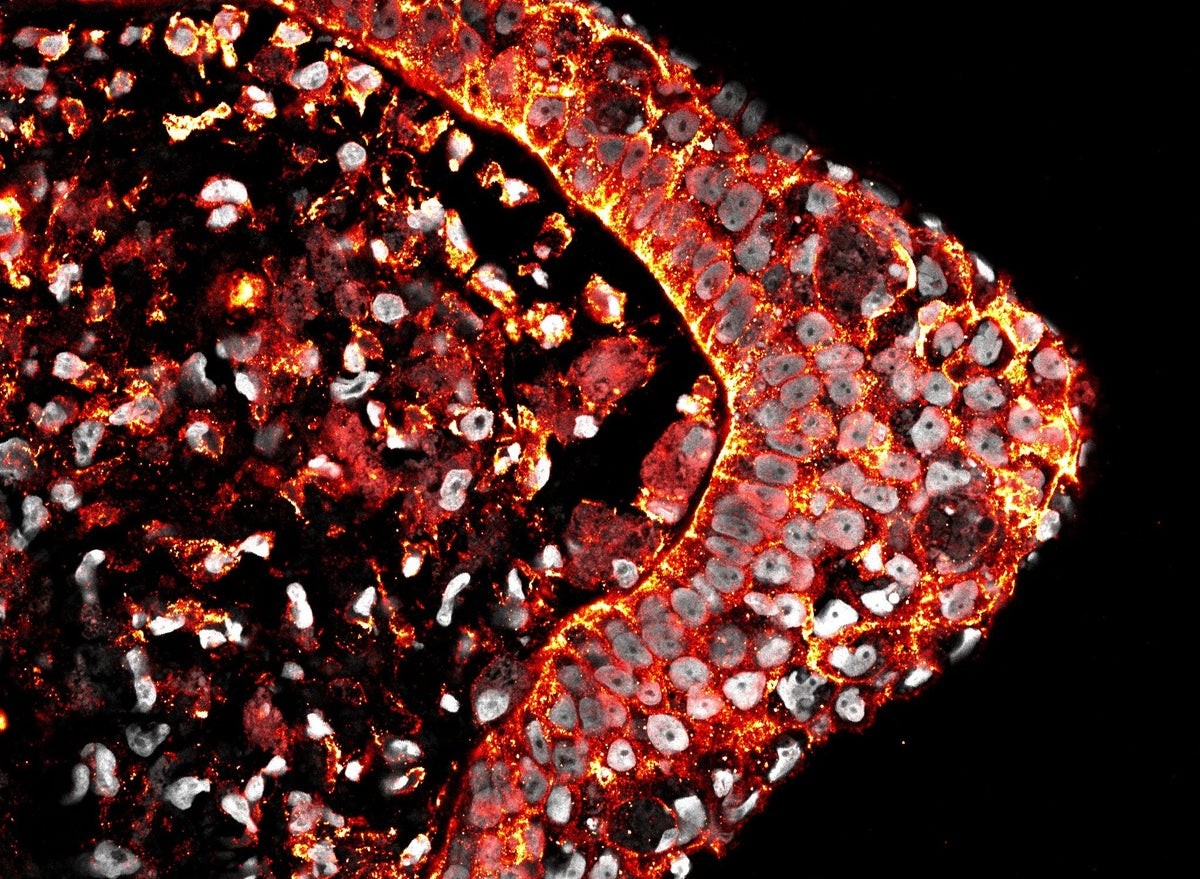
For most mammals, the ability to regrow lost body parts is a biological dead end. While a child might regrow the tip of a severed finger, or a mouse might recover a portion of a digit, the rest of the body remains incapable of such feats. This stands in stark contrast to “super-regenerators” like salamanders and starfish, which can regrow entire limbs.
New research published in the journal Science suggests that the answer to why mammals are limited may not lie solely in our DNA, but in the chemical and environmental conditions surrounding our cells.
The Role of the Extracellular Matrix
One major hurdle to regeneration in mammals is scarring. In most cases, when a mammal suffers a major injury, the body prioritizes rapid wound closure through scar tissue, which effectively blocks any potential for regrowth.
A study led by Byron Mui at the Stanford University School of Medicine investigated why the tip of a finger can regrow while the rest of the finger cannot. The researchers focused on the extracellular matrix —the structural material that surrounds and supports cells.
- The Discovery: Mice with higher levels of hyaluronic acid in their extracellular matrix were able to regrow finger parts more effectively and with significantly less scarring.
- The Implication: Hyaluronic acid, a substance commonly used in skincare to retain moisture, appears to play a critical role in creating a biological environment conducive to healing rather than scarring.
Oxygen Levels and Cellular Sensing
A second study explored the environmental triggers that allow certain species to regenerate while others fail. By comparing African clawed frog tadpoles (which can regenerate limbs) with embryonic mice (which cannot), researchers identified a connection between oxygen levels and regenerative capacity.
Molecular biologist Georgios Tsissios and his team found that:
1. Low-oxygen environments —similar to the aquatic habitats of tadpoles—helped embryonic mouse tissue heal more effectively.
2. By lowering oxygen levels in mouse limbs, researchers were able to trigger early regenerative responses that are typically absent in mammals.
3. However, there is a complex twist: tadpole cells seem to be less sensitive to oxygen changes than mouse cells, suggesting that how a cell senses its environment is just as important as the environment itself.
Why This Matters for the Future
These findings represent a shift in how scientists approach regenerative medicine. Rather than focusing exclusively on changing genes, researchers are now looking at how to manipulate the local environment of a wound to “trick” mammalian cells into behaving like those of a salamander.
While these studies have not yet resulted in the regrowth of a full limb, they provide a roadmap for future therapies. By controlling the levels of hyaluronic acid and managing oxygen exposure, scientists hope to eventually move from treating simple wounds to regenerating complex tissues.
“As a field, the way that we piece all of these puzzle pieces together will eventually lead to human limb regeneration.” — Jessica Whited, Harvard University
Conclusion
By identifying hyaluronic acid and oxygen levels as key drivers of regeneration, this research moves us closer to understanding how to bypass mammalian scarring. While full limb regrowth remains a distant goal, these biological clues provide a foundation for future breakthroughs in tissue engineering and wound healing.


