


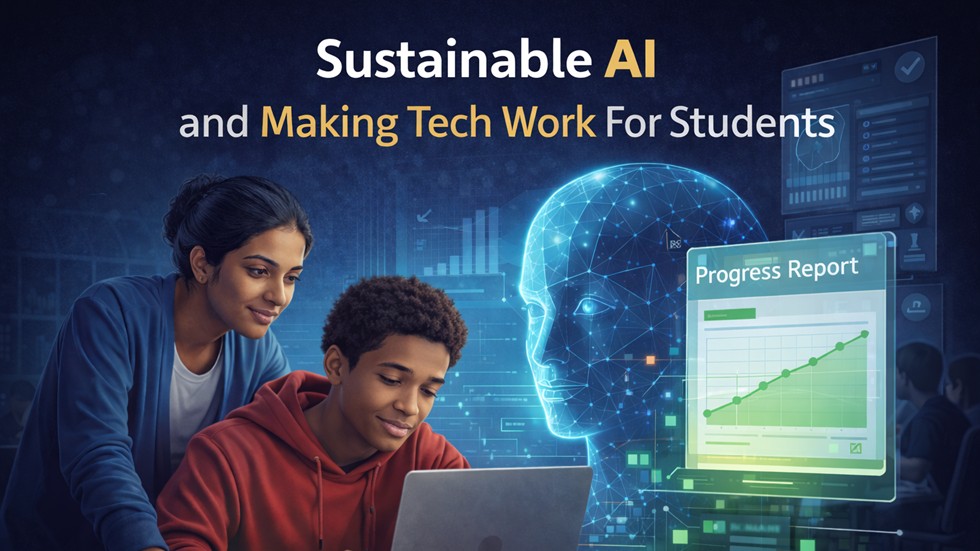
In many educational institutions, a silent crisis unfolds every semester: students drift from being “slightly behind” to “at risk” without anyone noticing. By the time academic failure is officially recorded in end-of-term grades, the damage is often done. At that stage, interventions are not only more expensive and difficult to implement, but they are also far less effective at reversing the downward trend.
However, a technological shift is offering a way to move from reactive crisis management to proactive support. By leveraging Explainable AI (XAI), schools can now identify struggling students in real-time using the data they are already generating.
The Power of “Explainable” Intelligence
Traditionally, many AI systems operate as “black boxes”—they provide a result or a prediction, but they cannot explain why they reached that conclusion. For a teacher, a notification saying “Student X is at risk” is frustrating if it lacks context.
Explainable AI (XAI) changes this dynamic by providing transparency. Instead of a simple alert, XAI offers a rationale: it explains what has happened, what is currently occurring, and what is predicted to happen next. This allows educators to:
– Validate the insight: Confirm if the AI has spotted a genuine trend or a data anomaly.
– Challenge assumptions: Use the AI’s reasoning to gain new perspectives on a student’s behavior.
– Act with precision: Move from guesswork to targeted interventions.
Recent research highlights the potency of this approach, showing that these systems can predict course outcomes and identify at-risk students with an accuracy rate of approximately 93%.
Turning Digital Footprints into Early Warnings
The data required to fuel these insights doesn’t require invasive surveillance; much of it comes from routine interactions within virtual learning environments. Educators have long known that participation is a leading indicator of success. XAI translates digital “traces”—such as how often a student clicks on materials or how frequently they access course modules—into actionable intelligence.
Because these signals are continuous rather than tied to periodic exams, they provide a constant stream of data. This allows for a “GPS-style” guidance system for educators, steering them toward students who need help before they fail a major assessment.
From Data to Action: The Workflow of Support
The true value of AI in education lies in its integration into school workflows. Platforms like RADAR demonstrate how this works in practice by synthesizing academic records, attendance, and “soft skill” indicators.
When a student’s trajectory deviates from the expected path, the system sends an alert to advisors. Because the AI is “explainable,” the alert includes the specific factors driving the concern. This enables schools to tailor their response:
* Low engagement? Refer the student to study skills workshops.
* High workload/low progress? Adjust academic expectations or workloads.
* Specific knowledge gaps? Provide targeted tutoring.
Addressing the Ethical Risks
While the benefits are significant, the deployment of AI in classrooms raises critical ethical questions regarding privacy, bias, and stigmatization. Critics rightly worry that automated systems could create a “surveillance culture” or unfairly label students.
To prevent these outcomes, the implementation of educational AI must follow three strict principles:
- Human-in-the-Loop: AI should never make final decisions. It should provide insights that a human teacher must review and validate.
- Rigorous Error Management: Systems must be constantly audited to prevent technical errors (such as confusing a “withdrawn” status with a “pass”).
- Equity by Design: Schools must minimize data collection to only what is necessary, secure that data strictly, and ensure families have a mechanism to challenge automated findings.
The Bottom Line
The cost of inaction is high. Late identification of academic struggle leads to increased student stress, loss of parental trust, and higher institutional costs. By adopting transparent, explainable AI, schools can transform routine data into a powerful tool for equity, ensuring that no student slips through the cracks simply because their struggle went unnoticed.
Conclusion: When built on a foundation of transparency and human oversight, Explainable AI moves education away from expensive, late-stage repairs and toward a model of continuous, personalized support that benefits both the student and society.


