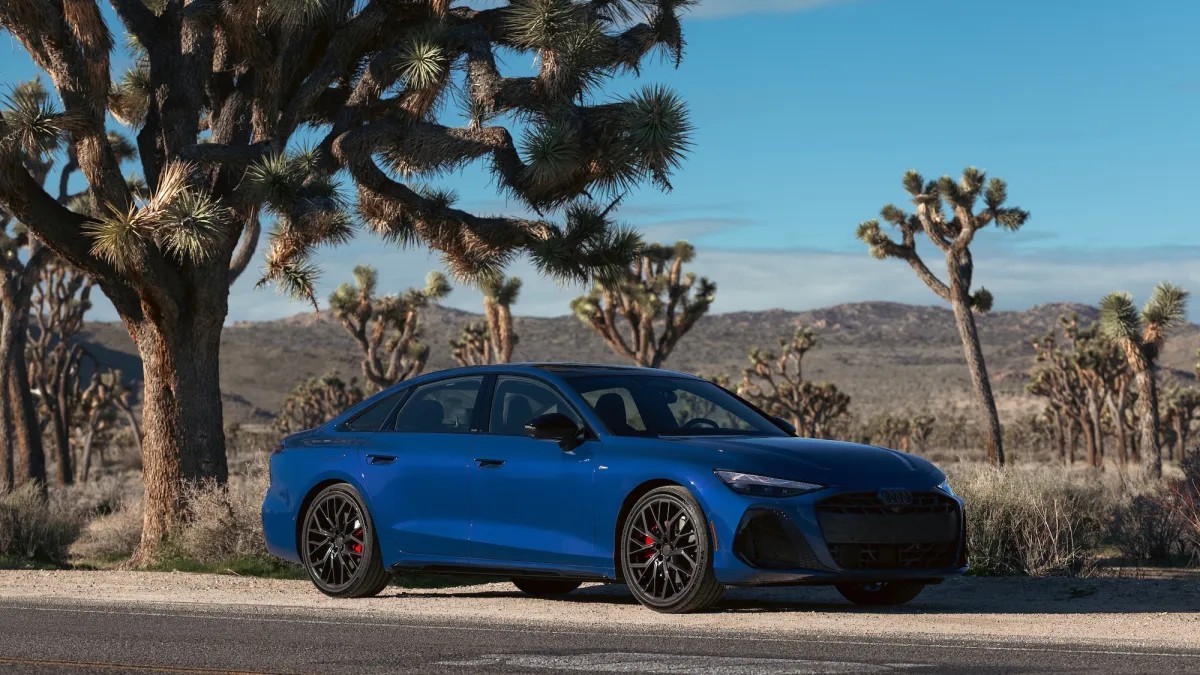
Audi is currently navigating a period of significant transformation. While the brand has pledged to launch 20 new or significantly updated models—twelve of which are already on the market—it faces the dual challenge of maintaining its luxury prestige while transitioning toward an uncertain electric vehicle (EV) future. This tension is visible in everything from the high-concept, all-electric “Concept C” sports car to the latest iteration of the dependable A6 sedan.
The ninth-generation Audi A6 serves as a prime example of how the brand is blending traditional performance with cutting-edge digital integration.
The Evolution of the A6: Luxury Meets High-Tech
The new A6 remains a powerhouse, featuring a 6-cylinder engine delivering 362 hp and 406 lb-ft of torque, capable of reaching 0 to 60 mph in just 4.5 seconds. However, the upgrades extend far beyond raw power. Audi has leaned heavily into “smart” luxury features, including:
- Enhanced Displays: A standard 14.5-inch OLED screen replaces the previous 10.1-inch LCD.
- Integrated Safety: A high-resolution 4K dashcam built into the rearview mirror, optimized for low-light visibility.
- Smart Glass: An electrochromic roof that can transition from clear to opaque in just six seconds.
While these digital luxuries grab headlines, the most critical technological advancement lies in how the car actually handles the road through its electromechanical progressive steering.
The Mechanics of Progressive Steering
To understand why progressive steering is a breakthrough, one must look at the history of driving. In the mid-20th century, driving required immense physical strength; massive steering wheels were necessary to provide the leverage needed to turn heavy vehicles. Even with the advent of standard power steering, most cars maintained a “fixed ratio”—meaning the relationship between how much you turn the wheel and how much the tires move remains constant.
Progressive steering changes this dynamic by varying the steering ratio based on driving conditions.
How it works:
The steering rack is the mechanical bridge that converts your steering wheel’s rotation into the linear movement that turns the wheels. In a progressive system, the teeth on the steering rack are spaced differently:
- Low-Speed Maneuvering: When parking or driving through tight city streets, the system provides a higher ratio, making the steering feel light and easy to manage with minimal effort.
- High-Speed Stability: As you turn the wheel further or drive faster, the “teeth” on the rack become closer together. This creates a variable ratio, meaning the steering becomes more direct and responsive.
“Essentially, you have a fixed variable ratio in your steering,” explains Anthony Garvis, Audi US Senior Manager of Product Planning. “The more you turn… the closer the teeth get on the steering rack, so you don’t have to turn the wheels much.”
This responsiveness is vital for modern safety. Because the system is electronic, it reacts instantly and provides the precise data necessary for advanced driver-assistance systems (ADAS), such as lane-keeping technology, to function accurately.
The Multi-Axle Advantage: All-Wheel Steering
Audi further enhances this control by pairing progressive steering with all-wheel steering, a feature that is now standard on the A6. This system optimizes the car’s footprint depending on your speed:
- Urban Driving (Below 37.3 mph): The rear wheels turn in the opposite direction of the front wheels (up to 5 degrees). This effectively “shortens” the car’s wheelbase, making tight turns and parking much easier.
- Highway Driving: The rear wheels turn in the same direction as the front wheels. This increases stability and precision during high-speed lane changes, preventing the “fishtailing” sensation that can occur at high velocities.
Conclusion
By combining electromechanical progressive steering with all-wheel steering, Audi has created a vehicle that is simultaneously easy to maneuver in cramped cities and incredibly stable at high speeds. This integration of mechanical precision and electronic intelligence defines the modern luxury driving experience.