For decades, marine biologists have relied on a familiar analogy to determine the age of sharks: counting rings. Just as dendrochronologists count concentric circles in tree trunks to determine age, scientists have traditionally examined thin slices of shark vertebrae, assuming that each opaque band represents one year of growth. However, new research from the University of Melbourne suggests this method is flawed. By combining laser technology with geochemistry, researchers are now unlocking a far more precise way to age sharks—and in doing so, they are gaining critical insights into the environmental health of these vulnerable predators.
The Limits of Traditional Ring Counting
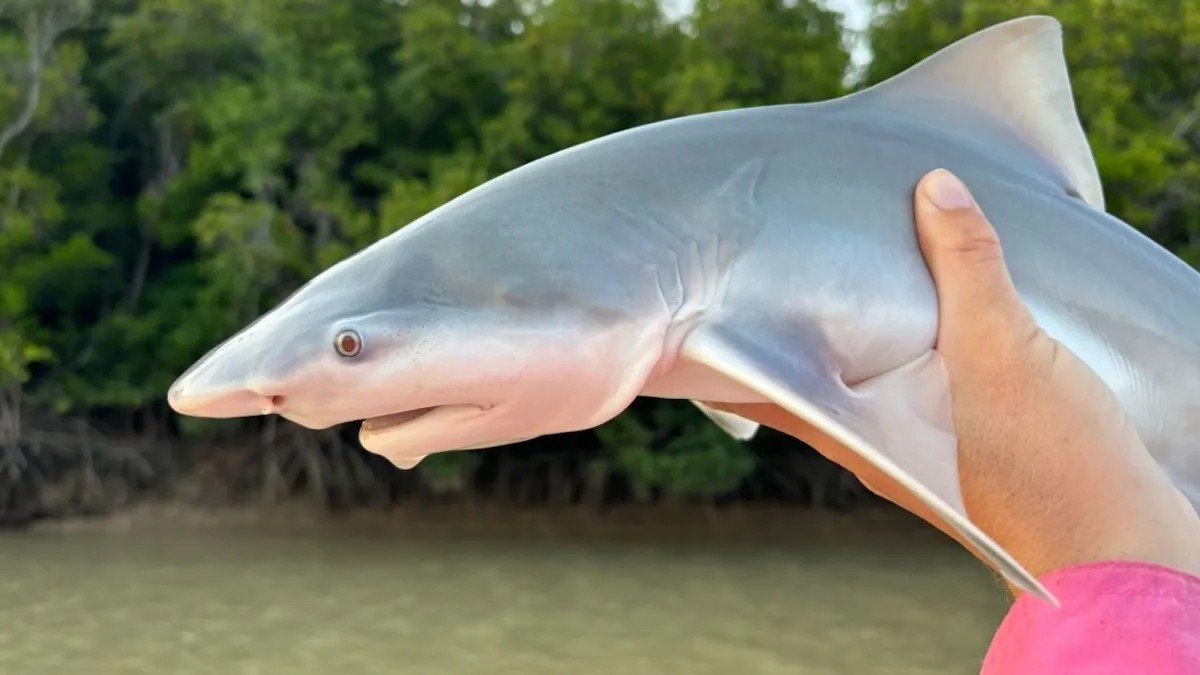
The speartooth shark (Glyphis glyphis ), a roughly 8.5-foot-long species found in the rivers and estuaries of Australia and Papua New Guinea, is one of the world’s most endangered sharks. With an estimated population of only 2,500 adults, accurate data on their lifespan and growth rates is not just academic—it is essential for survival.
Historically, scientists used transmitted light optical microscopy to view vertebrae slices. The prevailing consensus was that band deposition was annual. But as Brandon Mahan, an earth scientist at the University of Melbourne, and his colleagues note, this assumption may be incorrect for certain species. If the “one band equals one year” rule is wrong, then previous estimates of shark populations, growth rates, and reproductive cycles could be significantly skewed. This uncertainty hampers conservation efforts, as managers cannot effectively protect a species if they do not understand its basic life history.
A Laser-Powered Breakthrough
To resolve this ambiguity, Mahan’s team turned to a technique known as laser ablation inductively coupled plasma mass spectrometry (LA-MC-ICP-MS). While the name is complex, the process is elegant:
- Sample Collection: Researchers obtained vertebrae from speartooth sharks that had died naturally or through accidental bycatch.
- Laser Ablation: A focused laser beam is aimed at the vertebrae, vaporizing microscopic amounts of the sample into an aerosol.
- Mass Spectrometry: This aerosol is analyzed by a mass spectrometer, which identifies the specific isotopic composition of the elements within the bone.
This method allows scientists to read the chemical history of the shark’s skeleton with high precision. It is a technique already used in botany, archaeology, and geology, but its application to shark ecology offers a novel layer of data.
Reading the Environment in Bone
The true power of this method lies not just in dating, but in environmental reconstruction. As sharks grow, their vertebrae accumulate trace elements from the water they inhabit. One key element is strontium, which accumulates in bone in amounts that directly correlate with environmental levels.
By analyzing strontium concentrations, researchers can link specific growth periods to local precipitation records. For example:
* High strontium levels might correlate with dry seasons.
* Lower levels might align with wet seasons.
“In addition to providing a way to estimate shark age, our vertebral geochemical fingerprinting also differentiates between the water environments the shark inhabits during its lifetime,” Mahan explained.
This means scientists can determine not only how old a shark was when it died, but also where it was and what conditions it experienced throughout its life. This “geochemical fingerprint” provides a dynamic record of the animal’s interaction with its ecosystem.
Why This Matters for Conservation
The shift from simple visual counting to geochemical laser analysis has profound implications for conservation. Accurate age determination is vital for calculating population turnover rates, understanding mortality risks, and modeling population resilience. If previous methods underestimated or overestimated ages, conservation strategies—such as fishing quotas or protected area designs—may have been based on faulty data.
Moreover, this interdisciplinary approach bridges the gap between marine biology and earth science. By treating shark vertebrae as historical archives of environmental change, researchers can monitor broader ecological trends. This method is likely to be applied to other marine species, offering a more nuanced understanding of ocean health and animal lifecycles.
Conclusion
The integration of laser technology and geochemistry marks a significant advancement in marine ecology. By moving beyond the limitations of traditional ring counting, scientists can now accurately age vulnerable species like the speartooth shark while simultaneously mapping their environmental history. This precision is crucial for developing effective conservation strategies that ensure the survival of these apex predators in a changing world.