


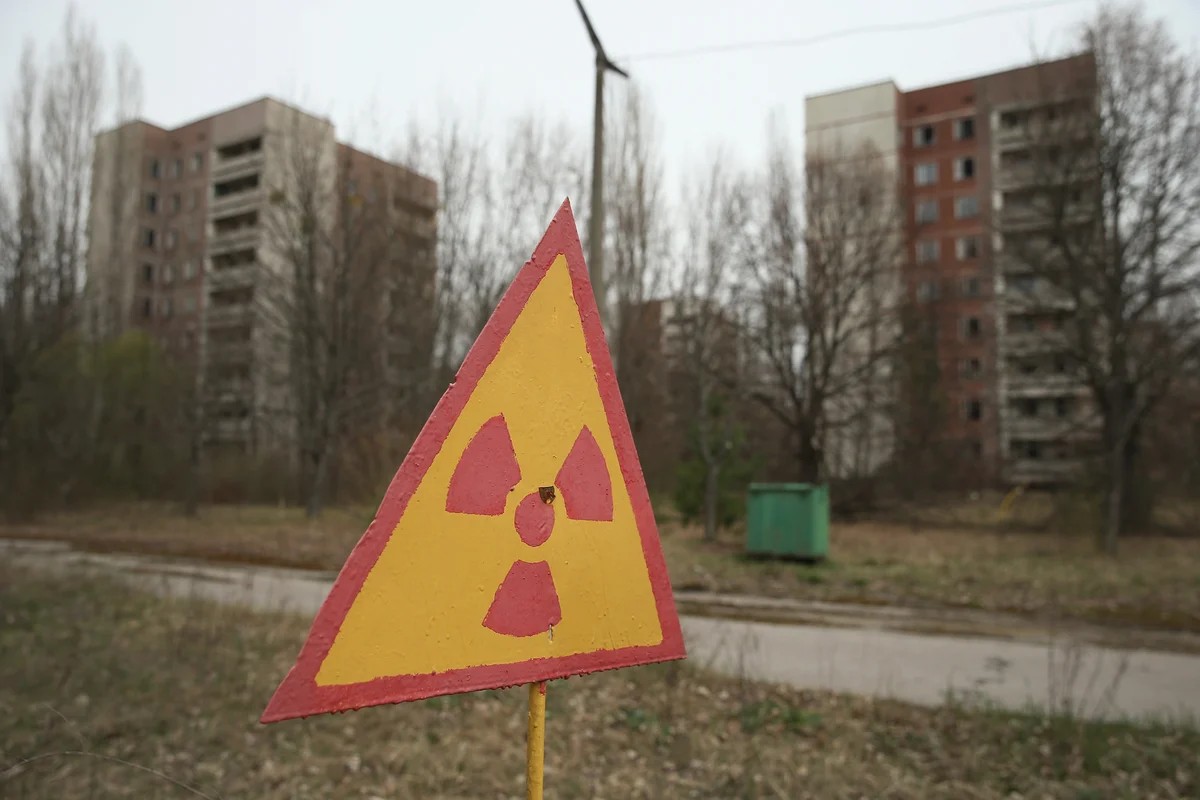
A significant wildfire has broken out within the Chernobyl Exclusion Zone, raising immediate concerns about safety at the site of the world’s worst nuclear disaster. The blaze, which has spread across an area estimated between five and 15 square miles, ignited on Friday following the crash of two drones near the facility.
Ukrainian authorities report that firefighters are actively working to contain the fire. While the situation is serious, officials have stated that radiation levels remain within normal limits, suggesting that the immediate threat to public health from radioactive release is currently low.
Conflicting Accounts and Ongoing Conflict
The origins of the drones involved in the incident remain unclear, adding a layer of geopolitical tension to the emergency response. Vyacheslav Chaus, the governor of Ukraine’s neighboring Chernihiv region, told the French news agency AFP that Russian drones have been constantly hovering over the area, complicating firefighting efforts.
Chaus provided a significantly larger estimate for the fire’s scope—approximately 15 square miles—compared to other official reports citing at least five square miles. This discrepancy highlights the difficulty in gathering precise data in a war zone where communication and access are restricted.
A History of Vulnerability
This incident underscores the persistent vulnerability of nuclear infrastructure during the ongoing war in Ukraine. Throughout the conflict, Ukrainian authorities have repeatedly accused Russia of targeting nuclear sites, including Chernobyl.
The site has already suffered direct damage from military action. In 2025, a Russian drone strike damaged the massive protective steel dome covering Reactor No. 4, leaving it compromised for over a year. Despite this damage, radiation monitoring has consistently shown levels remaining within safe parameters.
The Stakes: Why Chernobyl Matters
The Chernobyl site is not just a historical landmark; it is a containment vessel for one of history’s most potent radioactive sources. Reactor No. 4 exploded on April 26, 1986, releasing vast amounts of radioactive fallout across Europe.
The human cost of that disaster was staggering:
* Two engineers died instantly in the blast.
* Dozens of plant workers succumbed to acute radiation sickness and related illnesses in the years following.
* Thousands of cancer cases in nearby populations have been linked to the exposure.
* The United Nations estimates that thousands of people have died or will die as a direct result of the disaster.
Key Takeaway: While the current fire does not appear to have breached radiation containment, the proximity of active military conflict to such a sensitive facility represents a continuous, high-stakes risk. The crash of drones near the site serves as a stark reminder that even “contained” nuclear legacies remain vulnerable to modern warfare.
Conclusion
The wildfire in the Chernobyl Exclusion Zone is currently being managed without a reported breach of radiation safety, but it highlights the fragile security of nuclear sites during wartime. As military activities continue in the region, the potential for accidental or intentional damage to these critical containment structures remains a pressing global concern.


