Gray is a lie. Or at least, it’s an incomplete truth.
In April, NASA’s Artemis II crew flew past the farside. Astronauts looked out their windows. What did they see? Pocked, gray, dead-looking rock. Just like everyone always imagined. One goal was clear: take photos. Lots of them. Tens of thousands of shots flooded the agency’s servers.
But here’s the rub. All those raw files are just monochrome dust bowls. Boring, even if scientifically useful.
Enter Reid Wiseman. He’s the Artemis II commander. But before the launch, he was chatting with Andrew McCarthy. An astrophotographer. Someone who sees things differently.
Why wait for science to make art? McCarthy basically said. He reached out. Wiseman liked the idea.
“I thought it would be a really cool机会 to create photos that were maybe a bit less scientific and a bit more artistic,” McCarthy explained.
They didn’t just hope for good lighting. They planned it. McCarthy taught Wiseman how to shoot bursts. A hundred images in seconds. From the window. Of a moving rock seen from a moving ship.
Hard work? Obviously. Camera shake blurs details. Noise eats away the data. Most of those frames look like a mess. Blurry. Useless.
But not to a computer.
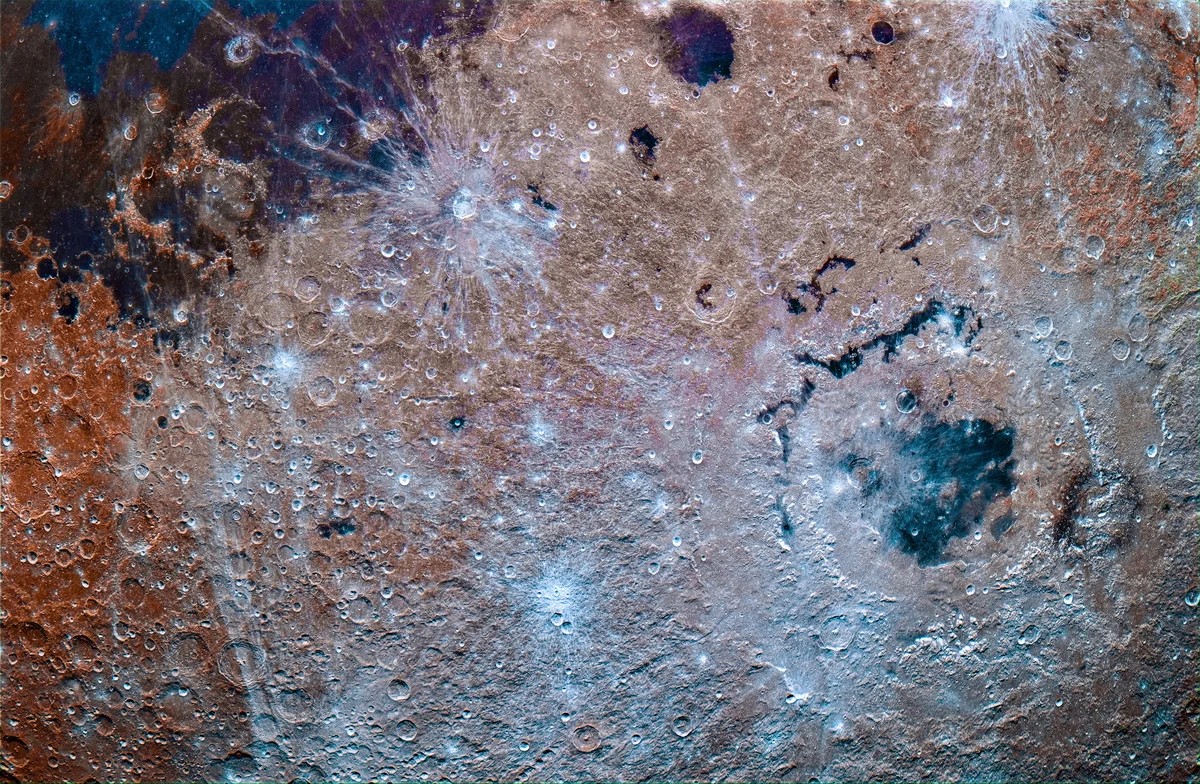
McCarthy stacked them. Layer after layer of digital noise canceled itself out. What remained was sharp. Clean. And then came the magic.
He turned up the saturation. Aggressively.
Suddenly the moon isn’t gray anymore. It’s a map.
Red patches show up. That’s likely iron oxide. Blue swirls emerge? Those point to titanium-rich basalt. The topography shouts through color instead of subtle shadow.
It changes everything. We stop seeing a dead hunk of stone. We see a geological gold mine. Hidden minerals waiting for the right eyes.
The images are jaw-dropping. Maybe too perfect. Does it matter?
Probably not.
We used to look at the moon and see nightlights and rabbits in the craters. Now we can see its composition from a distance. It feels new. It feels alive, almost.
McCarthy wanted people excited. Not just informed. Inspired to look back up.
So you can too.
The colors aren’t fake, they’re just… hidden. Until you know how to pull them out.
Who’s going to find what else is there? 🌕