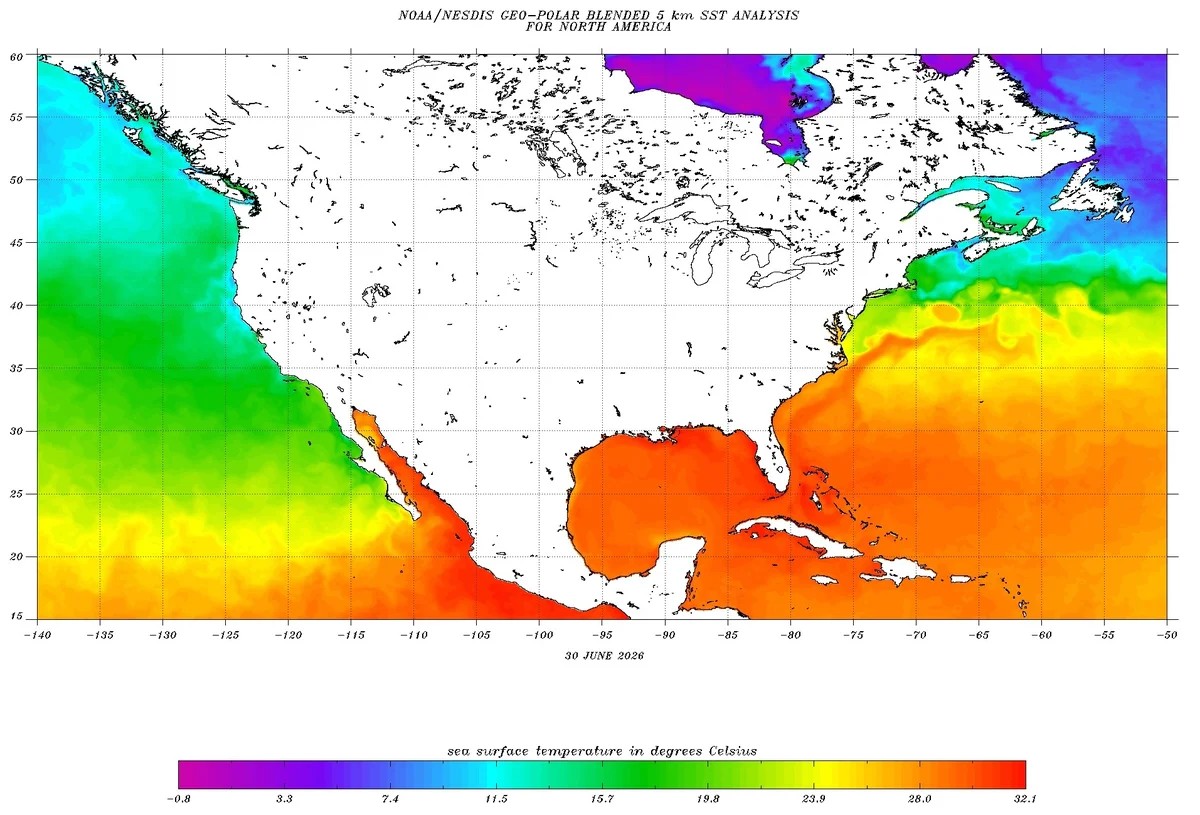
Global ocean temperatures are off the charts. That’s not a metaphor. They’re literally entering “uncharted territory” according to climate scientists.
Copernicus Climate Change Service says so. And so does the Copernicus Marine Service, another EU monitoring arm.
On June 21 the average sea temperature hit 21 degrees Celsius. About 70 Fahrenheit. Unprecedented for this time of year. The previous records belonged to 2023. Then 2024 got in the mix too. Warmer water means trouble for marine life. It also means more ice melts, which lifts sea levels higher than they are now.
Why is this notable?
We’re stepping into an El Niño event. You know the pattern. Ocean winds shift. The water gets warm. It’s a cycle, but this time it feels heavier. Last month the US National Oceanic and Atmospheric Administration stopped guessing. NOAA declared El Niño officially here. They think conditions will “strengthen” between November 1 2026. January 1 2027 to be precise. Scientific American noted back then this could be one of the largest events ever. If they’re right the ocean heats up even more.
More records will break. Soon.
Carlo Buontempo runs the Copernicus service. He sees the numbers too. With heat at these levels and El Nino looming, temperature records will keep falling in the next few months. He called current conditions the start of a new phase. A trip back to unknown land.
Where do we go from there?
“We are likely to see more temperature records,” he warned.