You know them. You use them. You probably typed one in this very moment. Interrogative sentences are the linguistic tools we use to demand answers, challenge assumptions, or simply satisfy a curiosity gap. They aren’t just grammatical footnotes. They are the engine of conversation.
When a speaker poses a question, the structure shifts. The goal changes from stating a fact to seeking information. It’s that simple.
Consider the difference between a statement and a question.
“I have five years.”
vs.
“How old are you?”
The first one sits. It’s static. The second one moves. It demands engagement.
Why Structure Matters in Questions
The way we frame a question often dictates the type of answer we get. Direct interrogative sentences put the verb or the question word at the front. This signals immediate intent.
Take a look at these examples:
-
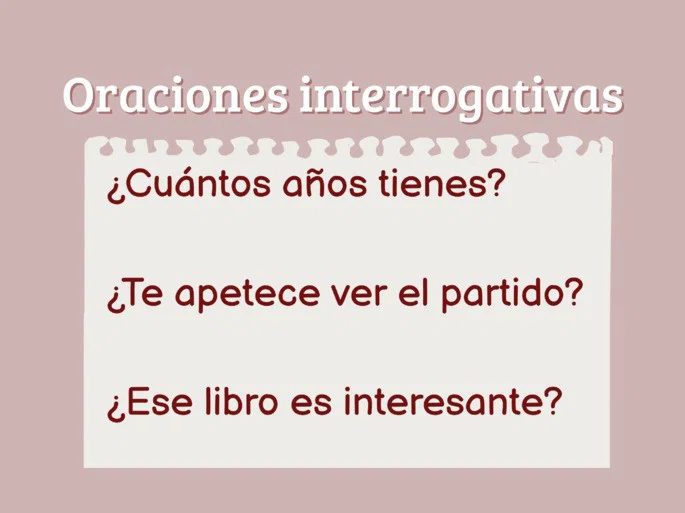
¿Te apetece ver el partido?
This isn’t just asking about your schedule. It’s asking about your desire. The structure invites a “yes,” a “no,” or a nuanced explanation of why you’d rather sleep. -
¿Cuántos años tienes?
A direct request for data. No ambiguity. The subject and verb flip positions compared to a statement (Tienes cuántos años sounds archaic or poetic in Spanish, but the principle of inversion holds true across many languages).
Breaking Down the Mechanics
Interrogative sentences do one thing: they present a question. That’s their entire job description. Whether it’s a rhetorical flourish or a genuine request for directions, the syntax serves the query.
In English, we often swap the auxiliary verb with the subject.
“You are going.” -> “Are you going?”
In Spanish, the intonation often does the heavy lifting, but word order still plays a role.
“Vas al cine.” -> “¿Vas al cine?”
It’s not about memorizing rules. It’s about recognizing the signal. When you see that question mark, or hear that upward lilt, you know the ball is in the other person’s court.
Practical Application for Learners
If you are learning a new language, stop treating questions as separate entities. They are the natural evolution of statements.
- Start with a statement. “I like pizza.”
- Flip the structure. “Do I like pizza?” (Redundant, but grammatically clear).
- Add a question word. “What do I like?”
This method works for ¿Cuántos años tienes? too.
Statement: “You have X years.”
Question: “How many years do you have?” (Literal translation) -> “How old are you?”
The logic remains consistent. The intent is clear.
Interrogative sentences are the bridge between ignorance and knowledge.
They force us to articulate what we don’t know. They expose gaps in our understanding. And in the process, they connect us to the people around us.
Next time you ask a question, pay attention to the structure. Notice how it differs from a statement. Notice the expectation it creates. It’s a small shift in syntax with a massive impact on communication.
Does it change how you listen? Probably.
Does
How to Spot Direct and Indirect Interrogative Sentences
Language isn’t just about stating facts. It is also about digging for them. The interrogative mood covers that intent. You use it to seek information or raise a doubt. Other moods exist for shouting, wishing, or ordering, but questions hold a unique place.
We often assume questions must have question marks. That is not always true. Consider this: I don’t remember how that was done. It asks nothing outwardly. Yet, structurally, it carries the weight of inquiry.
To understand this, you need to look at the four main types. Direct. Indirect. Total. Partial. Knowing the difference helps you write clearer sentences. It also helps you understand what someone is really asking you.
Direct Questions and Rhetorical Tricks
Direct questions stand alone. They are independent. Usually, they wear the ¿? signs.
¿How much did the bike cost?
Here, the speaker wants an answer. The listener is expected to provide one. These are the bread and butter of conversation.
But there is a twist. Rhetorical questions.
Why does this always happen to me?
No answer is expected here. The speaker is not curious. They are expressing frustration. It is a stylistic tool, not an information request.
Here are some clear examples of direct interrogatives:
- Did you call your sister to congratulate her on the promotion?
- Can you bring apples from the store?
- What time does the train to Bogotá leave?
- Is that book interesting?
- Do you have the concert tickets yet?
- Do you know how fast a cheetah runs?
- Which is the highest mountain in the Andes?
- Who left this box here?
- Do you feel like going to the cinema tonight?
- Are you not interested in modern art?
Notice the variety. Some ask for facts. Others ask for preferences. The structure remains direct.
Indirect Questions: The Hidden Inquiry
Indirect questions are different. They are also called subordinate interrogatives. They do not stand alone. They are part of a larger sentence structure. Specifically, they are noun clauses.
He asked me if I liked the food.
See the difference? No question marks. The inquiry is embedded. It is less aggressive. It is more subtle.
Why does this matter? Because context changes tone. An indirect question can sound more polite. Or it can sound like you are reporting someone else’s doubt.
Look at these examples:
- We already know how we can get to the square.
- They asked us how we managed to deliver the work on time.
- We are not sure who to ask in these cases.
- I wonder if you would like to come to my party.
- They wondered which civilization the statues belonged to.
- The principal wants to know how many people will be on vacation next week.
- They asked what my background was to offer me a job.
- He told us if I could come with them.
- She forgot how to use that program.
- He doesn’t know how much our dinner the other night cost.
In these cases, the “question” is the object of the main verb. It is information being transferred, not a demand for response.
Total Questions: Closed Doors
Total questions limit the answer. They are closed-ended. You cannot ramble here. The scope is tight.
There are two main variants.
First, polar questions. These are yes or no queries.
Are we going out this afternoon?
Second, alternative questions. These give you options.
Glass or goblet?
The answer must fit the framework provided. You cannot answer with a poem.
Examples of total interrogatives:
- I don’t know if you want to go to the cinema or the theater.
- Were we supposed to go to the dentist or the pediatrician this afternoon?
- Are you feeling well?
- I was wondering if you would like to have dinner with me.
- Do you want pizza, a hamburger, or something healthier?
- Do you like the new living room curtains?
- Are we ready for the trip?
- We wondered if you wanted to go to the museum, the beach, or the amusement park.
- Could you lend us some money to buy a gift?
- Have you finished studying the lesson?
These are efficient. They get straight to the point. Useful for quick decisions.
Partial Questions: Open-Ended Exploration
Partial questions are also known as open interrogatives. The answer is not limited. It is wide open.
They rely on interrogative pronouns or adverbs. Who, where, when, how much, how…
When can you give us an answer?
The listener must construct a specific response. It requires more effort from the responder. But it yields more detail.
Here is how they look in practice:
- What did Maria tell you?
- Do you know who I ran into at the cafe?
- Tell me when the building repairs will end.
- How is this router configured?
- We need to investigate where the treasure is located.
- Who are those people in the background?
- How many hours does he work a day?
- I wonder where there is a pharmacy.
- Does anyone know how to make this dish?
- What is the answer to question six?
The key here is the word that starts the clause. It dictates the type of information sought. How asks for method. Where asks for location. Who asks for identity.
Why This Distinction Matters
You might think this is just grammar school trivia. It is not.
Understanding these types changes how you communicate.
Direct questions demand attention. Use them when you need clarity.
Indirect questions soften the blow. Use them when you need to be polite or when you are reporting information.
Total questions drive decisions. Use them when you need a binary choice.
Partial questions drive discovery. Use them when you need depth.
Confusing them leads to miscommunication. Asking an indirect question when you want a direct answer leaves people confused. Asking a total question when you want details kills the conversation.
Language is a tool. Sharp tools work better.
Consider your goal before you speak. Do you want a yes? Do you want a story? Do you want a name?
Match the structure to the intent.
The next time you ask a question, pause.