


Gravity is more than just a rule book about falling apples. It’s the invisible glue that keeps your feet on the floor and your planets in orbit.
But here’s the problem. It’s easy to take this for granted until you actually do the math or explain it to a skeptical teenager.
What is gravity?
Basically, gravity is the basic force of nature. This is not advice. It’s a pull.
All objects with mass attract all other objects with mass. The greater the mass, the stronger the attraction. The earth pulls you. You are pulling the earth. differential? The Earth is bigger. That’s why you win every tug-of-war.
This force causes the moon to orbit the earth. It keeps the Earth orbiting the Sun. It prevents the solar system from flying apart into the cold void of space.
Without it, matter would just float around. Clouds wouldn’t form stars. Stars wouldn’t ignite planets. You’re not reading this.
So when we ask, “What is gravity?” We are actually asking about the structure of the universe. This is the structure.
How was gravity discovered?
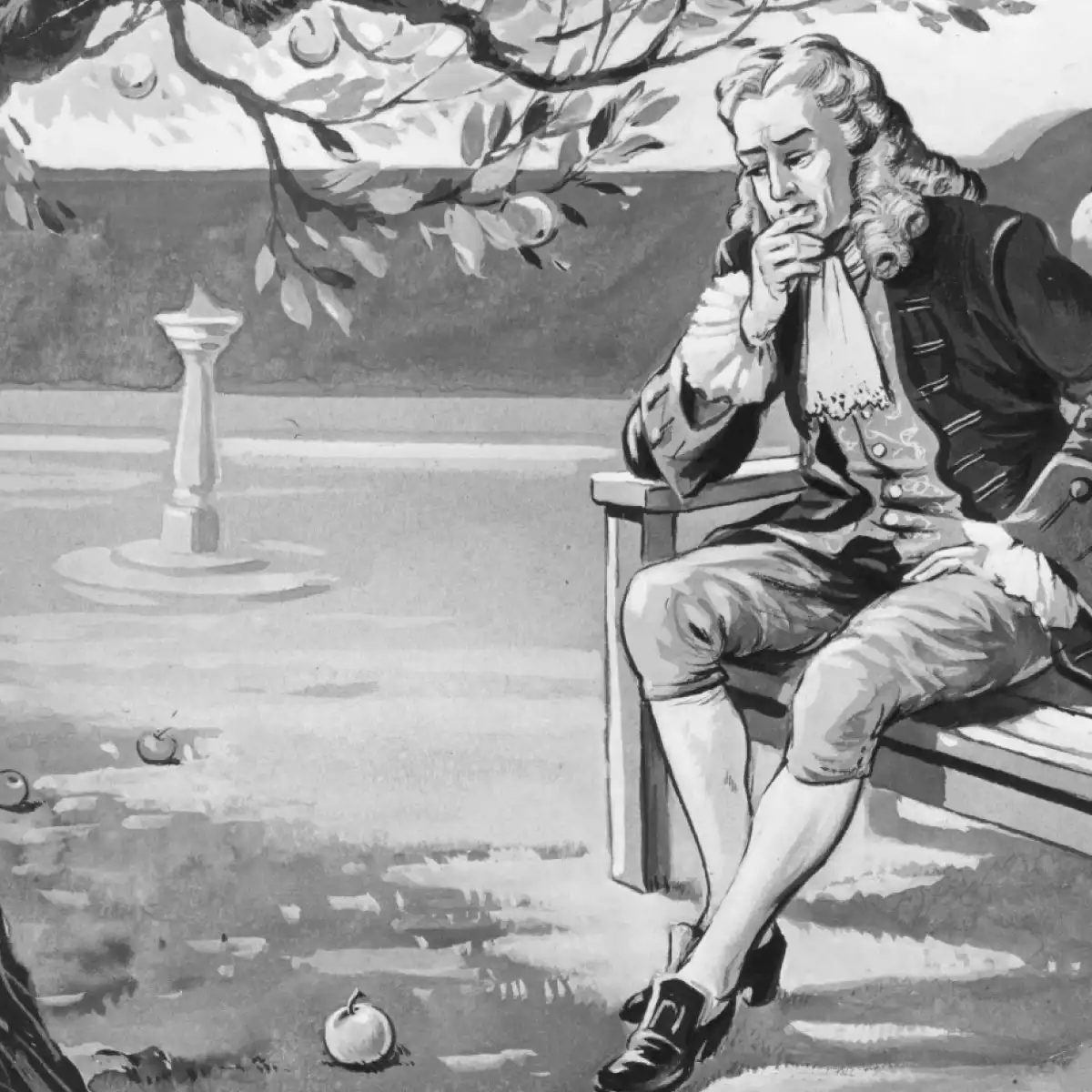
Most people know the apple story. Isaac Newton sat under a tree. The apple fell. He had an idea.
It’s a wonderful story. This is also mostly a myth. Newton did not see the apple hit his head. He watched the falling objects and wondered why they were moved in straight lines toward the center of the Earth.
He realized that the force that pulled the apple down was the same force that kept the moon in orbit. Math checked. The inverse square law describes the distance between objects.
But Newton did not explain “why” mass attracts mass. He was just explaining how it “works”. He called it force acting at a distance. To many of his contemporaries, it seemed like magic.
It wasn’t until Albert Einstein came along that we got a better explanation. He saw gravity as more than just a force. He saw it as a curve of space and time.
State of the mass curve. Space teaches mass to move.
Imagine a bowling ball on top of a trampoline. The ball produces a drop. Nearby spinning marbles form a spiral towards the bowling ball. Not because the bowling ball is pulling it with a rope. However, this is because the surface itself is a curved surface.
This is gravity. This is geometry.
“Gravity is different from other forces. It does not push or pull in the traditional sense. Gravity changes the shape of the stage on which the Actors perform.”
Why is this important to you?
You might think. I am a student. I’m not building a telescope. Why do I need to know this?
Because understanding gravity helps you understand everything else.
It explains tides. This explains why time moves more slowly near massive objects. This explains why GPS satellites must adjust their clocks to account for gravity differences.
If you are a parent explaining science to your children, now is the time. It’s not just about giving definitions. Show them the trampoline. Use sheets and weights. Help them understand how mass changes the environment.
If you are a lifelong learner, this is a reminder that the world is not static. It is dynamic. It’s warped. It is interactive.
Next
Yerçekimi. Sadece bir kelime değil. Yaşadığımız dünyayı ayakta tutan güç.
Basitçe tanımlamak gerekirse, bir cismin diğerini çekmesidir. Peki bu çekim nasıl işliyor? Neden düştüğünde yere çarpıyorsun? Cevap iki şeye bağlı: kütle ve mesafe.
Bir cismin kütlesi ne kadar büyükse, yarattığı çekim kuvveti de o kadar güçlü olur. Basit matematik bu. Daha büyük kütle demek daha büyük çekim demektir. Ama sadece kütle mi önemli? Hayır. Mesafe de devreye girer.
Cisimler arasındaki uzaklık arttıkça, çekim kuvveti hızla azalır. Bu ilişki ters orantılıdır. Yakındayken kuvvetli hissederiz. Uzaklaştıkça zayıflar. Bu prensip, evrendeki her şeyi yönetir. Gezegenlerin yörüngelerinden saçımızın durgun haliyle ilgili küçük detaylara kadar.
Yer Çekim Kuvveti Nasıl Keşfedildi?
İnsanlık tarihi boyunca gökyüzüne bakmışız. Düşen elmalardan dönen aylara kadar. Ama bu kuvvetin bir “kuvvet” olduğunu ve evrensel bir kural olduğunu kim söyledi?
Isaac Newton. 17. yüzyılda.
Efsaneye göre bir elma ağacının altında otururken başına bir elma düştü. Bu olay onun dikkatini çekti. Elma neden düştü? Yukarı uçmadı. Yer çekimi nedeniyle yere çekildi. Newton’ın dahiyane hamlesi, bu olayı gezegenlerin hareketiyle ilişkilendirmesiydi.
Ay neden Dünya’dan ayrılmıyor? Çünkü Dünya onu çekiyor. Elma neden düşüyor? Çünkü Dünya onu çekiyor. Aynı kuvvet. Farklı ölçekler.
Newton’ın evrensel çekim yasası, bu düşüncenin matematiksel ifadesiydi. Formül basit: Kütleler çarpımı mesafenin karesine bölünür. Bu formül sayesinde insanlık uzaya çıkmaya başladı. Ay’a gitmek imkansız görünürken, bu hesaplamalar sayesinde mümkün hale geldi.
Ancak Newton’ın teorisi eksikti. Kuvvetin nasıl bir “uzaktan etkileşim” yarattığını açıklayamıyordu. Einstein daha sonra genel görelilik teorisiyle bu boşluğu doldurdu. Kütle uzay-zamanı büküyor. Bu bükülme ise bizim “çekim” olarak adlandırdığımız hissi yaratıyor.
Yani aslında düşmüyoruz. Uzay-zamanın kavisli yüzeyinde yuvarlanıyoruz. Farklı mı geliyor? Belki. Ama sonuç aynı. Yerde kalıyoruz.

A long way to understand gravity
Gravity is not just a concept. It is the force that is pulling you into your chair right now. All living beings on earth feel it all the time. But it took centuries of work to understand how it works.
It started with Aristotle in the 4th century BC. He noticed that heavier objects fall faster than lighter ones. It’s a step. However, he never explained “why” the object fell straight down. The explanation is missing.
Enter Galileo. This Italian physicist changed the rules of the game. He showed that air resistance is the real culprit that slows things down. Let the air out. Then all objects fall at the same speed. There are no exceptions.
Newton’s breakthrough
Isaac Newton spent years trying to crack this code. He didn’t just watch the apples fall. He studied the mathematics behind the movement.
What he found was simple but profound. Every object that has mass has its own gravity. The earth pulls you. You’re pulling land (even if it’s small in comparison). Newton realized that the immense gravitational pull of the Earth causes objects to fall vertically.
He understood the law of this power. It is determined by two factors: mass and distance.
The gravitational force between two masses is directly proportional to their magnitude and inversely proportional to the square of the distance between them.
This means that larger objects are pulled harder. The further away the object is, the weaker the force of gravity. Specifically, when the distance doubles, the attraction decreases by a factor of four. This is an exact mathematical relationship.
Why is this important in learning physics?
Understanding the history of the theory of gravity requires more than just memorizing dates. It shows how science really works. This is not instant enlightenment. This is a layers of correction.
Aristotle’s observation was correct, but the mechanism was wrong. Galileo modified the mechanism by separating the variable (air resistance). Newton provided the universal law.
For students, this is a perfect example of how gravity affects everyday life. We usually think of gravity simply as something that makes objects fall. But it’s also orbit. This is the tide. That’s why we stay grounded instead of floating in space.
The Math Behind the Feel
Newton’s law of universal gravitation is the key to understanding the calculation of gravity. The formula is:
$$ F = G \frac{m_1 m_2}{r^2} $$
–F is gravity.
– G is the gravitational constant.
– m1 and m2 are the masses of the two objects.
– r is the distance between the centers.
See the inverse square law inside? The lower one, $r^2$, is important. This means that the gravity will drops off fast as you move away. Close to the earth, it’s strong. Far out in space, it never reaches zero.
Common misconceptions about mass and weight
Many people confuse mass with weight. Gravity explains the difference.
- Mass means how much material it is made of. It won’t change.
- Weight is the gravitational force acting on this mass. It depends on where you are.
On the moon, your mass is the same. Your weight is about one-sixth of your weight on Earth. That’s why astronauts bounce. The moon has less mass
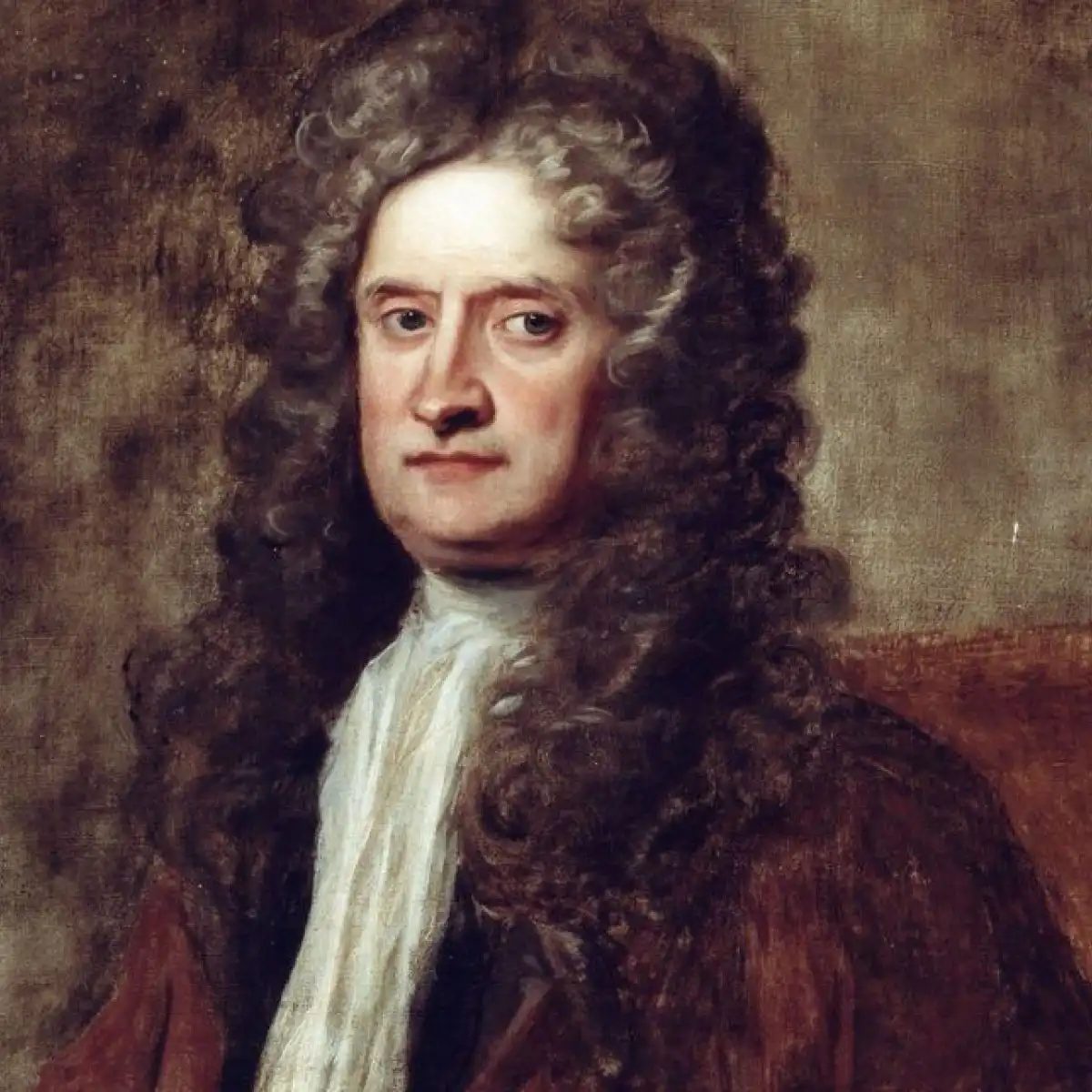
Newton’s theory of gravity was a revolutionary advance in physics and astronomy. In 1915, Albert Einstein proposed the general theory of relativity, which revolutionized perspective.
According to Einstein, gravity is a result of the curvature of space-time.
Currently, the concept of gravity is based on both Newton’s and Einstein’s theories.
The discovery of this concept has an important place in human history. It is the result of years of research by scientists. Gravity is a force that affects all areas of our lives. It is an important source of knowledge for mankind.
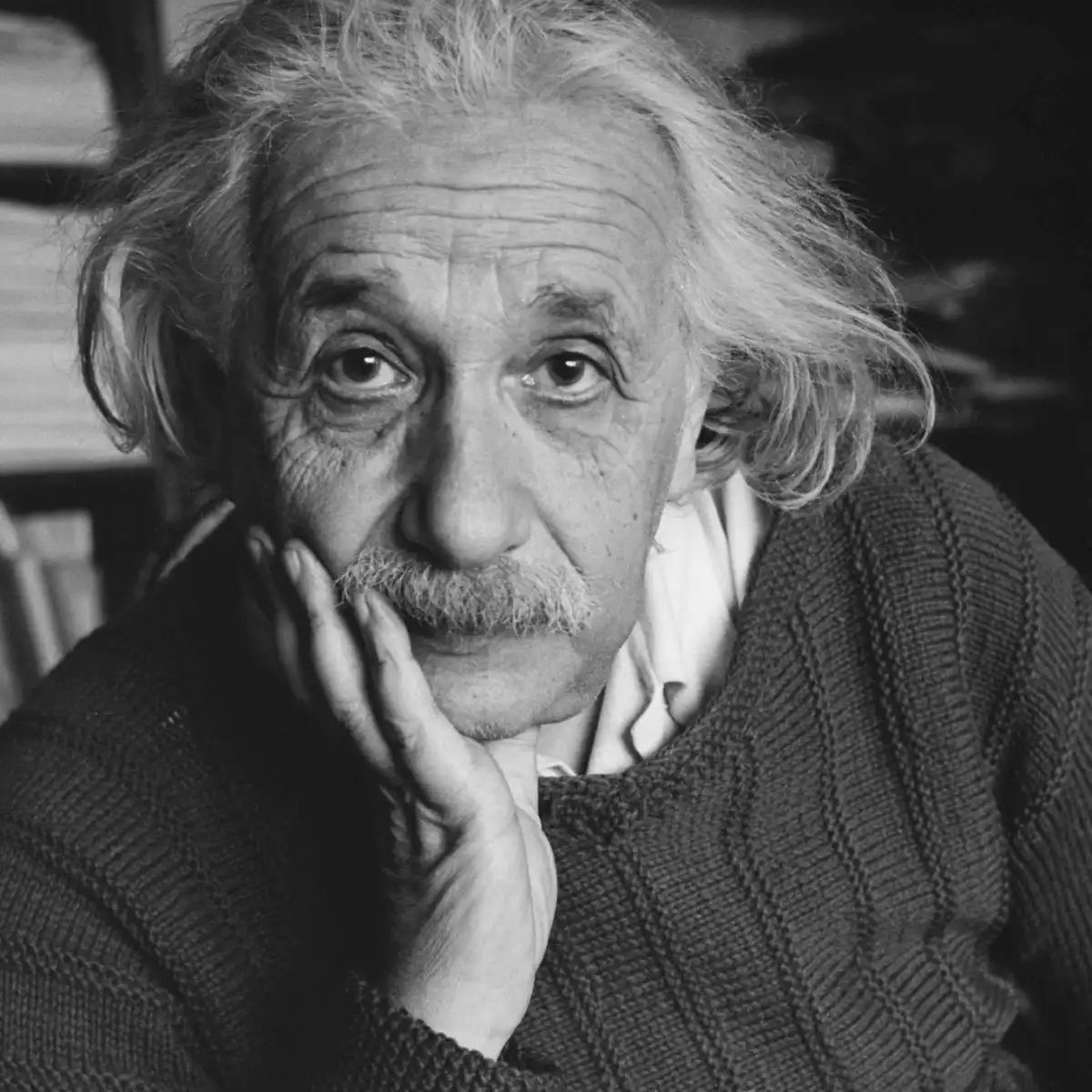
General relativity didn’t just change physics. It breaks the old rules. Albert Einstein, a giant in the history of science, changed the way we see the universe. His big idea? Gravity is not attraction. It is a bend.
Before Einstein, Isaac Newton’s views were mainstream. In empty space, objects attract each other. Simple. invisible power. But Einstein understood something else. He realized that gravity is actually a distortion of space itself. Massive objects twist the fabric around them. Other objects just roll into the dip.
Think of a trampoline. 🛏️
Place a heavy bowling ball in the center. The varnish hangs. Roll the marble near it. The marble curves towards the ball. Not because the ball reaches out and grabs it. However, because the surface is inclined. This is the essence of general relativity. Space-time acts like that sheet. Stars and planets are bowling balls. They distort the universe.
This is not just a theory. As you can see.
The orbits of the planets prove this. Mercury’s orbit changes slightly over time. Newton’s math couldn’t explain the full drift. Einstein’s equations predict the exact amount of deviation. The math matched the sky. 🌌
How massive objects distort space-time
This concept seems abstract until you understand how it works. Einstein saw space as a flexible medium. It isn’t rigid. It stretches. It is compressed. It’s warped.
When a star forms, it adds a large amount of mass to the local region. This mass creates a depression in space-time. Light traveling near stars must follow a curve. It does not proceed in a straight line. It follows the geometry of the curved space. This leads to gravitational lensing. Distant galaxies appear distorted or multiplied. Telescopes catch this effect constantly.
For students and lifelong learners, this is a fundamental change. Gravity is not a force vector. It’s geometry.
Why this matters for modern science
Understanding this transition explains much of modern astrophysics. Black holes are an extreme example. Their mass is so dense that the space bends completely inwards. Not even light escapes. GPS satellites rely on relativistic corrections. Without time dilation and spatial distortions, the map on your phone moves several kilometers every day. 📍
The beauty lies in the simplicity of the analogy. A sheet. A ball. A curve. But the reality is more complicated. Space-time is four-dimensional. Three dimensions of space. One of time. The “sheet” is a 2D simplification of a 4D reality. Yet, it holds true.
Compare Newton’s and Einstein’s gravity
Newton saw action at a distance. Einstein saw local curvature.
| Properties | Newtonian Gravity | General Relativity |
|---|---|---|
| Nature | Forces acting on space | Curvature of space |
| Mechanism | Instantaneous pull | Propagation at light speed |
| Accuracy | Good for weak fields | Essential for strong fields |
| Prediction | Planetary orbits (mostly) | Black holes, lensing, time dilation |
Newton’s laws work fine for building bridges. They fail near black holes. They fail for precise navigation. Einstein’s framework includes both weak and strong. connecting space and time
Karşılaştırmalı Analiz: Newton ile Einstein’ın Yerçekimi Anlayışları
Düşünün. Bir asansör kablosu kopuyor. Gökdelenin tepesinden aşağı, serbest düşüşe geçen bu kabinin içinde ne olur? İnsanlar yerlerine sıkışıp kalmaz. Havada süzülürler. Neden? Çünkü ağırlık hissi, o anlık serbest düşüş nedeniyle ortadan kalkar. Astronotlar da uzayda aynı durumu yaşar. Dünya yörüngesinde dönen bir gemide “ağırlıksızlık” hissi, aslında sürekli düşme haliyle ilgilidir. Einstein’ın kuramı, bu tür senaryoları sadece açıklamaz. Onların arka planındaki gerçeği de ortaya koyar.
Sir Isaac Newton’ın görüşüyle Albert Einstein’ın yaklaşımı arasındaki fark, basit bir sayısal hata değil. Köklü bir paradigmadır. Newton’a göre yerçekimi, cisimleri birbirine çeken görünmez bir kuvvettir. Etki-tepke prensibiyle çalışır. Hızlıdır. Etkisi anlık aktarılır. Einstein ise farklı düşünür. Genel görelilik, yerçekimini bir kuvvet olarak değil, uzay-zamanın geometrisi olarak tanımlar.
Uzay-Zamanın Bükülmesi: Yerçekiminin Gerçek Kaynağı
Modern fizikte yerçekimi, kütlelerin doğrudan birbirini çekmesiyle değil, kütlelerin uzay-zaman dokusunu bükmesiyle anlaşılır. Dünyayı bir trampolin üzerine yerleştirilmiş ağır bir bowling topu gibi düşünün. Top, kumaşı aşağı doğru çökerter. Eğer yanına küçük bir bilye koyarsanız, o bilye çukurun etrafında dolanacaktır. Bilyeyi çeken şey, bowling topunun “gücü” değil, onun yarattığı eğimdir.
Bu model, Newton’un “uzaktan etki” fikrini reddeder. Newton, gezegenlerin Güneş’i nasıl tuttuğunu anlamak için bir kuvvet hattı hayal etti. Einstein ise, büyük kütleli cisimlerin çevrelerindeki uzayı bükerek, diğer cisimlerin en kısa yolu izlemesini sağlar. Cisimler düz bir hat boyunca giderler. Ancak uzay büküklükten dolayı, bu düz yol eğri görünür. İşte bu eğri yola “yerçekimi” deriz.
Hangi Teori Daha Doğru? Newton mu, Einstein mı?
Bu sorunun cevabı, “hangi amaca hizmet ettiği”ne bağlıdır. Her iki teori de yanlıştır denecek kadar hatalar. Her ikisi de doğru, ancak farklı ölçeklerde.
Newton’un yasaları, günlük hayatta mükemmel çalışır.
– Bir arabanın fren mesafesi hesaplanırken
– Bir köprüyü inşa ederken
– Uzay aracı fırlatırken
…Newton’un formülleri yeterlidir. Hesaplama yapmak kolaydır. Hızlıdır. Einstein’ın denklemleri ise gereğinden
The Hidden Mathematics of Falling Apples
Gravity is not just a concept. It’s the reason you don’t float off the couch. Isaac Newton and Albert Einstein are credited with explaining it, but they solved two different puzzles.
Newton considered gravity to be a force. Pull. He discovered that all objects with mass attract all other objects. If the object is heavy, the attraction is stronger. If you move away from it, the attraction diminishes. More precisely, the force decreases as the square of the distance. Simple. Elegant. Useful.
However, there was a blind spot in Newton’s mathematics. Perfect for apples falling from trees or planets orbiting the sun. When things get “very” big or “very” fast, It breaks down That’s when Einstein steps in.
Einstein did not think of gravity as an attractive force. He saw it as geometry. Massive objects like the Sun distort the fabric of space and time around them. Imagine a bowling ball on top of a trampoline. It creates a dip. A marble rolled nearby will spiral in. Not because some invisible string pulls it, but because the surface itself is curved.
For centuries we thought Newton had the last word. we were wrong. But we weren’t entirely wrong either.
When to Use Which Formula
This is the practical part. Most of us don’t need Einstein’s theory of general relativity to buy groceries. Newton’s laws are still the gold standard of everyday physics. Bridges, cars and rockets in low orbit follow Newton’s rules.
So why is Einstein important? Because when you need precision on a cosmic scale, Newton’s equations start to diverge.
Let’s take Mercury as an example. It is the closest planet to the sun. Its orbit doesn’t match Newton’s predictions. It wobbles in a way that Newton’s math cannot explain. Einstein’s theory? It predicted that wobble perfectly.
Or consider GPS. Mobile phone navigation is based on satellites. These satellites move very fast and sitting in weaker gravity than on Earth. If engineers used Newton’s laws, GPS would be off by kilometers every day. They use Einstein’s corrections. Without relativity, maps are useless.
So who wins? Neither. It’s a matter of context.
Measuring the Unseeable
You may wonder how to measure something so pervasive yet so invisible. We do not measure gravity directly. We measure its effects.
Newton’s constant (G) is notoriously difficult to determine. It’s tiny. The force between two people in a room is negligible. To measure it, researchers use a torsion balance. Imagine a dumbbell hanging from a thin thread. Bring heavy lead spheres nearby. Gravity twists the thread. Measure the twist. Calculate the force.
This is delicate work. Sensitive to vibration. Sensitive to temperature. It is sensitive to almost everything except the weak gravitational pull of distant objects.
Modern methods are just as clever. Uses atomic interferometry. Drop atoms in a vacuum. Shine lasers at them. The laser splits the wave function of the atom. One part falls faster than others. When they combine again, an interference pattern is created. That pattern tells us exactly how fast gravity accelerates these atoms.
We can measure gravity down to one part in a billion. Enough to map underground oil deposits. Enough to detect changes in the groundwater level from space.
why
Old and new ways to measure gravity
Gravity is not just a concept. This is a measurable force. You can quantify it. There are many ways to do this. Some methods have been in use for a long time. Others are modern. The goal is always the same. Find out how much the earth is pulling you.
Plumb Bob
This is one of the oldest technologies. This is also the simplest. Take a weight. Tie it on a string. Let it hang. The weight seeks the center of the Earth. It pulls straight down. The string corresponds to the gravitational field. Simple. Effective. This is based on objects moving freely across the surface. Gravity works. Just look.
Drop method
Then there is the throw. Or rather, the drop. This is a more modern approach. You pick up an object. Keep it at a known height. Let it fall. Measure the time it takes to hit the ground. This period is important. You can calculate gravity. It turns a simple act into data.
Gravimeter
If you need accuracy, you use a gravimeter. This tool is very sensitive. Uses vibrating mass. Mass reacts to gravity. The frequency of this vibration changes. You measure this change. You get the most accurate measurements. Scientists use this to map the Earth’s interior.
What Exactly Is This Force?
Gravity pulls objects towards the center of the earth. It depends on mass. Your mass. Earth’s mass. The relationship between them creates the pull. It is a fundamental interaction.
Who found it?
Isaac Newton gets the credit. He published Principia Mathematica in 1687. The book explained universal gravitation. It defines how gravity works on a cosmic scale. Before him, people knew things fell. He explained why.
Measuring the Force
Gravity can be measured by weight. Weight is the force that gravity exerts on an object. Calculated using Newton’s laws. The scale measures this attraction. It tells how much weight someone has on this earth.
A world without it
Imagine that gravity doesn’t exist. People float away. But they cannot stay healthy. Movement would be hard. Nutrition would suffer. Plants cannot release seeds into the soil. The atmosphere might drift away. The shield protecting the earth disappears. It is essential to life as we know it.
Where is the strongest?
Gravity changes on Earth. It is strongest at the core. It is weakest in polar regions. Wait. The source text says that the center is the strongest and the poles the weakest. In fact, the bulge of the Earth makes gravity stronger at the poles than at the equator. However, according to the information provided, the center has the most power. In this case, the columns show the smallest surface dimensions.
Why is it important?
Growth depends on it. Plants need it. Animals need it. It builds an ecosystem. This is also important for space research. Understanding gravity is the key to getting off the ground.
Space Travel
Rockets use gravity. It’s not just about fighting. But use it. Return to Earth depends on gravity. Save fuel. It guides the descent.
Health in Space
Astronauts are in danger. Prolonged exposure to low gravity can cause health problems. Muscle atrophy. Bones weaken. Your body changes. Studying these effects can help understand human resilience.
Other planets
Not all worlds are created equal. Mars’ gravity is weaker than Earth’s. You would weigh less there. Each planet has its own gravitational signature. It depends on size and mass. This difference affects how we explore them.


