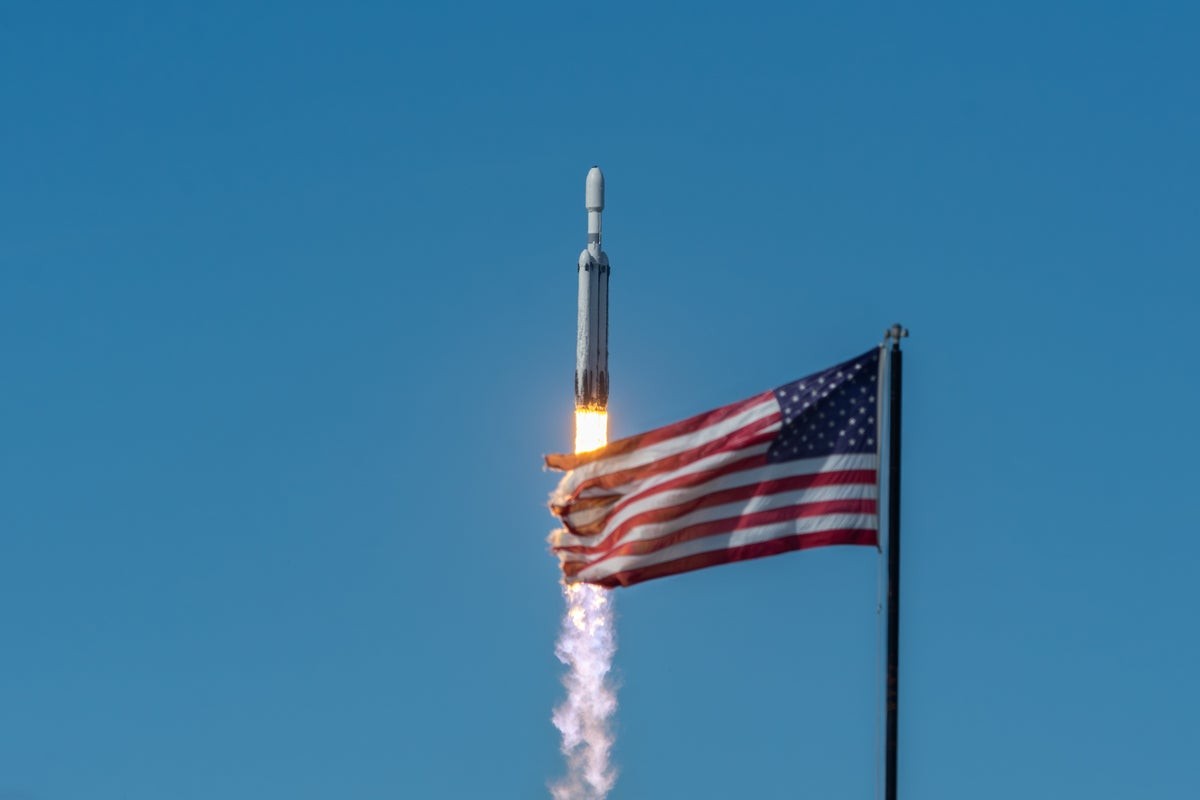
SpaceX is undergoing a radical strategic shift. In April, the aerospace giant announced a potential $60 billion acquisition of Cursor, an AI-code-writing startup. This figure alone is staggering—more than double NASA’s entire annual budget and roughly equivalent to the capital SpaceX hopes to raise in its upcoming June initial public offering (IPO).
This move is not isolated. It follows SpaceX’s February acquisition of Elon Musk’s xAI and signals a broader pivot toward artificial intelligence, specifically the construction of vast orbital data centers. While this ambition aligns with Musk’s interests in generative AI and robotics, it raises urgent questions for NASA. As SpaceX diverts focus and resources toward this new frontier, the agency’s Artemis program—tasked with returning humans to the Moon—faces increasing uncertainty.
The Core Conflict: AI vs. Artemis
The tension lies in SpaceX’s dual role as both a commercial innovator and a critical government contractor. SpaceX is the prime provider of the Starship rocket, which serves two essential functions:
1. Orbital Data Centers: The backbone of SpaceX’s new AI infrastructure ambitions.
2. Human Landing System (HLS): The vehicle NASA relies on to land astronauts on the lunar surface for the Artemis III (2025) and Artemis IV (2028) missions.
As SpaceX struggles with the delayed development of Starship, its new focus on AI infrastructure creates a resource competition. The company is no longer solely focused on Mars exploration or lunar logistics; it is now aggressively pursuing a $22.7 trillion market in business AI, as outlined in its recent S-1 regulatory filing.
“Is space going to be the place where AI is used, or is AI going to be the means for us to do more in space?” asks Jordan Bimm, a space historian at the University of Chicago.
This question highlights the ambiguity of SpaceX’s strategy. The acquisition of Cursor may be a genuine strategic move or a pre-IPO valuation boost, but the distraction is real. NASA has already shown signs of frustration, reopening the HLS contract to competitors last fall—a potential signal that the agency fears delays could allow China to beat the U.S. to the lunar surface.
A Shift in Priorities
Historically, SpaceX’s narrative was dominated by the goal of making humanity multi-planetary, with Mars as the ultimate destination. That rhetoric has notably quieted. In February, Musk announced a new priority: creating a “self-growing city” on the Moon.
Wendy Whitman Cobb, a professor of strategy and security studies at Air University, suggests this shift is reactive rather than visionary. “Up until recently, SpaceX didn’t see the moon as a big thing to do,” she notes. “It’s only been with Blue Origin coming up and nipping at SpaceX’s heels… where you now see SpaceX and Elon Musk changing their tune.”
This pivot underscores the risks of relying on a single private entity for national space goals. Casey Dreier of the Planetary Society points out the inherent volatility: “This speaks to the—optimistically, the nimbleness—but also the idiosyncrasies and fickleness of having a space company led by a single person, rather than a space program run by and for the public.”
The Competitive Landscape Expands
SpaceX’s AI pivot occurs amidst a rapidly evolving space economy. Competition is intensifying from multiple angles:
* Blue Origin: Jeff Bezos’s company has begun commercial launches of its New Glenn rocket, despite technical hurdles, and has filed for a constellation of over 50,000 spacecraft.
* Rocket Lab: Targeting smaller launch contracts previously dominated by SpaceX’s Falcon 9 with its Electron and upcoming Neutron rockets.
* Emerging Players: Companies like Firefly Aerospace, Stoke Space, and Relativity Space are entering the market.
However, SpaceX retains a decisive advantage: vertical integration. It is currently the only company capable of near-daily launches at a relatively low cost. This allows SpaceX to leverage its existing supply chain dominance to outmaneuver competitors. Matthew Weinzierl, a Harvard Business School researcher, describes this as “the boldest version yet of SpaceX’s general strategy… finding ways of making their existing and past successes magnified into future success.”
Technical and Financial Risks
The vision of orbital data centers is ambitious but fraught with challenges. SpaceX has applied to the Federal Communications Commission (FCC) to launch up to one million solar-array-powered satellites. Other players, such as Nvidia-backed Starcloud and Blue Origin, have also filed for massive constellations.
Yet, the engineering hurdles are formidable:
* Waste Heat: Managing thermal dissipation in the vacuum of space.
* Radiation: Protecting sensitive AI hardware from cosmic rays.
* Latency: Ensuring data transmission speeds are viable for enterprise use.
* Orbital Congestion: Adding millions of satellites to already crowded orbits.
SpaceX itself acknowledged these risks in its April pre-IPO filing, stating that its orbital AI initiatives are in “early stages, involve significant technical complexity and unproven technologies, and may not achieve commercial viability.”
Furthermore, the financial foundation of the AI boom is shaky. xAI was losing $1 billion per month prior to its merger with SpaceX. With OpenAI recently missing revenue targets, the broader AI sector shows signs of instability. If the AI bubble deflates, SpaceX’s heavy investments could become a liability rather than an asset.
Conclusion
SpaceX stands at a critical juncture, balancing its role as NASA’s indispensable partner against its ambition to become the world’s leading AI infrastructure provider. While its vertical integration offers a competitive edge, the diversification into high-risk AI ventures and orbital data centers introduces significant variables for the Artemis program. As the space economy matures and competition intensifies, the success of NASA’s lunar goals may increasingly depend on whether SpaceX can manage its expanding portfolio without compromising its core aerospace missions.