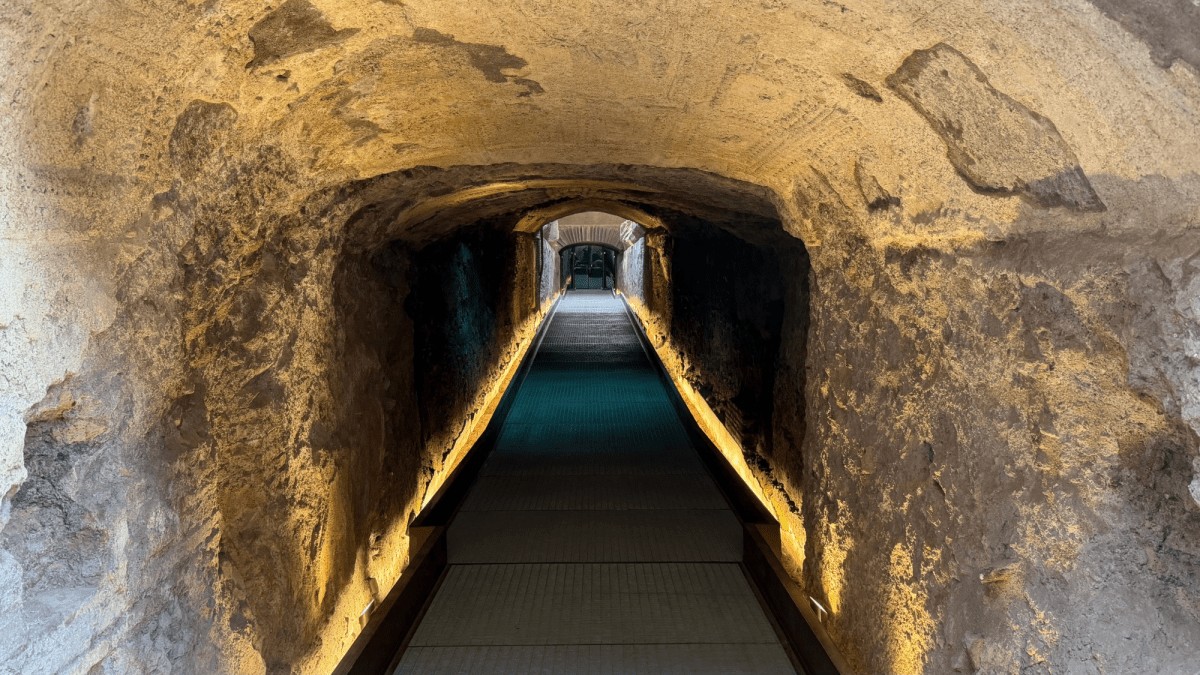
For centuries, the Colosseum has stood as a testament to Roman power, spectacle, and brutality. But beneath the arena’s grandeur lies a network of tunnels and passages that held secrets known to few. Recently, one such passage—the Passage of Commodus—has been opened to the public, revealing a glimpse into the hidden workings of the amphitheater and the emperors who ruled over it. This isn’t just about ancient stones; it’s about understanding how Rome projected power, entertained its citizens, and controlled its narrative.
The Colosseum as a Stage for Imperial Control
The Colosseum, originally known as the Flavian Amphitheater, was strategically built near the Milliarium Aureum, Rome’s symbolic center. This location was no accident. As historian Alexander Mariotti explains, the arena wasn’t just a venue for games; it was a way for emperors to bring the world to Rome, much like modern entertainment delivers experiences directly to our homes. Vespasian began construction, but his son Titus inaugurated the amphitheater in 80 CE with 100 days of extravagant games, including staged naval battles complete with flooded arenas and live orchestras.
These displays were more than entertainment. They were a demonstration of Roman dominance. The Colosseum allowed the empire to showcase its reach, bringing exotic animals, captured enemies, and skilled gladiators to the heart of Rome. The sheer scale of the spectacle reinforced the emperor’s authority, reminding citizens of his power and generosity.
The Passage of Commodus: A Tunnel with a Dark History
The newly accessible Passage of Commodus presents a unique window into the Colosseum’s internal workings. Built after the arena’s inauguration around 100 CE, this tunnel was not part of the original design. Its purpose: to provide discreet access for the emperor to the imperial box (pulvinar ), but also, for one ruler in particular, to appear directly in the arena.
Emperor Commodus, infamous for his obsession with gladiatorial combat, frequently participated in the games himself, sometimes even entering the arena in disguise. Ancient accounts suggest the tunnel may have been built after an assassination attempt on Commodus, offering him a hidden escape route. While definitive proof is lacking, the passage stands as a reminder of the emperor’s paranoia and his willingness to defy convention.
Preservation and Restoration: Unveiling the Colosseum’s “Skin”
Restoring the Passage of Commodus was a monumental challenge. The tunnel cuts through the Colosseum’s concrete foundations and intersects with modern sewer systems, highlighting the layers of history beneath Rome. Water damage has been a constant threat, forcing restorers to employ innovative techniques like laser cleaning to preserve fragile frescoes and stucco decorations.
Chief restorer Angelica Pujia emphasizes that the Colosseum was once lavishly decorated with marble and frescos, but much of this “skin” has been lost to time. The remaining traces—metal clamps, faint stripes, and remnants of floral plasterwork—offer glimpses into the arena’s former glory. The restoration efforts aim not just to preserve the structure, but also to recapture a sense of the Colosseum’s original splendor.
The Colosseum as Propaganda: Bread and Circuses
The Colosseum wasn’t just about entertainment; it was a tool of political control. Harvard professor Kathleen Coleman points out that the arena provided a stage for emperors to demonstrate their power over the entire empire. Seating arrangements enforced social hierarchies, with elites, foreign dignitaries, and even enslaved people segregated.
The games themselves were carefully orchestrated to reinforce imperial authority. Emperors were expected to engage with the spectacle, lest they risk appearing aloof or out of touch. The iconic thumb gesture, though its exact meaning remains debated, symbolized the emperor’s power over life and death, further solidifying his control.
Beyond Violence: The Art of Storytelling
While brutality was a part of the spectacle, historian Mariotti argues that the Colosseum’s primary purpose was storytelling. Gladiatorial combats weren’t just about violence; they were narratives of courage, resilience, and fate. The arena provided a space for dramatic conflict, allowing audiences to connect with human struggles and triumphs.
Just as modern cinema captivates audiences through compelling narratives, the Colosseum offered Romans a visceral experience that resonated with their emotions and beliefs. The games weren’t just about death; they were about the human spirit, presented in a way that reinforced imperial power and entertained the masses.
Ultimately, the Passage of Commodus is more than just a tunnel. It’s a reminder that the Colosseum was not just an arena for games, but a complex machine of power, propaganda, and storytelling. The newly opened passage allows us to walk in the footsteps of emperors and glimpse the hidden machinery that kept the Roman Empire in control.