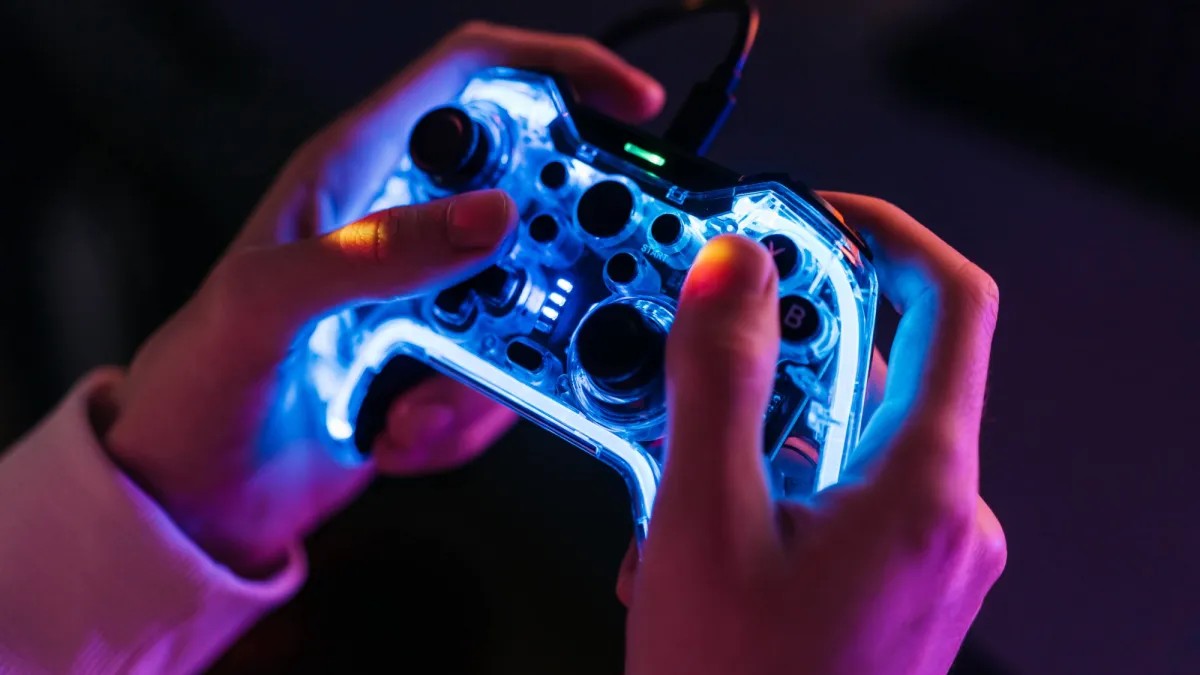
Despite rapid advancements in artificial intelligence (AI), humans remain superior when it comes to quickly mastering new video games. While AI excels at games with defined rules and goals – like chess or certain strategy titles – it struggles with open-ended, unpredictable environments that require intuition and adaptability. This isn’t just a gaming quirk; it highlights fundamental differences between how machines and humans learn, potentially revealing why true “human-level intelligence” remains elusive for AI.
The AI Advantage: Specificity Over Generalization
For decades, AI has used games as a testing ground. Models like IBM’s Deep Blue (chess) and Google’s AlphaGo (Go) demonstrated AI’s ability to dominate in structured environments through reinforcement learning – repeated trial and error. This same method now powers AI chatbots and excels at mastering Atari games, Dota 2, and Starcraft II.
However, this success relies on clear constraints. AI crushes humans at these games because the rules are rigid and the objectives defined. Even slight variations in game design can break an AI model, which thrives on repetition, not improvisation. Unlike humans, AI models don’t learn to generalize; they get exceptionally good at one specific task.
Why Humans Still Learn Faster
The key difference lies in how humans approach new experiences. A human can pick up a random game and grasp the mechanics much faster than AI, even in complex titles like Red Dead Redemption. Humans intuitively understand ambiguous goals—like embodying a morally ambiguous outlaw—while AI struggles with abstract concepts.
Researchers from New York University emphasize that well-designed games cater to human capabilities: intuition, common sense, and lived experience. A human baby learns to recognize objects within months simply by existing in the world; AI requires extensive training. Studies show that AI models may need 37 hours of continuous play (four million keyboard interactions) to finish a game, while a human gamer often figures it out in under 10.
The Benchmark for True AI Intelligence
Google DeepMind’s SIMA 2 represents progress, integrating reasoning capabilities from its Gemini model to help AI better interact with new environments. However, even this breakthrough isn’t enough. The authors propose a benchmark for true AI intelligence: beating the top 100 games on Steam or the iOS App Store without prior training, in roughly the same time it takes a human.
This challenge remains unsolved, and current methods may not be suited to solve it. Achieving this would require AI to demonstrate creativity, forward planning, and abstract thinking, qualities that remain uniquely human.
The true test of “human-level intelligence” might not come from deepfakes or novels, but from mastering the unpredictable chaos of video games.
The ability to adapt to new situations quickly, a skill honed by years of navigating a complex world, is what separates human and machine intelligence. Until AI can replicate this innate adaptability, it will remain a specialized tool rather than a true cognitive peer.