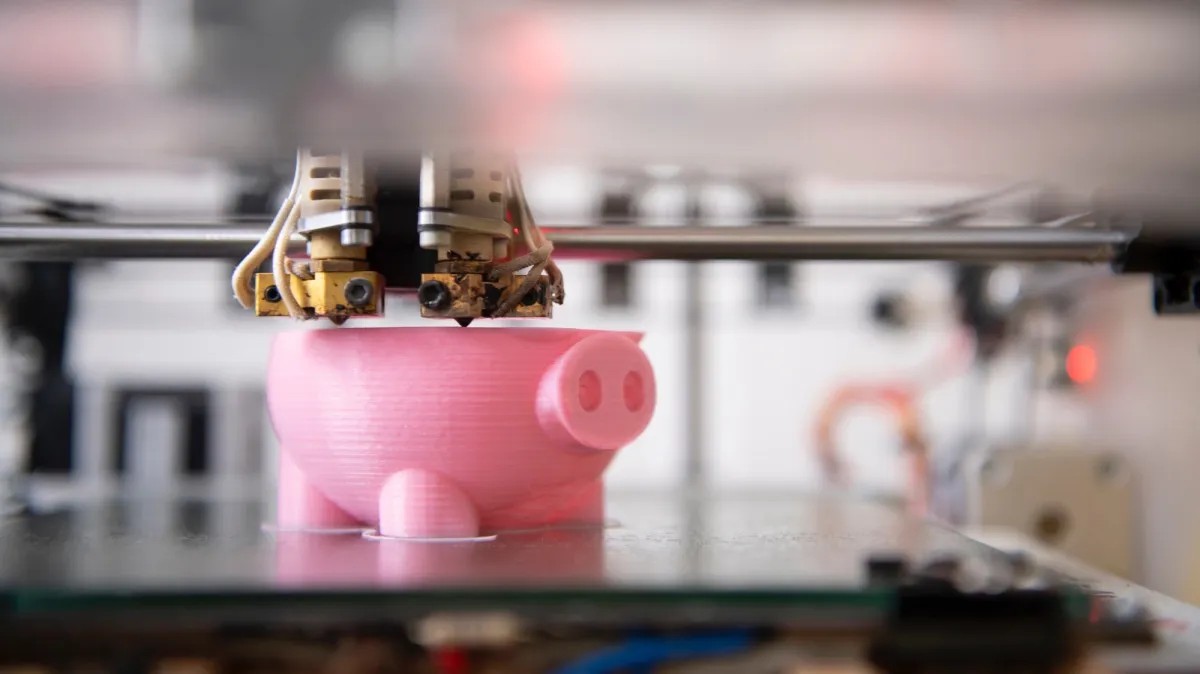
For years, the promise of 3D printing—to create only what is needed, when it is needed—has been undermined by a growing pile of waste. In workshops and labs worldwide, failed prints, discarded support structures, and abandoned prototypes accumulate like industrial kindling.
Traditional 3D printing materials face a fundamental “chemistry problem” that makes recycling difficult. Common plastics like PLA and ABS degrade every time they are reheated, losing strength after just a few cycles. Meanwhile, photocurable resins used in many high-end printers form irreversible chemical bonds; once they harden, they cannot be melted or undone.
However, a breakthrough from a joint research team in South Korea may have found a way to turn this waste problem into a circular economy using an unlikely ingredient: sulfur.
The Sulfur Solution: A “Closed-Loop” Approach
Sulfur is a common industrial byproduct, with roughly 85 million tons produced annually by oil refineries and smelters. Much of it sits in massive yellow mounds, often underutilized.
A research team led by Dr. Kim Dong-Gyun at the Korea Research Institute of Chemical Technology, alongside professors from Hanyang and Sejong Universities, has developed a way to transform this waste into a high-performance, fully recyclable 3D printing material.
Unlike traditional plastics, this sulfur-based polymer utilizes reversible chemical bonds. This allows for a process the researchers call “closed-loop printing” :
– Crush: A failed or old print can be physically crushed into a lump.
– Load: The lump is placed directly back into the printer’s material container.
– Print: Heat breaks the bonds, the material flows through the nozzle, and as it cools, the bonds reform to create a new object.
Because the material doesn’t rely on grinding or complex reprocessing, it remains stable. The team confirmed that the material maintains its properties through at least ten recycling cycles without significant degradation.
Breaking the “Molecular Mesh”
The challenge wasn’t making sulfur plastic—scientists have been experimenting with “inverse vulcanization” (using sulfur as a primary ingredient) since 2013. The real hurdle was viscosity.
Previously, sulfur polymers had molecular networks so tightly knotted that the material was too thick to pass through a printer nozzle. Dr. Kim’s team solved this by redesigning the molecular architecture. By “loosening” the crosslinked structure, they created a material with shear-thinning properties: it flows easily like a liquid when forced through a narrow nozzle but regains its strength and shape once extruded.
Beyond Recycling: The Rise of 4D Printing
The most exciting aspect of this material is that its recyclability is just the beginning. Because the chemical bonds respond to external stimuli, the material enables 4D printing —the creation of objects that can change shape or move after they are printed.
By adjusting the sulfur content, researchers can “program” the material to react to different triggers:
– Temperature: Different compositions allow the material to change shape at specific temperatures (ranging from 14°C to 52°C).
– Light: Certain mixtures respond to near-infrared light.
– Magnetism: By adding iron powder, the material becomes magnetically responsive.
Demonstrating “Motorless” Robotics
The team used these properties to create “soft robots” that function without batteries, wires, or motors:
* Underwater Micro-robot: A 1mm-thick thread that rolls through water in response to magnetic fields.
* Temperature-responsive Gripper: A robotic arm that opens and closes based on ambient temperature changes.
* Autonomous Chemical Capsule: A capsule that stays sealed until it reaches a specific temperature, at which point it “pops” open to release a catalyst, while a magnet simultaneously stirs the solution.
The Path to Commercialization
While the results are groundbreaking, the technology is still in the laboratory phase. Several hurdles remain before this hits the consumer market:
1. Long-term testing: Researchers need to see how the material performs over dozens, rather than just ten, recycling cycles.
2. Material limits: Adding too much iron powder (above 20%) can clog the printer nozzle.
3. Scaling production: Mass-producing sulfur-based polymers at a commercial scale is a significant industrial challenge.
“This is the first time all of these functions—recyclability, printability, and responsiveness—have been integrated into a single material,” says Dr. Kim.
Conclusion: By turning industrial sulfur waste into a programmable, endlessly recyclable medium, researchers have bridged the gap between sustainable manufacturing and advanced robotics, potentially solving one of 3D printing’s oldest environmental flaws.