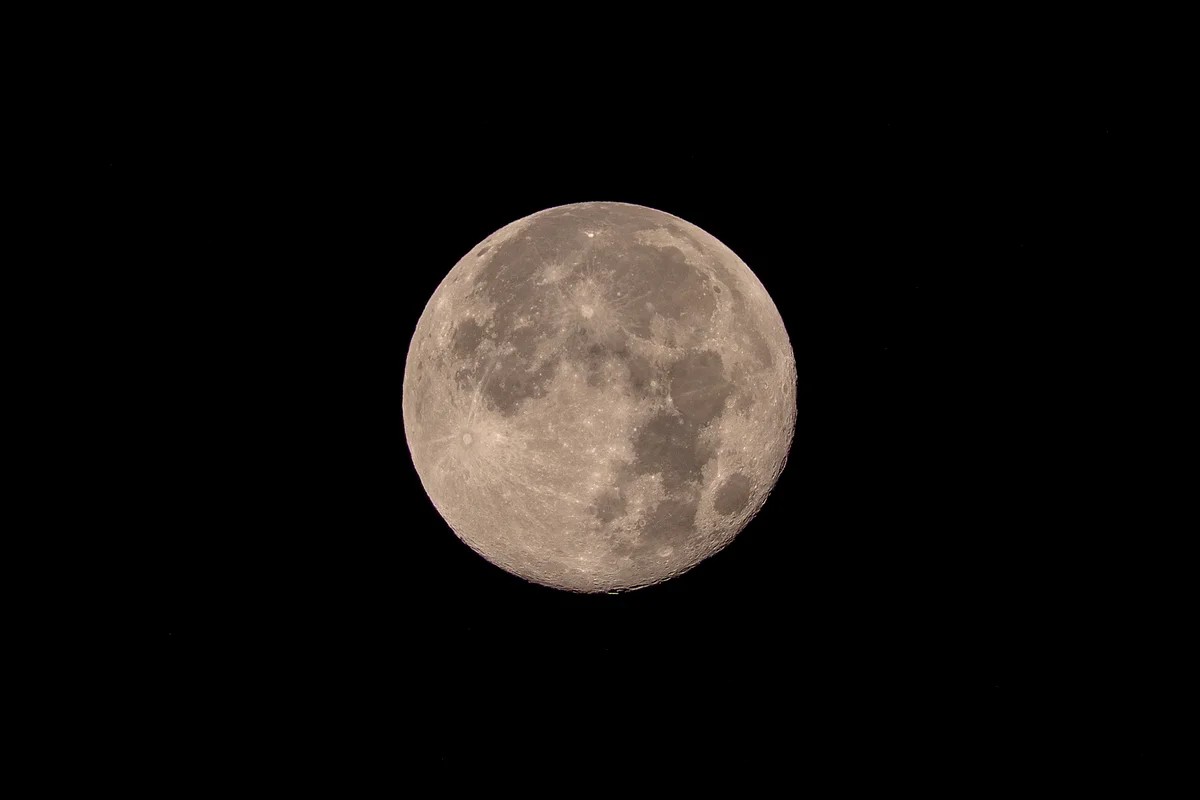
A discarded booster stage from a SpaceX Falcon 9 rocket is predicted to impact the lunar surface on August 5, creating a new crater and highlighting a growing concern about space debris in cislunar space. The collision, timed for approximately 2:44 A.M. EDT, will see the rocket stage strike the moon at roughly 5,400 miles per hour —several times the speed of sound.
This event is not just a celestial coincidence; it serves as a stark warning for the burgeoning lunar economy. As NASA, China, and private companies prepare to return humans to the moon within the next few years, the accumulation of orbital debris poses a potential threat to future missions and infrastructure.
A Stray Booster’s Unplanned Journey
The wayward object is the first stage booster from a Falcon 9 launch that occurred in January 2025. This mission was significant for carrying lunar landers from two private companies: Firefly Aerospace’s Blue Ghost and ispace’s Hakuto-R.
Under standard procedures, a rocket booster is designed to burn up upon reentry into Earth’s atmosphere after delivering its payload. However, this particular booster did not follow that path. Instead of disintegrating over Earth, it entered a highly elliptical orbit that carried it as far as 310,000 miles from our planet.
Independent astronomer Bill Gray, who develops software for tracking celestial objects, first identified the object’s trajectory in September. His calculations revealed that the booster’s orbit intersects with the moon’s path. While the two bodies have not yet crossed paths, Gray’s models indicate they will align on August 5.
The Physics of the Impact
Predicting the exact impact site is complex due to subtle forces acting on the booster in space. While the gravitational pull of the Earth, sun, and moon is straightforward to calculate, solar radiation pressure adds a layer of uncertainty.
“It’s the reason why, even now that we’re much closer to the event, I can be certain it’s going to hit, but there’s still an uncertainty of at least a few dozen kilometers as to where it’s going to hit,” Gray explains.
Solar radiation pressure occurs when photons from the sun strike an object, exerting a tiny but cumulative force over time. This force has nudged the booster’s trajectory slightly, meaning the predicted impact time could be off by a few minutes, and the location by several dozen kilometers.
The impact is expected to occur near the Einstein Crater on the moon’s western limb. Because this region is on the edge of the moon’s visible disk from Earth, witnessing the impact directly from our planet will be difficult.
A Precedent for Lunar Debris
This is not the first time a human-made object has been predicted to strike the moon. In 2022, Gray forecasted that a Chinese rocket component would impact the lunar surface. That event resulted in two distinct craters, proving that such collisions are a tangible reality, not just theoretical risks.
Gray argues that while space is vast, the probability of collision increases with the volume of debris. “Eventually, your luck runs out, and you’re both in the same place at the same time,” he notes.
Why This Matters for the Future of Space Exploration
While this specific impact poses no immediate danger to astronauts or equipment, it signals a broader trend: space junk is moving beyond low-Earth orbit.
John Crassidis, a professor at the University at Buffalo who collaborates with NASA and the U.S. Space Force on debris mitigation, warns that the problem is escalating. With both the U.S. and China planning crewed lunar missions in the coming years, the cislunar environment is becoming more crowded.
Crassidis emphasizes that while the risk of an astronaut being struck by debris is currently remote, the long-term outlook is concerning. “We’re going to start to create a debris field,” he says. “We can definitely be a lot more careful about it.”
The philosophical and practical imperative is clear: we must not export the debris problems of Earth to the moon and eventually Mars. As lunar activity increases, establishing strict protocols for debris management will be essential to ensure the safety and sustainability of future exploration.
Conclusion
The impending impact of the SpaceX booster on August 5 is a minor event in the grand scale of cosmic history, but it carries significant weight for the future of spaceflight. It serves as a timely reminder that as humanity expands its footprint beyond Earth, we must also take responsibility for cleaning up our trail.