13,000 voices.
That’s how many people—parents, kids, neighbors—told Aldine ISD they were done with the status quo. The message was sharp, unambiguous.
We want choices.
If this were any other district, they might have shrug. Maybe released a polite statement about budget constraints. Aldine didn’t do that. Located in southeast Houston, a place often overlooked, the district leaned in. They asked their Chief Transformation Officer, Adrian Bustillos, what to do next. His answer wasn’t complex theory.
You broaden the portfolio.
Simple.
Bold, maybe.
But first? They stopped guessing and started looking at the numbers.
The Math Made Sense
Data doesn’t lie. And in this case, it was screaming.
Texas is facing a massive nursing shortage. By 2032, we’re going to need licensed vocational nurses, RNs, certified nurse-midwives. You name it.
Now look at Aldine. The district was sitting on underused space—specifically, an old freshman campus called Nimitz. Empty halls. Quiet gyms. Meanwhile, the surrounding area is what experts call a “medical desert.” Few hospitals. Limited clinics.
But flip the map slightly. Houston hosts the world’s premier medical center. The best in the world, basically. Just out of reach for kids who haven’t been to a hospital in years except as patients.
Why build in a vacuum? Why not bridge the gap?
From Grant to Gym
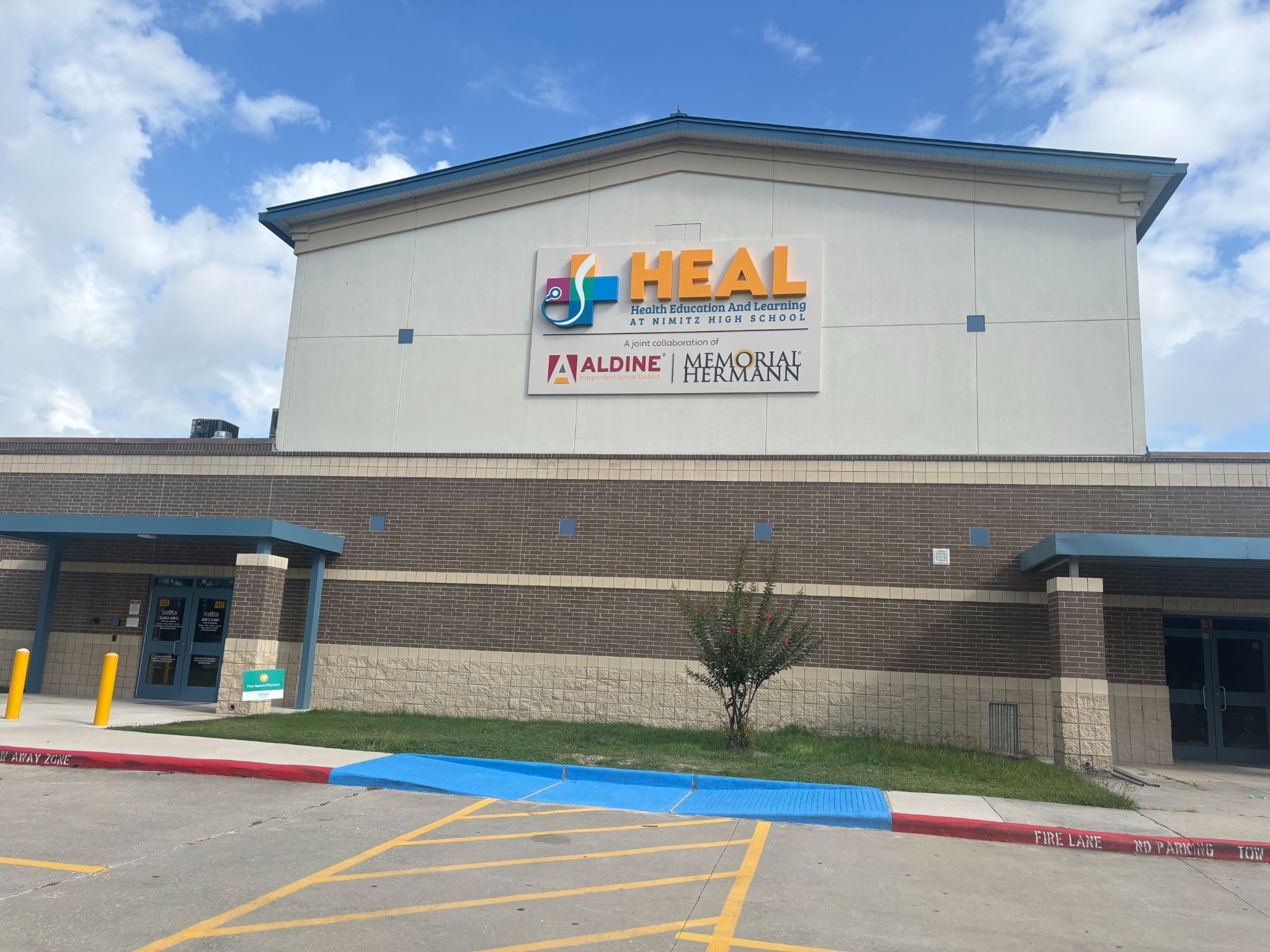
Bloomberg Philanthropies showed up with cash. Memorial Hermann—a 14-hospital giant—showed up with purpose. The result opened its doors in 2023: HEAL.
The Health Education and Learning High School.
It’s not just a class. It’s a hub. Part of Aldine’s expanding menu of options alongside places like Avalos P-TECH or La Promesa. But HEAL is different. It’s specific. Medical. Health-focused.
Five paths:
- Nursing
- Pharmacy
- Medical Imaging
- Healthcare Business Administration
- Occupational/Physical Therapy
Open to every grade level. No GPA hurdles. That’s right—no grades filtering you out at the start. They want 700-plus kids in here. 190 per path. A serious effort to plug those workforce holes before the holes get wider.
“They’ve been excellent,” said Bustillos.
He was talking about Memorial Hermann. The partnership isn’t transactional. It’s physical. They took a repurposed gym. They stripped it bare. They rebuilt it as a hospital.
Real Walls, Real Machines
Walk in there and it feels less like high school more like an ER.
They built replicas. Nurse stations. Patient intake cubicles. Rehab areas. Even the restrooms match up. Why? Because simulation builds muscle memory. Confidence matters when you’re standing next to a real surgeon later on.
Check the imaging machine in the corner. The same brand used at Memorial Hermann hospitals. The only high school in Texas that has it.
That’s the power of letting an industry partner design your classroom.
Teachers get mentorship from actual healthcare staff. The knowledge transfer is constant, daily, urgent. Before HEAL existed, Memorial Hermann already had a school-based clinic in Aldine—cheap care for vaccines, teeth, antibiotics. Not formally part of the high school, sure, but it moved into these new walls anyway. Serving 100% more people overnight.
Nursing pathway lights flicker. Alarms beep. Students learn to hear through the noise.
Immersion Starts Early
Summer isn’t break at HEAL.
Incoming students spend it getting used to the space. Led by hospital staff, they drill on CPR. They learn Stop the Bleed. Practical skills first. Books second.
Then September hits. The whole group—regardless of pathway—trips to the Medical Center. They see the air ambulances. They walk the floors. They meet the CEO. It’s motivational. It’s reality checking.
Back home, the schedule splits.
Core academics in the morning. The afternoon is simulation time.
Rehab rooms. Pharmacy counters. Surgical suites. Partnerships with community colleges mean certificates stack up along the way. Twenty-plus college credits earned by graduation. That’s leverage.
Fernanda Flores, Director of Transformational Learning, puts it plainly. She tells the kids to network now. Because later, when applying for apprenticeships, these contacts matter.
Many of these students haven’t crossed the median to see what’s on the other side of town. The Medical Center is foreign territory. Now it’s their workplace.
They play doctor. They play patient. They manage intake forms like pros.
The Door Is Open
HEAL works because the district actually listened.
They didn’t ignore the 13,001st voice. They aligned their strategy with a tangible problem. Medical desert? Check. Workforce gap? Check. Underutilized bricks and mortar? Check.
This isn’t theoretical education. It’s social capital in construction form. Kids walk in scared and walk out ready to shadow real nurses in real hospitals.
What’s next for them? Who knows.
The door stays open. The machine stays running.