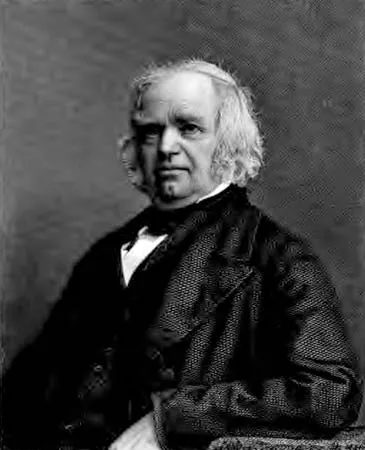
If you are trying to understand the roots of Indo-European historical linguistics, you have to start with August Pott. He didn’t just study language. He built the foundation for how we trace words back to their origins. Born in Nettelrede, Hanover, on November 14, 1802, Pott spent his life decoding the complex relationships between related words. He died in Halle, Germany, on July 5, 1887, leaving behind a legacy that still shapes modern etymological studies.
The Academic Foundations of Sound Correspondence
Pott’s journey into philology began while he was a theology student at the University of Göttingen. He wasn’t just interested in theology. The structure of language pulled him in. By 1827, he was teaching at the gymnasium in Celle. That same year, he finished his doctoral dissertation titled De Relationibus Quae Praepositionibus in Linguis Denotantur. The title translates to “Concerning the Relations That Are Denoted in Languages by Prepositions.” It was a start. But he needed more.
He moved to the University of Berlin to study under Franz Bopp. Bopp was a giant in early Indo-European linguistics. Studying with him changed Pott’s trajectory. By 1830, Pott had earned a position as an unsalaried lecturer in general linguistics at the university. He was in the room where it happened.
Etymological Research and Sound Change
The real work began in 1833. Pott published the first volume of his major work: Etymologische Forschungen auf dem Gebiete der indo-germanischen Sprachen. The full title is long, but the point is clear. He focused on sound change in Sanskrit, Greek, Latin, Lithuanian, and Gothic.
“Pott established modern etymological studies on the basis of the correspondence of sounds occurring in related words in Indo-European languages.”
This wasn’t just a collection of words. It was a systematic analysis. He looked at how sounds shifted across different Indo-European languages. The second volume came out in 1836. The work set a new standard. It showed that language wasn’t random. It followed patterns. You could track them.
A Professor for Life in Halle
In 1833, Pott became a professor of general linguistics at the University of Halle. He stayed there for the rest of his life. The position gave him the stability to continue his research. It also allowed him to influence the next generation of scholars. The University of Halle became a hub for linguistic study because of his presence.
Beyond Indo-European: Roma and World Languages
Pott didn’t limit himself to European languages. He wrote extensively about other linguistic systems. His work on the languages of southern Africa, Java, and Japan showed his broad interest. But one area stood out.
He became the most important 19th-century philologist for Romany. That’s the language of the Roma people. His research provided a detailed look into a language that many scholars at the time ignored. He treated it with the same rigor he applied to Latin or Sanskrit. This gave Romany a place in serious academic discourse.