You speak it, you write it, you probably argue in it. But where did it come from? The answer is simple, historical, and baked into the DNA of half the world’s population. Romance languages are the direct descendants of Vulgar Latin—the spoken, everyday version of Latin used by soldiers, merchants, and colonists rather than philosophers. They form a tight-knit subgroup within the Italic branch of the Indo-European family tree.
Think of them as linguistic cousins. They share enough basic vocabulary and grammatical structure that you can spot the relationship almost immediately. French? It’s Latin with a French accent and some Germanic tweaks. Spanish? It’s Latin with Moorish influences and a rhythmic snap. Portuguese, Italian, and Romanian follow the same pattern. They aren’t just similar. They are the same language, fractured by time, geography, and conquest.
Who Speaks These Languages Today?
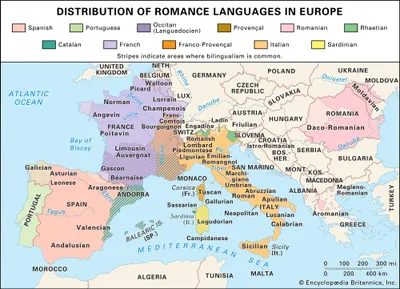
The major players are easy to name. French, Italian, Spanish, Portuguese, and Romanian are national languages with millions of speakers. They dominate Europe and have spread globally. But the picture is richer than that list.
Catalan holds significant political and cultural weight, especially in Spain and Andorra. It’s not just a dialect. It’s a distinct literary and political identity.
Then there are the smaller groups. Occitan and Rhaetian dialects have lost much of their literary prestige. Sardinian is a linguistic island in Italy. Dalmatian is extinct. These languages didn’t die because they were inferior. They died because empires fell, borders shifted, and power concentrated elsewhere.
Why Are They So Easy to Trace?
Linguists love Romance languages because they’re transparent. Other language families are messy, full of broken lines and unknown origins. Romance languages are a straight shot back to the Roman Empire.
The evidence is everywhere. The vocabulary overlap is staggering. Even with phonological changes—sounds shifting over centuries—you can still see the Latin root. The grammatical forms remain recognizable. Verbs conjugate in predictable patterns. Nouns have gender. Articles exist. It’s all there, buried under centuries of evolution.
For the non-specialist, history does the heavy lifting. The Romans didn’t just invade Italy. They occupied Gaul (modern France). They conquered the Iberian Peninsula (Spain and Portugal). They spread into the Balkans. The “Roman” character of these languages isn’t a coincidence. It’s a direct result of occupation. The language of the empire became the language of the people. It stuck. It adapted. It survived.
How Did They Spread Globally?
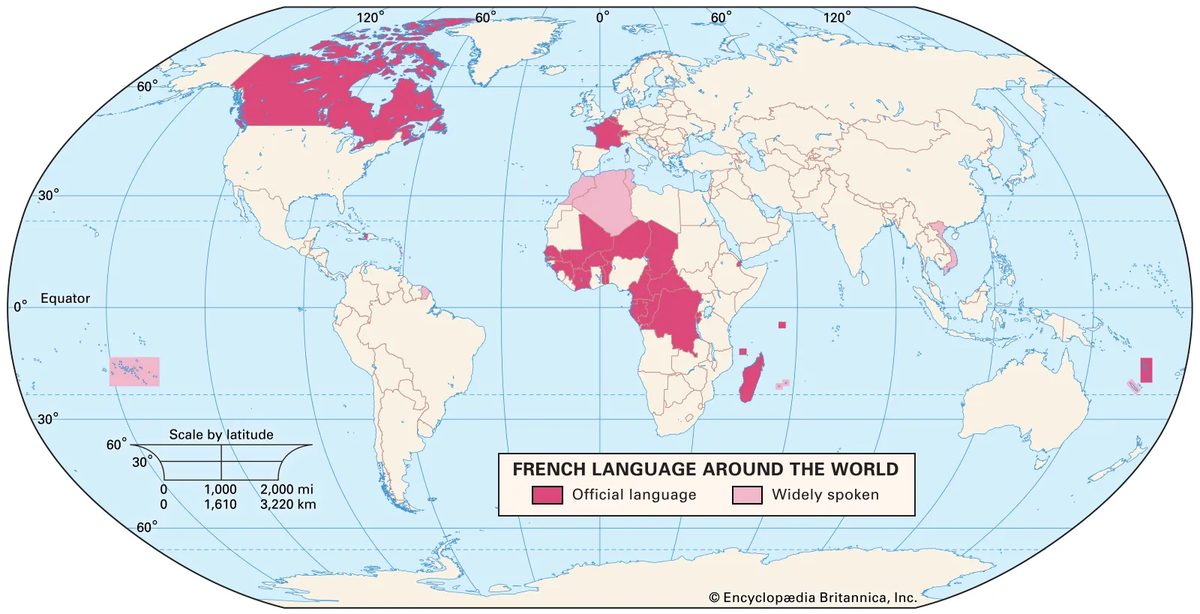
The story doesn’t end in Europe. Later colonial and commercial contacts expanded the reach of French, Spanish, and Portuguese. They took root in the Americas. They spread across parts of Africa. They reached into Asia.
When you speak Spanish in Mexico or Portuguese in Brazil, you’re not just using a language. You’re using a tool of empire that evolved into a tool of culture. The languages adapted to new environments. They absorbed local words. They created new idioms. But the core remained Roman.
The continuity is remarkable. There were few breaks. The religious and scholarly traditions kept the written form stable even as the spoken form drifted. Latin wasn’t just a dead language. It was a living substrate. Romance languages are its
The Latin Roots of Romance Languages
The term itself points directly to the source. Romance languages trace their lineage to Rome. The English word comes from an Old French adaptation of the Latin Romanicus. In the Middle Ages, scholars used this label to describe a specific type of vernacular Latin. It was the everyday speech of common people, distinct from the polished, learned Latin used by clerics in religious texts. It also covered literature written in that same accessible, non-academic tongue.
This distinction matters. It highlights that these languages did not just appear out of thin air. They evolved from a spoken, practical version of Latin. Yet, they are not identical to the Classical Latin taught in textbooks today. The Romance languages share features that do not appear in standard Classical Latin grammar. This suggests a divergence. The lineage is clear, but the path changed.
Some argue that other Italic languages contributed to this mix. These were part of the same Indo-European family as Latin, spoken across Italy. Did they leave a mark? The consensus is no. It is fairly certain that Latin itself, specifically its popular, everyday form, is the direct precursor. The shift wasn’t a hybrid of multiple local tongues. It was Latin evolving on the ground, in the streets, away from the strict rules of the elite.
“The Romance languages continue a version of Latin that is not identical with Classical Latin.”
This evolution wasn’t accidental. It was the natural result of how language is used by real people. When you speak daily, you simplify. You adapt. You drop complex cases. You borrow words. The result is a family of languages that feels familiar to English speakers but stands on its own foundation. That foundation is Latin, stripped of its academic armor and rebuilt for daily life.
The connection to Rome isn’t just historical. It’s linguistic. Every time a French speaker uses a verb or an Italian speaker orders coffee, they are using structures inherited from that vernacular Romanicus. The gap between the textbook and the street was where the modern languages were born.
It raises a question. If Classical Latin was the standard, why did the popular form survive so well in these modern tongues? The answer lies in utility. The spoken version was flexible. It survived because it worked. The academic version remained static. It preserved the rules but lost the people.
This distinction explains the quirks in Romance grammar. The vowel shifts. The simplified noun cases. The vocabulary that doesn’t match its Latin ancestor. These aren’t errors. They are signs of life. They show a language adapting to the needs of its speakers.
Consider the word for “horse.” In Latin, it was caballus, a word for a workhorse, not the noble equus. The Romance languages kept caballus. It survived because it was the word people actually used. It wasn’t elegant. It was practical. That practicality shaped the languages we speak today.
So when you look at Spanish, French, or Italian, you aren’t just looking at derivatives of Latin. You are looking at Latin as it lived. Not as it was written in scrolls. But as it was shouted in markets, whispered in homes, and sung in songs. The connection to Rome is real. But it’s the Rome of the people, not the senate.
This understanding changes how we view language learning. It’s not about memorizing dead rules. It
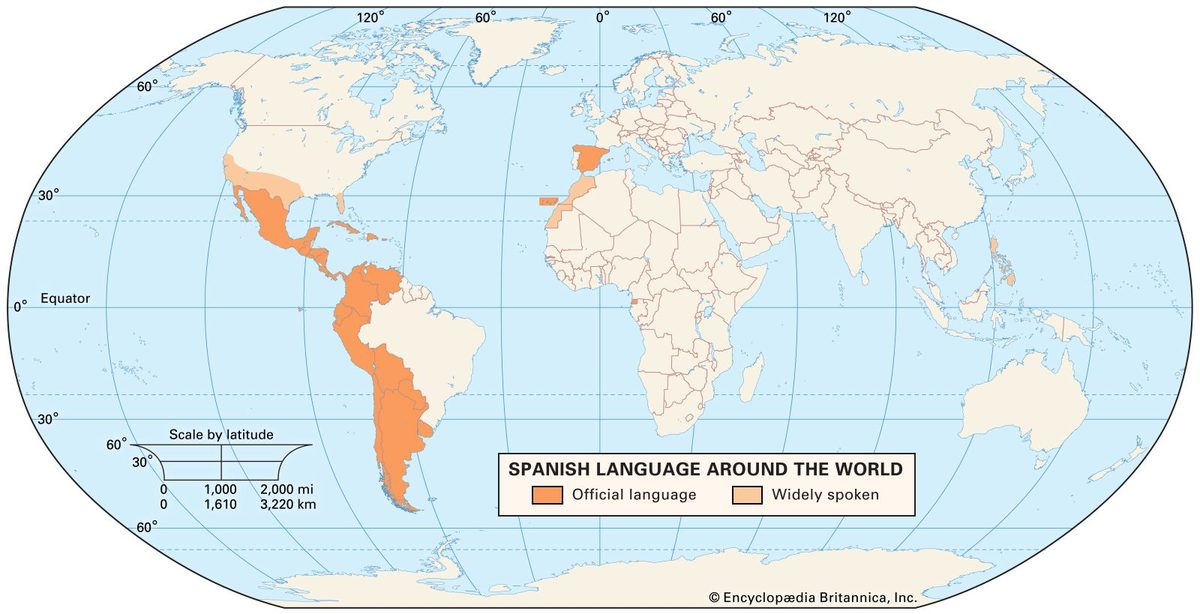
By the early 2000s, roughly 920 million people spoke a Romance language as their native tongue. Another 300 million used it as a second language. Then there are the creoles. These are simplified or pidgin forms that evolved into native languages for entire communities. French creoles echo in the West Indies, parts of North America, and Indian Ocean islands like Mauritius, Réunion, and Rodrigues. Portuguese creoles dominate in Cabo Verde, Guinea-Bissau, and São Tomé and Príncipe. You will also find them in India, particularly Goa and Daman and Diu, and even in Malaysia.
Spanish creoles, including Palenquero and Chavacano, exist in the West Indies and the Philippines. Papiamentu sits nearby too. It is based on Portuguese but heavily influenced by Spanish. Most speakers code-switch. They use the creole for casual, informal moments. They switch to the standard language for formal occasions.
French holds a unique position in Africa. It is an official language in 18 countries. Think of Benin, Burkina Faso, Burundi, Cameroon, and the Central African Republic. It is also official in Chad, the Republic of the Congo, Côte d’Ivoire, the Democratic Republic of the Congo, Djibouti, Equatorial Guinea, Gabon, Guinea, Mali, Niger, Rwanda, Senegal, and Togo. Madagascar and several offshore islands speak it too. In North Africa, French shares the stage with Arabic in Tunisia, Morocco, and Algeria.
Portuguese commands official status in Angola, Cabo Verde, Guinea-Bissau, Mozambique, and São Tomé and Príncipe. The reach is vast. English is growing. French influence has waned somewhat due to English’s rise as the global lingua franca. But French persists. Its literary tradition is rich. Its grammar was precisely formulated by 17th- and 18th-century grammarians. French speakers take pride in their tongue. That pride ensures lasting importance.
Spanish and Portuguese hold sway over vast territories. They remain prime players. Italian has less geographic spread. Yet it stays popular with students. Why? It carries the weight of Italy’s cultural heritage.
Classification methods and problems
Classifying Romance languages is easy on the surface. Lexical and morphological similarities make it clear which languages belong to the family. Grouping them into subgroups is messy. Most classifications are historico-geographic. Spanish and Portuguese are Ibero-Romance. French and Franco-Provençal are Gallo-Romance. Shared features in these subgroups point to pre-Roman languages. These substrata were displaced by Latin. Superstrata are languages superimposed by later conquerors.
The first major split is West vs. East Romance. The dividing line runs across Italy from La Spezia to Rimini. One theory suggests this split happened early. Eastern dialects in central and southern Italy developed popular features. Western speech areas maintained higher literary standards. School influence kept them closer to Latin norms.
Problem cases abound. Where does Catalan fit? Is it Ibero-Romance or Gallo-Romance? Its medieval literary language resembled Provençal. What about Rhaetian dialects? Those in Italy lean closer to Italian. The Swiss ones drift toward French. Sardinian stands apart. Isolation from the Roman Empire after the Vandal kingdom’s mid-5th-century incorporation supports this separation. Dalmatian’s exact position remains disputed.
How Romance languages are grouped
The family tree model is the standard approach. But change the criteria, and the tree shifts. Take historical development of stressed vowels as the criterion. French groups with North Italian and Dalmatian. It separates from Occitan. Central Italian ends up isolated.
Non-tree classifications rank languages by degree of differentiation. Compare them to Latin. Sardinian and Italian show the least change. French shows the most. Romanian changes the most in vocabulary.
Standard Italian is a central language. It sits close to all other Romance tongues. It is often readily intelligible. French and Romanian are peripheral. They lack similarity to other Romance languages. Other speakers must exert more effort to understand them.
Which classification method works best for learners? It depends on whether you prioritize history or mutual intelligibility. The lines blur when you look at real usage. A speaker in Marseille might struggle with a speaker in Bucharest. Yet they share a common Latin root. The geography of language is not just a map. It is a timeline. And it is still being written.
Deciding whether a variety of speech is a “language” or just a “dialect” is messy. Opinions differ wildly on how many Romance languages actually exist today. The easiest answer is political. If a nation or people accept it as standard, it’s a language. By that definition, French, Spanish, Portuguese, Italian, and Romanian are safe bets. Romansh might count too. It’s semi-official in Switzerland and likely tied to Rhaetian dialects in Italy. Catalan is official in Andorra and co-official in Spain’s Catalonia, Valencia, and the Balearic Islands.
Linguists take a different view. They often treat Sardinian and Occitan (medieval Provençal) as independent languages rather than dialects. This is because neither comes from an independent nation-state anymore—Sardinian lost its political independence in the 14th century.
The Grey Zone of Italian and French
The situation gets fuzzier in Italy. The Rhaetian dialects, like Ladin in the Dolomites and Friulian near Udine, are sometimes seen as distinct from Italian. Sometimes they are just local flavors of it. Sicilian is distinct enough from northern and central Italian that many give it separate status. Yet, all neighboring Italian dialects are mutually intelligible. The differences only become stark as geographic distance grows.
Then there is Franco-Provençal. This group of dialects spans the Alpine regions of France and Italy. Many think it is different from both French and Occitan. Some linguists argue it is merely a transitional dialect between the two. Few French speakers know it today. It survives in Italy’s Valle d’Aosta region, where French remains the cultural language, not Italian.
Rising from “Dialect” Status
In the 21st century, the line between dialect and language is shifting. Asturian and Galician (spoken in Spain and Portugal), Corsican (France and Italy), and Piemontese were once dismissed as mere dialects of their national languages. Now, they are considered distinct enough to be granted language status.
Why the change? Other “dialects” are fighting for recognition based on their written traditions. Active promotion of these tongues in literature and daily use is forcing a reevaluation.
The political definition of a language is the least ambiguous one.
Judeo-Spanish and Creoles
Judeo-Spanish, also known as Ladino, is a special case. Do not confuse it with Ladin. For a long time, it was not seen as an independent language. It was viewed as an archaic form of Castilian Spanish. It preserved features from the 15th century, right before Jews were expelled from Spain.
Today, there are 100,000 to 200,000 speakers. Most originate from the Balkans and Asia Minor. After World War II, the population concentrated in Israel. Others live in Turkey.
Linguists also debate creoles. Some believe Haitian Creole is a language distinct from French. They point out that the two are mutually unintelligible. But intelligibility varies so much by speaker and listener that it is hard to set firm criteria. You cannot rely solely on whether two people can understand each other.
The Disappearance of Dalmatian
Many Romance dialects literally vanished in the 20th century. Dalmatian is the most striking example. The last known speaker was Tuone Udaina (Italian: Antonio Udina). He was blown up by a land mine in 1898.
He was the main source of knowledge for his parents’ dialect. This dialect came from the island of Veglia, now modern Krk. Udaina was hardly an ideal informant. Vegliot Dalmatian was not his native language. He had only learned it by listening to his parents’ private conversations.
He had not spoken the language for 20 years before acting as an informant. He was deaf and toothless. Most of our knowledge of Dalmatian comes from documents from Zara (modern Zadar) and Ragusa (modern Dubrovnik) from the 13th to 16th centuries.
It is possible that, aside from isolated pockets, the language was replaced by Croatian and, to a lesser extent, Venetian. Even with scanty evidence, Dalmatian was clearly a language in its own right. It was noticeably different from other Romance languages.
Surviving on the Edge
On the Istrian Peninsula in Croatia, near Krk, another Romance variety survives precariously. Istriot has fewer than 1,000 speakers. It may be related to Vegliot. Some scholars link it to Rhaetian Friulian dialects or Venetian. Others call it an independent language.
There are no texts except those collected by linguists. A little farther north on the same peninsula, Istro-Romanian is threatened with extinction. It has about 300 mother tongue speakers in the early 21st century.
Usually classified as a Romanian dialect, Istro-Romanian may have been carried to the peninsula by Romanians fleeing the Turks in the 16th and 17th centuries. It has undergone strong Croatian influence. The first evidence of its existence is a short word list in a 1698 historical work. Folklore texts from the 19th century exist. Otherwise, it is unwritten.
Another isolated Romanian dialect is Megleno-Romanian. It is spoken mainly in Kilkís prefecture, Greece, west of the Vardar River near the Macedonian border. In 1914, there were 13,000 speakers. Many emigrated to Asia Minor, former Yugoslavia, and Romania. Small pockets survive, numbering about 5,000 in the early 21st century. The only texts are those transcribed from oral traditions.
We often think of Latin’s children—French, Spanish, Italian—as enduring giants. But history shows that many Romance tongues vanished long before our own era. Some didn’t die with a whimper. They were erased by pressure, war, and the slow creep of neighboring languages.
Take Mozarabic. This Ibero-Romance dialect survived in Arab-occupied Spain until shortly after the Reconquest ended in the late 15th century. The name comes from the Arabic word for “Arabized person,” or ʿajamī, which essentially meant “barbarian language.” It wasn’t just peasant talk. It was the urban bourgeoisie’s tongue. These Christians stayed Christian while the countryside largely converted to Islam. Eventually, even many Arabs picked up the dialect.
The Mystery of Mozarabic Phonology
Reconstructing how it sounded is nearly impossible. Why? Because most evidence survives in Arabic script. That script uses no vowel signs. We have one 15th-century glossary from Granada. That’s it for direct texts.
Scholars rely on fragments instead. Medical and botanical works listed Mozarabic terms alongside Arabic translations. Then there were the kharjah s. These were refrains attached to Arabic love ballads, or muwashshaḥ s, from the 11th and 12th centuries. Nobody started studying them seriously until 1948.
The language was conservative. Very conservative. Yet it still died out after the Arabs were driven out. Some claim it left marks on southern Spanish and Portuguese dialects. But the speakers? Gone.
Romania Submersa and the Pressure of Conquest
This phenomenon isn’t unique to Spain. Linguists call these extinct varieties Romania submersa. They developed in peripheral Roman Empire regions only to get crushed by non-Italic languages. We know they existed because surviving languages borrowed their words.
Look at North Africa. The Afro-Asiatic Amazigh (Berber) languages hold evidence of a brilliant Roman period that ended with Arab invasions in the 7th century CE. The Romans were gone, but their language lingered in the vocabulary.
In Britain, Brythonic or British Celtic languages kept traces of a conservative Romance dialect. This dialect was eliminated by Anglo-Saxon invaders in the 5th century. Welsh retains many of these traces today.
Romance in Eastern Europe and Beyond
The story gets even more complex in Eastern Europe. Albanian contains so many Romance words that some experts call it “semi-Romance.” It’s not fully Romance, but it’s deeply influenced.
Consider the Roman province of Pannonia. This covers modern western Hungary, parts of eastern Austria, Slovenia, and northern Serbia. Romance speech likely wasn’t dead there when the Magyar invasion hit at the end of the 10th century. The language probably held on longer than we think.
There’s strong reason to believe Romance dialects once stretched across much of southeastern Europe. They weren’t just isolated pockets. They were a widespread presence.
The Southward Retreat
Romance languages have been retreating southward for a long time. The pressure came from Germanic tongues.
For a long time, it seems probable that Romance was spoken throughout Switzerland. It was also used in parts of Bavaria and Austria. When did it stop? Roughly the 9th to 10th century.
That’s a massive shift. In a few centuries, the linguistic map of Europe changed entirely. What remained? Only the places where Romance could hold its ground against the Germanic wave.
The silence of these lost languages is deafening. We catch echoes in medical texts, in borrowed words in Welsh or Berber, in the structure of Albanian. But the voices themselves? They’ve been quiet for over a thousand years.
What happens to a language when its speakers are displaced? It doesn’t just vanish. It leaves scars. Traces. Fragments that haunt the surviving tongues long after the last native speaker has stopped speaking.
The story doesn’t end with Cicero. To understand why your morning coffee is caffè and not cafeus, you have to look past the polished marble of Classical Latin. You have to look at the messy, evolving street talk that survived the empire’s collapse.
Before Latin became the global standard of the West, it was just another dialect in a crowded room.
The Italic context
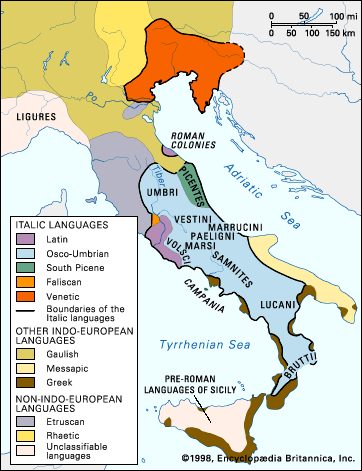
Latin wasn’t born alone. It belonged to the Italic branch of Indo-European, sitting next to its cousin Faliscan. Think of them as siblings who didn’t always get along. To the south, there was Oscan.
Oscan was the voice of the Samnite tribes. It shows up in inscriptions for five centuries before the Common Era. The Romans used it in official documents until about 90–89 bce. The texts suggest a standardized form. No wild variations. But the scripts tell a different story. Three alphabets appeared in the same region:
- Local scripts derived from Etruscan.
- Greek scripts in southern cities.
- Latin scripts in later inscriptions.
Umbrian hung out to the northeast of Rome. It might have touched the Adriatic Sea at one point. We know it mostly from the Iguvine Tables (Tabulae Iguvinae ). These date from 400 to 90 bce. Umbrian looks a lot like Oscan.
Here is the tricky part. Latin and Osco-Umbrian probably couldn’t understand each other. Some linguists argue they aren’t closely related at all. They might have just converged. Contact between groups creates similarities. It doesn’t always mean shared ancestry.
The Faliscan connection
The Roman dialect was part of a larger group called Latinian. The biggest rival within that group was Faliscan.
Faliscan was the language of Falerii. That’s modern Civita Castellana. It sits about 51 kilometers north of Rome. The Faliscans were likely a Sabine tribe. They fell under Etruscan domination early on.
We know Faliscan mostly from short inscriptions. These are from the 3rd and 2nd centuries bce. The dialect likely survived the Roman conquest of Falerii in 241 bce. It didn’t vanish overnight.
Rapid change in early Latin
The oldest Latinian text is a cloak pin (fibula ). It’s from the 6th century bce. It comes from Palestrina (Praeneste).
Other early Latinian inscriptions look different from Roman Latin. We don’t have much evidence of Roman Latin before the end of the 3rd century bce. That’s a gap.
But we know the language changed fast. Look at the 5th century. There’s a mutilated inscription in the Roman Forum. It’s probably a religious prescription. Then there’s the Twelve Tables. We know the contents from later evidence.
By the 3rd century bce, older texts were unintelligible. People couldn’t read their own grandparents’ writing. That level of drift sets the stage for everything that follows.
Standardization and Greek influence
Rome subdued its Latin neighbors by 335 bce. The language began to standardize. It absorbed features from other dialects. It became a tool of empire.
Plautus (c. 254–184 bce) was the first author of note. He was a comic dramatist. His language reflects a spoken idiom. Some features of that idiom survived into the Romance languages. You can trace the DNA of modern Italian or Spanish back to the jokes in Plautus.
Cultural borrowing accelerated after 265 bce. Rome conquered Magna Graecia in the south. They absorbed Greek literary ideals. Poetic language took heavy hits from Greek structures. This continued until Latin poetry hit its zenith with Virgil.
The Golden Age of Prose
In the 1st century bce, literary prose developed. It valued elegance. It valued clarity. It rejected vulgarity. It rejected rusticity.
Grammatical rules were codified. Vocabulary was pruned. The goal was the harmonious balanced period. Rhetorical circles loved it.
Cicero (c. 106–43 bce) took this prose style to its highest point. But he gave us something more valuable than perfect sentences. He showed us the gap between written and spoken language.
He distinguished between his speeches and his letters. In the letters, he used sermo plebeius. This means “plebeian speech.” The style is different. The sentences are shorter. They are less complex. The vocabulary is more colorful. It uses plenty of diminutives.
Truly popular language differed even more from the sophisticated literary idiom.
The survival of the archaic
Archaic features were banned from literary style. You wouldn’t find them in Cicero’s speeches. But they survived in common speech. They survived right through to the Romance stage.
Why does this matter? Because the Romance languages are built on that common speech. Not the polished version.
Some claim the historian Sallust (c. 86–35/34 bce) approximated popular usage. His style was archaizing. But it’s more probable he was consciously imitating old Roman poetry. It wasn’t natural speech. It was a stylistic choice.
Then there’s Petronius Arbiter (died 66 ce). He was the Roman “judge of elegance.” He wrote the Satyricon. In the Cena Trimalchionis section (chapters 26–78), he creates the character Trimalchio. Trimalchio speaks in what looks like vulgar speech. Petronius was imitating it. He was capturing the voice of the rising middle class.
This voice didn’t disappear. It kept evolving. The empire fell. The politics changed. But the words remained. They twisted. They shortened. They gained new sounds. And that’s how you get from senatus populusque Romanus to modern Italian, French, Spanish, Portuguese, and Romanian.
The standardization stopped. The divergence began. And the rest is history. Or rather, what’s left of it.
How Latin Diverged from a Single Tongue
We assume Latin was monolithic. It wasn’t. In the sprawling territories where Romance languages now dominate, Latin was once the default for nearly every class. But how did it fracture into French, Spanish, Italian? That is the million-dollar question.
Did these languages grow from rough peasant dialects? Or were they the refined speech of cultured urbanites? Scholars are split. One camp argues that divergence began the moment local populations adopted the conqueror’s tongue. In this view, dialects emerged from isolated innovations or the stubborn preservation of archaic features in remote areas.
It is obvious that Latin usage varied across the empire. But were those differences merely phonetic? Regional accents and vocabulary tweaks? If so, mutual intelligibility would have survived. On the other hand, the differences could have been profound enough to serve as the foundation for total separation once the political glue of the empire dissolved.
This second hypothesis implies a long period of bilingualism. We are talking up to 500 years of overlap. Linguistic interference rarely outlives the bilingual stage. Yet, we know virtually nothing about the status of indigenous tongues during the imperial period. Contemporary references to linguistic differences within the empire are vague at best. It feels odd that none of the numerous Latin grammarians of the era flagged these well-known facts. But absence of evidence is not evidence of absence. Diversification likely happened.
Historical parallels are scarce. The British Empire exported English to wildly different lands, but it lasted a comparatively short time. Its linguistic contribution was backed by modern media and partially negated by rising nationalist sentiment. Rome had neither.
The Shift from Vernacular to Vernacular
What we do know is that popular usage within the Roman Empire was highly diversified. Yet it was overlaid by a standard written language that preserved significant uniformity long after the empire’s administrative collapse.
For the speakers themselves, they believed they were using Latin. They just thought their version was sloppy. They knew, through sheer ignorance, that their speech was not quite as it should be.
It wasn’t until the 8th or 9th century—later in some regions—that people realized Classical Latin wasn’t just a polished version of their own speech. It was a different language entirely.
This realization triggered a cultural pivot. Latin wasn’t just fading; it was being replaced by the very languages it had once suppressed. The emergence of Romance languages wasn’t an overnight event. It was a slow burn of misunderstanding and redefinition.
The Church’s Role in Standardization
Christianity spread Latin into new frontiers. It likely preserved the language in a “pure” form in Ireland, from where it was exported to England. This purity paved the way for an 8th-century reform led by Charlemagne.
Charlemagne was conscious that current Latin usage was falling short of Classical standards. He invited Alcuin of York, a scholar and grammarian, to his court at Aix-la-Chapelle (Aachen). Alcuin stayed from 782 to 796. He didn’t just teach; he inspired an intellectual renaissance.
The revival of so-called purer Latin had an unexpected side effect. Vernacular texts began to appear. The contrast became undeniable. The vernacular and Latin were not the same language.
This realization led to concrete policy. In 813, just before Charlemagne’s death, the Council of Tours issued a decree. Sermons were to be delivered in rusticam Romanam linguam. That means the rustic Roman language. The goal was intelligibility. Congregations needed to understand the word of God.
Why Latin Outlasted Empires
Latin remained the official language of the Roman Catholic Church. It was in constant use by most Romance speakers. It wasn’t until the second half of the 20th century that church services began to be conducted in the vernacular.
For centuries, Latin was the language of science and scholarship. It held sway until the 16th century. Then, three forces converged to topple it.
- The Reformation.
- Nascent nationalism.
- The invention of the printing press.
Modern languages began to replace Latin. Yet, in the West, knowledge of Latin remained a mark of the educated person alongside Greek. This persisted for centuries.
The teaching of classical languages in schools declined significantly in the mid-20th century. But the imprint remained. Latin didn’t just die. It infiltrated.
The Legacy in Non-Romance Languages
Rome’s prestige was so immense that Latin borrowings exist in virtually all European languages. They are even found in the Berber languages of North Africa. These languages preserve agricultural terms that have been lost elsewhere.
Basque has borrowed a significant number of words. These come mainly from administrative, commercial, and military spheres. Determining whether these terms are later borrowings from Spanish or direct from Latin is difficult in some cases.
Uncertainty disappears with the Celtic languages. Welsh, Cornish, and Breton contain around 800 Latin words. These are drawn from a wide sphere of activities.
In Germanic languages, borrowed Latin words primarily involve trade. They often reflect archaic forms.
Albanian presents a unique case. The language contains a very large number of Latin words. These are part of its basic vocabulary. They include kinship terms and cover spheres like religion. Some of these words may have been later borrowings from Romanian. In some instances, Latin words found in Albanian have survived in no other part of the former Roman Empire.
Greek and Slavic languages have comparatively few Latin words. The ones they do have are often administrative or commercial in character.
The spread of Latin was not just about conquest. It was about utility. It was about trade, religion, and administration. Even where Latin never became a native tongue, it left a fingerprint.
So, how did a single language become the backbone of half the world’s major tongues? And why do we still struggle to separate the “pure” Latin from the messy, living reality of what people actually spoke? The answer lies in the gap between what was written and what was spoken. That gap widened over centuries. It became a canyon. And then, it became a bridge to the modern world.
When did Latin become Romance?
The line between Latin and Romance is blurry. Scholars used to obsess over the exact date of the switch. It’s a terminology problem. Today’s Romance languages are basically regional dialects of a uniform speech pattern. They match Vulgar Latin closely. Generative phonologists argue that modern underlying forms look identical to Proto-Romance.
But speakers know they aren’t speaking Latin. They understand neighbors, sure. But they feel a gap. Speaker consciousness is the best metric for divergence. When did they realize they weren’t using Latin?
Some point to the 5th century. Barbarians were flooding the empire. Communication broke down. Others demand textual proof. They want to see written Romance. That evidence doesn’t appear until the 9th century. It starts in northern France. Then Spain. Then Italy.
Charlemagne’s reforms might have accelerated this. He pushed for classical Latin standards. That likely forced a distinct written form for the vernacular. Feudalism played a role too. The open Roman society split into closed feudal units. That isolation had linguistic effects.
Reading between the glosses
Scribes started noticing the change. By the 7th century, they were adding glosses. These were notes in older Latin texts. They replaced obscure words with familiar ones.
The glosses often show Romance forms. But they are written in Latinate style. It looks like superficial adjustments. The original texts were still comprehensible.
The Reichenau glosses are the best known. They belonged to an abbey on Lake Constance. They date to the 8th century. The vocabulary smells French.
- arenam (sand) becomes sabulo
- vespertiliones (bats) becomes calvas sorices
- scabrones (beetles) becomes wapces
Some words come from Frankish. respectant turns into rewardant.
Other glosses show wider innovations. emit (has bought) becomes comparauit. That word survives in Romanian and Spanish. fissura (crack) becomes crepatura.
There is morphological simplification too. saniore (healthier) is glossed as plus sano. cecinit (he sang) becomes cantavit. Most comments are lexical.
The Kassel glosses appear in the early 9th century. They translate Bavarian German into Latin. They show phonetic differentiation. Scholars think they are French or Rhaetian. mantun means chin. Compare it to modern menton.
The spelling is weird. The intent is clear. It’s Latin. When phrases are glossed, the Latin stays close to classical models. It isn’t a new language yet. Just a draft.
The messy birth of Romance writing
Writing in local languages didn’t happen overnight. Sure, you had the Strasbourg Oaths in the 9th century. And the Eulalia poem. But let’s be honest, the Latin alphabet was barely equipped to handle the sounds of the time. It was a clumsy fit.
Northern French texts showed up first. That isn’t a surprise. Latin had mutated faster there than almost anywhere else. The locals needed to write things down, and their version of Latin was already drifting far from the original. By the 10th century, lawyers in other regions realized nobody could read formal Latin anymore. They needed vernacular. They needed clarity.
Real literary momentum didn’t hit until the 12th century. That’s when the arts really took off across western Europe. But don’t think every Romance language got in on the action then. Rhaeto-Romance and Romanian had to wait. They didn’t find their literary footing until the Reformation period. Much later.
How languages borrowed from each other
Medieval poetry wasn’t isolated. It was a cross-pollination event. The Provençal lyric style left a mark on practically every vernacular literature. Words jumped borders. Lexical borrowing was rampant.
Then the center of gravity shifted. In the 13th century, influence moved from southern France to northern France. From Sicily to Tuscany. Power follows money and politics, and that’s where the influence went. Portuguese and Catalan entered the fray a bit later. They picked up the pieces of southern France’s battered literary scene and took over the Iberian Peninsula.
Meanwhile, English was losing its grip on French. A century earlier, Anglo-Norman lit had been rich and vibrant. Now? French was retreating. Inside France, the Parisian dialect began to swallow everything else. In Italy, Florence was watching the rise of its dialect. It was laying the groundwork for a standard.
The Latin echo in modern vocab
The rediscovery of classical texts changed everything. First in Italy. Then spreading. This wasn’t just reading old books. It was about copying them. Writers tried to model their grammar on Classical Latin. They borrowed heavily from Latin and Greek.
The Italian standard language still owes a massive debt to this. It looks more like Latin than its own spoken dialects do. French was different. Except in the 16th century, it didn’t let Latin reshape its grammar much. But the vocabulary? That’s a different story.
From the 14th century onward, French speakers started preferring words that looked quasi-Latin over the old inherited forms. So much of modern French vocabulary has that “learned” appearance. It’s a stylistic choice, not a grammatical necessity.
Spanish followed a different timeline. The trickle of Latinisms became a flood in the 15th century. Spanish was stubborn. It was more reluctant to drop old words than French was. But those Latin borrowings now make up a huge chunk of its lexicon.
The fight for a standard
Italy started the argument. The “question of the language” became a hot dispute right there. Dante tried to define a volgare illustre. An illustrious popular speech. He wanted something that could rival Latin for serious work. It didn’t peak until the 16th century.
Spain moved faster on the policy side. 1492. The reconquest ended. America was discovered. Antonio de Nebrija published his Gramática Castellana. His argument was blunt. They needed an ennobled language. One fit for imperial export.
France took longer to decide. The Renaissance, the Reformation, and printing press all played a role. By the 16th century, French was taking over Latin’s job in science, religion, and scholarship. They tried to build a national language from dialects and Latin scraps.
They didn’t make a definitive choice until the late 17th century. Why then? Because political power and social influence were locked inside the royal court. The only acceptable usage was court usage.
This created a weird dynamic. Social climbing became tied to speech. The bourgeoisie wanted to get ahead. So they mimicked their betters. They aped the speech habits of the aristocracy. This made guides to le bon usage — good usage — incredibly popular.
French dominance cemented itself. With Louis XIV and Racine leading the charge, French style became the gold standard. The Golden Ages of Spain and Portugal were fading. Italy was stagnating. French won by default.
The grammar police
French grammarians in the 18th century had a lasting effect. They weren’t just recording language. They were policing it. They wanted “purity.” They wanted to eliminate “vulgarity.” They codified rules based on logic, not always linguistic reality.
This belief persists. The idea that correct language isn’t a birthright. It’s a tool. A tool that needs to be fashioned carefully. Skillfully handled. To mirror thought with minimal distortion.
This mindset still shapes education in Romance countries. To an English speaker, it looks ridiculous. We often judge competence by nativelike performance. Can you communicate? Do you sound natural?
But in Romance cultures, the metric is different. Strict adherence to grammar-book rules often matters more. If a foreigner uses the “negligent” native usage, they get frowned upon. They want the stilted correct expression. The precise form.
It’s not about how you sound. It’s about how correctly you construct the sentence. And that distinction changes everything about how people are taught to speak.
The Sound and Rhythm of Romance Languages
Linguists often describe Romance languages as melodic. This isn’t just poetic license. The sound is driven by a vowel-heavy structure. Consonants take a backseat. This creates a flow that feels musical to outsiders. Some languages hit harder. Portuguese and Romanian are quieter. They lack the bell-like clarity of Spanish or Italian.
Speed is another factor. Romance speech feels rapid. Why? Because individual words carry little stress. French has almost none. Elision is common. Words run together in stress groups. Romanian is the odd one out. It is spoken slowly.
Intonation tells a story about emotion. Some hear excitability in the pitch. It’s subjective, sure. But the data shows range. Northern French stays within one octave. It’s sober. Italian sweeps over two octaves. It’s sinuous. Castilian Spanish jumps. It moves jerkily over an octave and a third.
Grammar: From Synthesis to Order
These languages kept some Latin structure. Verbs are the main holdouts. Romanian even kept it in nouns. But French broke away. Since the 14th century, it shifted radically. It dropped morphological forms. Now, it relies on word order. It relies on intonation. Other Romance languages allow some flexibility. None match the chaos of Classical Latin.
This shift matters. It changes how meaning is constructed. You can’t just conjugate your way out of a sentence. You have to pay attention to sequence.
The Battle for Purity and Standardization
Purists hate change. They hate borrowing. English is the current enemy. Grammarians have fought this war for centuries. They lost. The flood of neologisms never stopped. French is the worst offender. It loses old words as fast as it adopts new ones. It’s volatile. It’s quick.
Codification changed the game. Once grammar was written down, stability arrived. Standard languages became rigid. This rigidity feeds back into speech. It comes through the education system. Governments issue edicts. They decide what is correct. Exams enforce it.
This stiffness has a benefit. It makes the language teachable. Standards of correctness are high. French spoken by Africans. Spanish spoken by indigenous Americans in the Americas. The grammar holds. It’s stable. The goal was international importance. The method was cultural diffusion. You teach the language to spread the values.
Typology: Who’s Closest to Latin?
Standard Italian is the “central” Romance language. It kept Latin traits. It even readopted some. But it’s not elegant. Castilian Spanish is more efficient. It ruthlessly cut anomalies. Italian suffers from historical inertia. It looks backward. This hinders popular development.
Romanian is grammatically closest to Latin. It uses noun declensions. The definite article comes after the noun. It uses the subjunctive mood heavily. These features might come from Balkan neighbors. Or an older linguistic layer. The vocabulary is messy. It’s full of Slavic and Turkish words. It doesn’t always feel Romance.
French diverged the most. Radical phonetic changes happened early. The 9th-century texts look nothing like Latin. Scholars blame Celtic and Frankish influence. A second wave of change hit in the 15th century. Word accents vanished. Morphological markers disappeared. The motivation is unclear.
Occitan and Catalan are conservative. Roman schools in South Gaul kept them stable. Spanish and Portuguese are similar. Some blame an Iberian substratum. Others point to a Moorish superstratum. But they differ in force. Spanish is aggressive. It accepts innovation. Portuguese is soft. It retains old oddities. It’s inert.
Rhaeto-Romance and Dalmatian show German and Italian impact. Sardinian is a peasant language. It’s extremely conservative. Some dialects have picked up Italian and Spanish features.
Phonology: The Latin Split
Phonological changes started in Vulgar Latin. Vowel length contrast vanished. Stress accent strengthened. This happened while dialects were still united.
Western Romance languages share more changes. The collapse of ē and ĭ into /i/ might have happened after Sardinia and southern Italy split off.
Eastern and Western Romance split later. The development of ō and ŭ in Romanian and Vegliot suggests this. It points to a deeper divide. The sound shifted. The grammar followed. The languages drifted apart.
The Vanishing Vowels
Unaccented vowels don’t just sit there. They erode. In some languages, they weaken to the point of total disappearance. Consider the final -a. It is the most sonorous vowel in the Latin inventory. Yet in Romanian, Portuguese, and certain Catalan and Rhaetian dialects, it has weakened into a neutral sound. Standard French? It is gone. The dialects of France might still whisper that neutral vowel sound—the second vowel in English alphabet —but the standard language has dropped it entirely.
Final -o fares little better. Derived from Latin -ō or ŭ, it vanished early in French, Occitan, Catalan, and Rhaetian. It only survives in Romanian before a following article. In Portuguese and Romanian, it closed up to a /u/ sound, like the u in lunar. Final -e is even more evanescent. It remains a full vowel only in pockets of central and southern Italy and Sardinia.
How Diphthong Formation Changed Vowel Quality
Under the weight of main stress, Latin vowels transformed. They became diphthongs. Why? Perhaps heavy stress lengthened them. Or maybe following high vowels raised them. This process, known as breaking, mirrors the German umlaut. The “open” e /ɛ/ (as in met ) was hit hardest. The “open” o /ɔ/ (like the o in law or ingot ) followed, though less intensely. High close vowels i and u were virtually untouched.
The shift of short e /ɛ/ to a diphthong—usually /ye/, as in yet —is so common that some scholars believe it began in the Vulgar Latin period. But the conditions vary wildly. In French and Italian, it happens only in open syllables (those ending in a vowel in Vulgar Latin). In Romanian, Vegliot, Spanish, and arguably Rhaetian, similar developments occurred in all accented syllables. Portuguese may have skipped the process altogether. Or maybe it joined in, developing diphthongs from short e- and o- under the influence of a following high vowel, only to reduce them back to a single sound later. This mirrors what happened in Occitan, Catalan, Sardinian, and some Italian dialects.
The French Shift: From flour to fleur
Northern French took a different turn. At an early period (after the 5th but before the 9th century), Latin ō and ŭ, along with ē and ĭ, became the diphthongs ou and ei. By the 12th century, the phonetic results were eu and oi. These provided today’s spellings, though the sounds have shifted considerably since. Compare fleur (‘flower’). It came from flour, which came from flore. The greater extension of spontaneous diphthong formation in French, compared to other Romance languages, is often attributed to the heavy stress of the Frankish superstratum.
Why Nasalization Matters in French and Portuguese
In nearly all Romance languages, a following nasal consonant caused peculiar developments in the preceding vowel. Usually, the effect was limited to raising or closing. Not in French and Portuguese. There, phonological nasalization took hold. A series of vowels distinguished by nasal resonance developed.
In these languages—and some others like Chilean Spanish, Caribbean Spanish, Andalusian Spanish, Romanian in Albania, and northern Occitan—nasal vowels are distinct. They are not mere variants of oral vowels. They are phonemic. They serve to differentiate meaning.
Take French. Pin (‘pine’) is pronounced /pɛ̃/. The tilde marks the nasalization. Paix (‘peace’) is /pɛ/. No nasal. In Portuguese, lã (‘wool’) contrasts with la (‘there’). The difference is the nasal resonance.
The Mechanics of Denasalization
Nasalization was probably noticeable by the 10th century in French and Portuguese. It may not have become phonemic until much later. Some argue that today, nasal vowel resonance is just a surface manifestation of a latent underlying nasal consonant. It appears that nasal vowels were more frequent in the Middle Ages than they are now.
In France, roughly the 16th century brought denasalization when the nasal consonant sat between vowels. The n sound was retained. Look at French bon (‘good’, masculine), pronounced /bõ/, versus bonne (‘good’, feminine), pronounced /bon/. The n reappears in the feminine form.
Portuguese is messier. The consonant did not always reappear after denasalization. Compare boa (‘good’, feminine), from bõa, from bona. No n. But between i and a or o? A palatal nasal consonant emerges. It sounds a bit like the ny in canyon. Vinho (‘wine’) comes from vĩo, from vinu. The n slips in.
Did Celtic Influence Shape the French u?
Some claim Celtic substratum influence caused nasalization. The evidence is weak. A better case exists for the effect of such influence on the French u sound. That /y/ sound, pronounced like German ü or Greek upsilon [υ], appears in most Occitan dialects (likely a recent introduction from French), Rhaetian, and parts of Portugal and Italy. Elsewhere, it is sometimes a marker of affected speech.
The link to Gaulish is plausible. But ignorance of the language itself, combined with chronological and geographic discrepancies, makes a detailed argument difficult. You can trace the sound. You can struggle to prove the root.
The Uvular R and the Romance Split
You’ve likely heard the French r. It’s that guttural rasp, vibrating at the back of the throat. It’s a sound so distinct that social climbers often mimic it to sound sophisticated. But here’s the catch: this Parisian uvular r /ʀ/ isn’t ancient. Standard French didn’t accept it until after the Revolution of 1789. Before that, the Parisian bourgeoisie probably used it as early as the 17th century.
Where did it come from? Likely from the Latin double rr, which was already differentiating itself from the single r by introducing local friction in Middle French. Most modern Provence dialects still keep the distinction clear. Brazilian Portuguese does too, using a trilled r for single letters and a velar “rough” r for double rr. Think of caro (dear) versus carro (cart). Elsewhere? You’ll only find this velar r regularly in Puerto Rican Spanish and a handful of North Italian and Romanian dialects. It’s rare almost everywhere else.
The La Spezia–Rimini Line
Linguists often point to consonant behavior between vowels as proof of an early split between Eastern and Western Romance languages. Draw a line on the map from La Spezia to Rimini in Italy. North and west of that line? Dialects voiced Latin voiceless consonants and simplified geminates (doubled consonants). South and east? Those areas held onto the original Latin system of voiced, voiceless, and geminate distinctions.
The line cuts right through Sardinia. Northern dialects align with the “Western” group. Southern ones lean “Eastern.”
Some scholars connect this voicing to Celtic lenition. It’s not identical, but the process feels similar. Accented vowels lengthened and turned into diphthongs. Meanwhile, Latin doubled consonants shrank into singles. Theories link these shifts, suggesting a broader trend of simplification in the West.
Palatal Shifts and the “Soft” C
Here is a key difference between Latin and the modern Romance languages. The later languages added palatal and palato-alveolar consonants. Latin had none of these.
Palatal sounds happen when your tongue touches the hard palate. Palato-alveolar sounds use the ridge just behind your teeth. In later Latin, stress patterns changed. Unstressed ĭ and ĕ following consonants and preceding vowels shrank into a nonsyllabic y sound called jod.
This new sound forced the tongue upward. Preceding consonants assimilated, moving their articulation toward the roof of the mouth. Eventually, they became dental fricatives like z or th, or affricates like ch. The vowels themselves got modified too.
We see this early shift in spelling errors. Inscriptions confuse –tĭ – and –cĭ -, sometimes writing them as tz.
The results are everywhere in modern vocabulary. Take Latin rubeum (red). It became French rouge, Portuguese ruivo, Catalan roig, and Old Italian robbio. Latin folia (leaf) turned into French feuille, Portuguese folha, Italian foglia, and Sardinian fodza.
How Velar Consonants Moved Forward
Another source of these palatal sounds was velar consonants hitting front vowels. The velar sound moved forward in the mouth. Sometimes it went all the way to dental or alveolar. Often, it settled on a palatal or palato-alveolar spot.
This probably started early. It first hit the velar /k/ and /g/ before front vowels /e/ and /i/. We know it hadn’t happened in the Classical period because early loanwords into Berber, Basque, Celtic, Germanic, Albanian, and Greek don’t show the change.
Central Sardinian dialects still use the old velar pronunciation before front vowels. This suggests palatalization happened after Sardinia separated from the empire. Vegliot evidence is messy. ē didn’t trigger it, but ĕ, ĭ, and u did.
But this shift explains the famous “soft” c. In most Romance languages, c before e and i sounds like /s/ or /ts/. In Italian and Rhaetian, it’s /ch/. Before a, o, and u, the c stayed hard (/k/).
In Classical Latin, every c was hard. The change came later. So Latin centum (/kentum/) became Italian cento (/chento/), Portuguese cento (/sento/), and Spanish ciento (/siento/ or /thiento/ in Castilian).
The map of language is still being drawn, consonant by consonant.
Why French chanter Sounds Nothing Like Latin cantare
In north-central France, something shifted. The Latin a moved forward in the mouth. It sat closer to the teeth. This tiny change had a big ripple effect. It pushed neighboring /k/ and /g/ sounds into new positions.
The result? Palato-alveolar sounds. You know them as /ʃ/ and /ʒ/ in IPA. Or think of the “ch” in church (/tʃ/) and the “j” in jam (/dʒ/).
Take chanter (to sing). Latin cantare lost its hard edge. It became soft. Joie (joy) comes from gaudia. Same process. The hard consonants melted.
This wasn’t just French. West Rhaetian dialects did it too. Sursilvan tgaun. Engadine chaun. Both mean chien in French (dog). All from Latin canem. Franco-Provençal and Northern Occitan dialects followed suit.
But not everyone joined. Picard stayed hard. Canter kept its c. Norman dialects? Mixed bag. Picard kier (dear) from carum didn’t budge.
The timing matters here. This shift happened later than the palatalization of k before e or i. That earlier change didn’t touch Frankish words. Those waited. They fell victim to a different rule. K became ch /tʃ/. Then ch became sh /ʃ/.
Look at skina. It became échine (backbone). A slow evolution. A hard start, a soft finish.
The Romanian Sound Shift: From Latin Roots to Modern Romance
Romania tells a different story. Here, velar consonants moved forward. The trigger? A following i or e.
Dental consonants did the opposite. They moved back. Toward a palatal position. The same vowels pulled them.
Think about terram (earth). It stayed grounded. But sic (thus) became şi (and). The sound shifted. The meaning stayed close. Caelum (sky) became cer. The air got lighter.
Labials got involved too. Or some dialects did. Pectum (chest) became piept. Vinum (wine) became vin. Wait. Vinum to vin? No. Jin from vin? The notes say jin from vin? Let’s check. The text says jin from vin from vinum. Actually, looking closely: k’ept from piept? No. Piept from pectum. And jin? The text lists jin from vin? That seems odd. Let’s stick to the text’s example: piept from pectum (chest). And cînți (you sing) from cânt (I sing).
The final consonants got soft. Transparently so. Earlier “hard” consonants met i. They morphed. They took on morphological weight.
Lupi (wolves). Singular lup (wolf). The i softened the edge. Cînți vs cânt. The i changes everything. It’s not just spelling. It’s sound. It’s meaning.
Consonant Clashes: When Letters Rubbed Together
Palatalization wasn’t just about vowels. Juxtaposed front consonants played a role. Especially in the middle of words.
Imagine a velar next to a dental. Latin /k/ or /g/ next to /t/, /s/, or /n/. Or a lateral /l/.
Sometimes this happened because an unaccented vowel vanished. Vulgar Latin ate it up. The remaining letters collided.
The results varied. Language by language. Region by region.
In Romanian, labials stepped in. They replaced velars in clusters.
Take -ct-. Peptum became piept (chest).
Take -x- (ks). Coxa became coapsă (thigh).
Take -gn-. Lignum became lemn (wood).
Why? Maybe assimilation came first. The velar copied the dental. Like Italian -tt- from Latin -ct-. Or Sardinian -nn- from Latin -gn- (linna from ligna ). Then the geminate split. Differentiation.
Latin l had its own quirks. In Italian, it became a jod /j/ after another consonant. Placere became piacere. Flore became fiore. Clave became chiave. Glanda became ghianda.
Romanian did it after velars too. Plăcea. Floare. Cheie (/kjej/). Ghinda (/gjində/).
Spanish and Portuguese took a different path. A following l palatalized labials and velars. Both initially and medially.
Planum became Spanish llano
The Romance languages look like they came from the same Latin trunk. Superficially, they share a lot of surface vocabulary. Dig deeper though. You find structural shifts that are hard to pin down with simple comparisons. The biggest change? Words have gained autonomy. Latin relied on endings to tell you what a word was. Romance languages rely on syntax. They are analytic. Latin was synthetic. This shift made word order less flexible. It is now the main tool for showing who is doing what to whom.
How Inflectional Endings Simplified Grammar
Inflectional endings took the hit first. Nouns and adjectives lost most of their morphological markers. Classical Latin had a five-case declension system. Romance languages mostly replaced it with a two-gender system. Masculine usually survives from the Latin second declension (-us ). Think of Italian cavallo. Portuguese cavalu. Romanian cal. They all trace back to caballus. Feminine gender sticks to the first declension (-a ). Italian capra. Spanish cabra. Romanian capră. From capra.
Third-declension nouns are trickier. Their gender isn’t marked by the word’s ending anymore. It is marked by agreement. The article or the adjective does the heavy lifting. Take Italian il monte versus la notte. The word monte comes from mons. Notte from nox. The marker is in the article. French is even messier. Written French uses a silent -e for feminine gender. Spoken French is inconsistent. Sometimes pronunciation changes things. Chatte (female cat) has a final t sound. Chat (male cat) does not. But tour (trick) and tour (tower) sound identical. Yet they are different genders. Syntax tells you which is which.
Plurality still exists. Most Romance languages mark it morphologically. Modern spoken French skips this often. In Western Romance, the plural sign is usually -s. It comes from the Latin accusative plural. Spanish caballos. Occitan cavals. Catalan cavalls. Italian and Romanian diverge. They use -i for plural. Romanian cai. Italian cavalli. Some feminine nouns use -e. Romanian capre. These endings might come from Latin nominative plurals (-ae, -ī ). Or they might be an irregular evolution of the -s. We don’t know for sure.
Why the Case System Disappeared (Except in Romania)
The case system is gone in almost all modern Romance languages. Romanian is the exception. It keeps inflected articles. This allows it to distinguish nominative and accusative from genitive and dative. Look at how they handle possession. Latin uses matris. Romanian uses mamei. French uses de la mère. Italian uses della madre. Romanian is doing something Latin did. It is using inflection. Everyone else uses prepositions.
Old French and Old Provençal held on to remnants. They distinguished a subject case from oblique cases. Modern Romance languages don’t bother. They use word order. The subject goes before the verb. Just like English. French Pierre appelle Paul. Portuguese Pedro chama Paulo. Italian Piero chiama Paulo. Simple.
What if the object is a person? Some languages add a particle. Spanish adds a. Pedro llama a Pablo. Romanian adds pe. Petru cheamă pe Pavel. Italian dialects do it too. Calabrian Chiamu a Petru. Sardinian dialects. Portuguese dialects. Even Engadine. The Mediterranean lingua franca used by sailors since the 16th century also picks out the personal object. It is a consistent feature. It helps clarify who is receiving the action. Without it, word order alone might get fuzzy.
The Emergence of New Articles
Latin had no articles. Definite or indefinite. Romance languages invented them. They usually come from the demonstrative ille (that). Or the numeral unus (one). A few parts of the map use reflexive ipse. The definite article behaves differently across the region. In most languages, it is proclitic. It attaches to the front of the next word. Italian il monte. Romanian is different. The article is enclitic. It attaches to the end. Muntele.
Early on, these new words did more than just point things out. They helped distinguish subjects from objects. Speakers used the article more where a Latin nominative would have appeared. It gave prominence to the topic. Today, that distinction is lost. In French, common nouns always need a determiner. An article. A demonstrative. A possessive. You can’t strip it away.
This expansion has created idioms that don’t make sense structurally. Avoir faim. To be hungry. Literally, to have hunger. Why no article? You wouldn’t say avoir le faim. It is unexplained by modern rules. It is just how the language evolved. The system changed so much that the old logic vanished. Leaving us with these fossilized phrases.
How Romance Verbs Kept Their Grammar Alive
When Latin morphed into the Romance languages we speak today, nouns took a beating. The complex system of declensions largely vanished. Verbs, though, held on tighter. They survived better than almost any other part of speech.
It wasn’t a clean break. The four regular Latin conjugations got crushed down to two. Only the -a- class stayed truly productive. But look at the person markers. They are still there. Directly traceable to Latin origins. Amō, amās, amat, amāmus, amātis, amant.
Modern French is the outlier here. It is the only major Romance language where personal endings don’t serve the same function as they did in Rome. Why? Because French marks person primarily through pronouns now. Derived from the Latin emphatic nominative forms. J’aime (I love). Tu aimes (you love). It comes from ego amo, tu amas.
Creoles took this even further. Their verbs are usually invariable. They don’t change shape at all. Instead, they use prefixes. These elements indicate person, tense, aspect. It’s a lot like West African languages. Take Louisiana French. /motegẽ/ means ‘I was having.’ It breaks down to mon (I) + étais (was) + gagner (have). /ilagẽ/ means ‘he will have.’ The verb doesn’t move. The context does the heavy lifting.
The Imperfect and the Past
In metropolitan languages, verbal modalities are still shown by inflection. Some Latin endings disappeared. The passive -r? Gone. The future? Gone. But others survived. The pluperfect indicative and subjunctive hang on in a few languages, though their function has shifted.
Most modern Romance languages still use reflexes of the present, perfect, and imperfect indicatives. Plus one or more subjunctive tenses.
The imperfect indicative is a Latin innovation. It survives almost intact. But its evolution? Messy. Its function? Also problematic.
Here is the weird part. The Latin -ī – stem form in -iēba- is thought to have merged early with the -ē – stem -ēba- form. Most languages just went with the merged version. But a few didn’t. Italian. Friulian. Some Spanish and Portuguese dialects. They kept reflexes of an -ība- form. A relic from popular Latin.
The Latin -āba – form survives almost everywhere else. In French dialects, the older reflexes (-eve, -oue ) were replaced. Modern forms come from Latin -ēba-. Phonologically, this is puzzling. The -b- often disappears irregularly. Spanish and Portuguese say -ía. French says -ais. No b. Just a ghost of a sound.
The Perfect Tense: A Shift in Strategy
The Latin perfect of the type amāvit (he has loved) is known in all literary languages. It’s rare in speech for French, Italian, and Romanian. They replaced it.
They built a new compound past. Made up of the verb ‘to have’ and a past participle. This structure exists in all Romance languages. But they use it differently. Often to express a more recent past than the preterite amāvit form. Which just indicates action in the past. No reference to duration. No repetition.
Look at the evidence:
* Romanian: am cîntat
* Italian: ho cantato
* French: j’ai chanté
* Spanish: he cantado
* Old Portuguese: hei cantado
* Engadine: ha chantà, hè chantò
* Sardinian: kantau appo
All from Latin habeo cantatum (I have sung).
Modern Portuguese prefers ter (to have, to hold) over haver. So you get tenho cantado. Modern Catalan? It has two forms. The pan-Romance type (he cantat ). And a specific type using ‘to go’ plus the infinitive (vaig cantar ). Semantically different. One feels closer. The other feels more distant.
Building a Future from Scratch
The Latin future disappeared. Most Romance languages fixed this with periphrastic origin forms. Many use a reflex of habēre (to have) joined to an infinitive.
Latin cantāre habēo (I will sing) spawned:
* Italian: canterò
* Spanish/Catalan: cantaré
* Portuguese: cantarei
* French: je chanterai
* Rhaetian: c(h)antero, c(h)antera
* Occitan: cantarai
Latin habēo cantāre gives us southern Italian aggio cantà. Similar forms appear in earlier Spanish, Portuguese, and northern Italian.
Latin habēo ad cantāre produces Sardinian ap’ a kantare. Latin habēo de cantāre gives Portuguese hei-de cantar. In Portugal, this is more popular than cantarei.
English speakers might recognize another pattern. The periphrastic future like ‘I’m going to sing.’ It enjoys popularity in Romance. It indicates a less distant future than the formal future tense. French: je vais chanter. Spanish: voy a cantar.
Other periphrases pop up too:
* ‘I will (wish to) sing’: Romanian voi cînta
* ‘I must sing’: Sardinian deppo kantare
* ‘I’m coming to sing’: Sursilvan jeu vegnel a cantar
* ‘I have that I should sing’: Popular Romanian am să cînta
Dalmatian didn’t bother with these. It used kantuora. Perhaps from Latin cantāverō. It served as both future and conditional.
The Conditional: Future in the Past
The Romance conditional. The “future in the past.” A form not found in Latin.
In many languages, it’s related to that new future tense we just discussed. In Western languages, it’s composed of the future stem (or infinitive) plus a past-tense marker. Related to reflexes of habēre.
Sometimes an imperfect form is used. Sometimes a perfect form.
Examples:
* French: je chanterais (I would sing)
* Spanish, Portuguese, Occitan, Catalan: cantaría
* Italian: canterei, -ebbe
Romanian is different. The conditional marker can precede or follow the infinitive. It may be derived from the imperfect of vrea (to wish).
- aş cînta
- ar cînta
Or, in obsolete and dialectal forms:
- cîntare-aş
- cîntare-ar
The grammar shifts. The endings fade. But the logic of time remains. You can trace the movement from Latin to now. It’s not a straight line. It’s a collision of structures. And somehow, it works.
How Word Order Shapes Meaning
Modern Romance languages rely heavily on syntax to define relationships between words. Subject-verb-object is the statistical standard for statements. But questions? They get tricky.
In Spanish and Italian, you often flip the subject and verb.
¿Vino el hombre?
É venuto l’uomo?
Does the word order alone make it a question? Not really. It’s the intonation. The written question mark hints at it, but you can’t hear the rise in pitch in print. Without that vocal emphasis, inversion doesn’t always signal a query. People use it for emphasis in statements, too.
Unlike Latin, most modern Romance languages dropped unambiguous question markers like ne or nonne. Popular speech had to step in. Intonation took the lead, but new particles emerged to reinforce the doubt.
Look at the regional variations:
– Romanian uses oare (Oare a venit? )
– Italian dialects use ce, che, or o (Che è venuto? )
– Sardinian uses a (A morde kkǔstu kǎne? )
– French and Limousin use ti (from forms like a-t-il? )
Standard French, however, went with est-ce que. It’s a fixed interrogative particle now.
Est-ce qu’il est venu?
Comment est-ce qu’il s’appelle?
It removes the ambiguity. You don’t need to guess the intonation. The structure does the heavy lifting.
Why Negation Evolved From Latin Roots
Latin had a whole family of negative items. Non, nemo, nihil, nullus, nunquam. They had specific roles. Romance languages simplified this. The continuator of non became the standard negator. It usually prefixes to the verb.
But there’s a catch in phonetics.
In France (both north and south) and parts of northern Italy and Swiss Rhaetian areas, the non particle weakened. It lost its punch. It couldn’t distinguish between negative and positive anymore. So, speakers added “positive” words to carry the negative weight.
This is where French gets interesting.
– personne means “no one” (originally “a person”)
– pas means “not” (originally “a step”)
– plus means “no more” (originally “more”)
In casual speech, people drop the original ne entirely.
Je le vois pas instead of Ne le vois pas.
In Occitan: Lou vese pas.
The negation is clear from the context and the added words. The original Latin core vanished, leaving a skeleton of emphasis.
The Reduction of the Subjunctive Mood
The verb system survived Latin relatively intact. Schoolbooks say the usage isn’t vastly different. But look closer. The subjunctive shrank.
French, for instance, treats subjunctive forms as automatic variants. You use them obligatorily after certain phrases. Tense differences within the mood? Gone.
When the subjunctive survives, it carries emotional weight. It signals doubt. Unreality. Hypothetical futurity.
It appears in subordinate clauses dependent on:
– Command
– Exhortation
– Emotion
– Doubt
Examples of this emotive usage:
– Romanian: Vreau să vină (“I want him to come”)
– Engadine: Mieu bap voul ch’eau lavura (“My father wants me to work”)
– French: Je doute qu’il vienne (“I doubt that he’s coming”)
– Portuguese: Duvido que seja feliz (“I doubt that he is happy”)
– Italian: Temo che sia tarde (“I’m afraid it’s late”)
– Spanish: Temo que él lo diga (“I’m afraid he’ll say it”)
It also follows conjunctions that project into the future. “Until,” “before,” “in order that.”
– French: avant que vous soyez venu
– Spanish: hasta que sea feliz
– Italian: perchè potessi fare in tempo
– Portuguese: avant que eu o veja
– Catalan: abans que vingui
Latin used it more broadly. Romance languages pulled back.
Recession happened in indirect speech. Also in temporal and concessive clauses. In French, using the subjunctive after bien que or quoique (“although”) wasn’t even natural. 18th-century grammarians imposed it.
The infinitive often replaces the subjunctive in Romance subordinate constructions.
French: dites-lui de s’en aller instead of dites-lui qu’il s’en aille.
But it’s not uniform. Romanian extended the subjunctive in these areas. Balkan influence? Maybe. Greek influence explains similar indicative-heavy constructions in northeastern Sicily, northern Calabria, and the Salentine Peninsula.
The trend is clear. The subjunctive is retreating. It’s becoming a marker of specific emotion or future uncertainty, rather than a default grammatical mode.
How Romance Languages Handle Hypothetical ‘If’ Clauses
The way Romance languages handle past-tense hypotheticals reveals a messy, fascinating history. Latin had a specific formula for this: si habuissem dedissem. It meant “if I had had it, I would have given it.” That construction relied on the subjunctive mood in both parts of the sentence.
You might expect that formal grammar to stick around. It didn’t, not really. Since the time of Cicero, speakers were already challenging that strict rule. They started using indicative tenses instead. The subjunctive form survived only in scattered pockets. You still hear echoes of it in older stages of various languages. It persists in southern Italy (Se potessi, facessi – “If I could, I would do it”). It lives on in Rhaetian varieties like Sursilvan. Romanian retains a similar structure too: dacă aş fi avut destui bani, aş fi cumpărat-o (“If I had had enough money, I would have bought it”).
Most languages, however, moved on. They replaced the subjunctive in “if” clauses with new conditional forms. This is the standard pattern you will encounter today.
The New Conditional Standard
In Spanish, Portuguese, and most Italian dialects, the rule is consistent. The “if” clause uses a specific verb form, followed by a conditional result.
Take Spanish: si yo tuviese bastante dinero, lo compraría. The first part is the imperfect subjunctive. The second part is the conditional. Italian follows the same logic: se avessi abbastanza denaro, lo comprerei. Portuguese speakers say se tivesse bastante dinheiro, eu o compraria. The meaning is identical across all three. It translates to: “if I had enough money, I’d buy it.”
Spoken Catalan also prefers this construction. You might hear si estudiessis ho sabries (“if you studied, you would know it”). It feels familiar because it aligns with the dominant trend in the family.
The Imperfect Indicative Alternative
There is another way to build these sentences. It is common in Catalan, French, and parts of Corsica and Sardinia. Instead of the subjunctive, these languages use the imperfect indicative in the “if” clause.
In French, you simply say si j’avais assez d’argent, je l’achèterais (“if I had enough money, I’d buy it”). The grammar is straightforward. No subjunctive required. Logudorian Sardinian does the same: si denía abba deo dia buffare (“if I had water, I’d drink”).
Catalan allows this imperfect indicative approach as well. Si estudiaves ho sabries (“if you studied, you would know it”) is perfectly normal in many contexts.
When Grammar Gets Looser
Some constructions blur the lines further. You will find instances where both clauses use the imperfect indicative or the conditional. These are generally considered substandard styles. They are not errors in casual speech, but they do not appear in formal writing.
This happens most often in French and Romanian. The imperfect indicative type is also common in Tuscany and southeastern Italy. You can hear it in parts of Spain too. The conditional-in-both-cl
How Romance Languages Build Words
Romance languages didn’t just inherit their structure from Latin; they evolved it. The core methods for creating new words fall into two buckets. First, there’s the inheritance: adding suffixes to change meaning or prefixing elements to modify the root. Second, there are newer developments. These include combining free forms into compounds or stretching the syntactic role of an existing word to do double duty.
Derivation via suffixes remains the dominant engine for new vocabulary. Verbs, in particular, need morphological tagging to fit into a conjugation class. The class corresponding to Latin -āre is by far the most productive today. Look at plantāre. It became Italian plantare, French planter, and Catalan plantar. The root planta (plant) stayed consistent across the board.
Infixes pop up between the verb root and the conjugation marker. Sometimes they’re direct holdovers from Latin frequentatives. Jacere (to throw) became Italian gettare and French jeter. Other times, the infix adds semantic weight. Italian lavoracchiare (to slack off) derives from lavorare (to work). French criailler (to bawl) comes from crier (to cry). The Greek verbal infix -iz is also huge in modern usage, mirroring the English -ize. Automatiser is a standard example.
Noun Suffixes and Diminutives
Diminutives are everywhere. Except in French, they’re still highly productive. Romanian uses –aş, as in baieƫaş (little boy). The other languages prefer derivatives of Latin –ittus. Spanish loves it. Arbolito (little tree) and señorita (young lady) are common. French has sachet (little sack). Italian uses foglietta (little leaf).
Latin –īnus is the preference in Italian and Portuguese. Tavolino (little table) in Italian. Copinho (little drinking glass) in Portuguese. It’s also the go-to for signorina and senhorinha.
Conversely, the Latin –ōne suffix often flips to augmentative. Italian cavallone and Spanish caballón mean large horse. Romanian -oi and -oaie continue this adjectival form (căloi, căsoaie for big house).
Many suffixes have dual forms. A “learned” version and a “popular” one. Latin -atione splits into Italian -agione / -azione, French -aison / -ation, and Spanish -azón / -ación. Portuguese keeps -azão / -ação. Romanian offers -ăciune / -ațiune / -ație. Occitan has -azó.
Some suffixes remain strictly productive. The Latin verbal adjectival –bilis survives in Italian bastevole (enough), French admirable, and Spanish amable (pleasing). It’s absent in Romanian. The Latin verbal nominal –mentum appears in French abonnement (subscription), Spanish cobijamiento (lodging), and Italian abboccamento (interview). Romanian uses acoperămînt (cover).
Prefixes and Compounding
Prefixing is still frequent. Italian autostrada (highway), Spanish contraveneno (antidote), French photocopie. Some older prefixes are barely recognizable now. The repetitive verbal prefix re- is active. Romanian răpune (to kill), Italian ricattare (to recover), French racheter (to buy back).
Compound words exist. They’re less common than in Germanic languages but still present. French cheflieu (principal town). Italian primavera and Romanian primăvară (spring). Spanish lavamanos (wash basin).
Adverbs often come from adjectives. The process started with suffixing Latin mente (mind). It’s now a morphological rule. Spanish and Portuguese retain traces of the older stage. Phrases like severa e cruelmente (severely and cruelly) show the split.
Syntactic Expansion and Gender
Romance languages use syntax to extend vocabulary. Latin couldn’t do this. You can juxtapose any part of speech with an article or determiner and use it as a noun. Italian il perchè (the reason). Spanish lo útil (utility). French un je ne sais quoi (an I-don’t-know-what).
In French and Spanish, verbal infinitives are treated this way. Le devoir (duty). El poder (power). Romanian also uses infinitives as verbal nouns. It keeps the full form (cîntare for singing) to differentiate it from the shortened verbal form (cînta ).
Earlier stages of these languages used the verbal root as a noun. This is back-formation. The root usually appears in the third-person singular present indicative. Romanian laudă (praise). Italian domanda (question). French approche (approach) and désir (desire). Spanish baila (dance). Portuguese muda (change).
Adjectival forms are frequently used as substantives. Nouns are used with adjectival function. There are few restrictions. Practice varies on agreement. French les frères ennemis (enemy brothers) keeps agreement. Une femme médecin (a woman doctor) drops it. Past-participial forms normally act as adjectives, just like in English.
Gender classification extends the vocabulary. Gender markers often align with sex differences. Romanian nepot, nepoată. Occitan nebut, nebudo. Spanish nieto, nieta. Portuguese neto, neta. Catalan net, neta. Italian has nipote (invariable). French uses lexically differentiated neveu, nièce.
Modern French makes particularly fruitful use of gender differences. It started via ellipse. Le (vin de ) champagne (the drink). La Champagne (the province). La Normandie (the province). Le Normandie (the ship).
Where Romance Vocabulary Actually Comes From
If you look at the most common words in French, Spanish, or Italian, you are looking at Latin. This isn’t just about nouns. It extends to function words like de, which means “of” or “from” in Romanian, Italian, Rhaetian, French, Spanish, and Portuguese. It covers basic lexical items too. Facere (to do) became fare in Italian and faire in French. Aqua turned into acqua, eau, and agua. The lineage is direct.
But here is where it gets messy. Different Romance languages often pulled these words from different social strata of Roman society. Take the word for “lamb.” Southern Italy and Galician kept the original Latin agnus, resulting in año. Most others went for the diminutive agnellus. That gave us agnello in Italian, agneau in French, and anhel in Occitan. Sardinian and some Calabrian dialects used yet another form, agnone.
Spanish and Portuguese? They ignored the lamb entirely. They chose a derivative of chorda, a word referring to the birth process or cord. This created cordero and cordeiro. It is a weird linguistic coincidence that the word for the animal in Iberia is tied to the mechanics of birth, while everywhere else it is tied to a baby sheep.
Pre-Latin Roots and Greek Influence
Not everything comes from Latin. Some words were already in the mix before Latin unity broke down. These are mostly Celtic borrowings. Latin carrum meant “cart.” We see it in Romanian car, Italian carro, and French char. The concept traveled west and east with remarkable consistency.
Christianity brought a different wave. Greek ecclesiastical terms flooded into Christian Latin. Consider episkopos (overseer). Latin adapted it to episcopus. From there, it fractured into nearly a dozen forms: vescovo in Italian, evêque in French, obispo in Spanish, and bispo in Portuguese. The core meaning remained, even as the sounds warped under local tongues.
Germanic influence was sparse in early Latin. Few words crossed over before the languages split. Only one Germanic word is confirmed in both Eastern and Western Romance: sapōne (soap). Pliny recorded it. It survives as săpun in Romanian, sapone in Italian, and jabón in Spanish. A clean line from ancient Germanic through Latin to modern usage.
The Power of Learned Latin
Then there are the “learned” borrowings. These words didn’t come directly from the imperial period’s spoken Latin. They were borrowed later, when Latin was still used as a scholarly language. Words like capital, natura, adulterium, and discipulus entered Romance languages virtually unchanged.
This creates a strange duality. In English, using words like “suppress” or “disciple” can sound stilted. Pedantic. In Romance languages, these Latinisms are normal. French supprimer doesn’t just mean to legally suppress something. It often just means “to do away with” in everyday conversation. The academic vocabulary bled into the street.
For students of these languages, this means you can’t assume a word’s register based on its origin. A Latin-derived term isn’t always formal. It might be the only word for the job in casual speech. The boundary between “book” Latin and “spoken” Romance is thinner than it appears.
“Romance Latinisms, however, are quite normally used in contexts in which similar words would sound stilted and pedantic in English.”
This explains why an English speaker might think they know a word like natura because it looks identical to English, but the pronunciation and usage nuances are entirely different. The word is a ghost of Latin, wearing modern clothes.
So, when you are learning Italian or Portuguese, remember that you are not just learning vocabulary. You are learning a complex inheritance. Some words are pure Latin. Some are Celtic ghosts. Some are Greek missionaries. And some are scholarly imports that decided to stay and live in the kitchen.
The Romance languages didn’t just inherit Latin. They mutated it.
Even though Spanish, French, Italian, and Romanian share a common trunk, their branches grew in wildly different directions. This divergence wasn’t random. It was shaped by geography, invasion, and the specific words people needed to describe their daily lives. Some variations go back to the Roman Empire itself. Others arrived later, brought by conquerors or traders.
Understanding these shifts explains why “beautiful” is bello in Italian but hermoso in Spanish. It reveals why French has so many Germanic words while Portuguese holds onto more conservative Latin forms. It’s not just about grammar. It’s about history.
Local preferences in the Empire
Look at the word for “oak.”
In the East, Latin speakers stuck with quercus. You see it in Romanian (stejar —though that might be Balkan origin) and southern Italian (quercia ). In the West, they switched to robur. That root survives in Spanish (roble ), Portuguese (roble ), and Italian (rovere ). French chêne is a outlier, borrowed from Celtic.
Then look at “beautiful.”
The conservative, peripheral areas kept the older Latin formosus. That’s why Spanish says hermoso and Portuguese says formoso. Romanian frumos follows suit. But in the central, more urbanized regions, the trendy word was bellus. Italian kept bello. French softened it to beau. Occitan and Catalan use bel.
These weren’t mistakes. They were regional preferences. Some provinces liked the old formal terms. Others adopted the slangier, shorter versions. When the empire fractured, these preferences became national standards.
The hidden layer: Substratum words
Before Latin arrived, people in Gaul, Iberia, and Dacia spoke their own languages. When they switched to Latin, they didn’t stop using words for things that felt local.
This is the “substratum.” It’s hard to pin down because those original languages left few records. Scholars guess. They look at a word and say, “This doesn’t look Latin. It must be Celtic or Iberian.”
Take Spanish vega or Portuguese veiga for “wooded ground by a river.” It likely comes from a pre-Indo-European Iberian source. Compare it to Basque ibaiko (riverbank). The similarity is striking, even if the connection isn’t 100% proven.
French got charrue (plow) and borne (boundary stone) from Celtic. Romanian picked up barză (stork), possibly from Dacian, akin to Albanian bar.
These words were likely in use during Roman times. But estimating the total debt is tricky. When a word has no clear Latin or Greek origin, scholars often default to a speculative Iberian or Gaulish source. Is it always accurate? No. But it’s the best we have.
Germanic superstrata: Franks, Lombards, and Visigoths
The fall of Rome didn’t mean the end of language change. It accelerated it. Invading Germanic tribes didn’t replace the Romance languages. They layered new vocabulary on top of them. This is the “superstratum.”
French absorbed about 700 words from Frankish. Many didn’t survive, but the ones that did changed the language’s texture. These weren’t love poems or philosophy. They were practical terms.
Agriculture dominated. Jardin (garden), houe (hoe), blé (wheat), gerbe (sheaf).
So did war. Guerre (war), heaume (helmet).
And social hierarchy. Sénéchal (seneschal), chambellan (chamberlain), maréchal (marshal), baron.
Northern Italy wasn’t spared. The Langobards (Lombards) left their mark, though less heavily than the Franks did in France. Standard Italian borrowed few military or administrative terms. Dialects retained more—perhaps 300 words. Standard Italian picked up rural life words like melma (mud), zecca (sheep tick), and stamberga (hut).
Iberia was different. The Visigoths were more Romanized. By the 7th century CE, they had largely abandoned their Germanic tongue. So, borrowings into Spanish and Portuguese are fewer. But still significant. Words like estaca (stake) and brotar (to bud) are common across the peninsula.
Slavic influence in the Balkans
Romanian is the outlier in the Romance family. Why?
Slavic infiltration.
When Slavic groups moved into the Balkans, Romanian absorbed a massive number of words. Some are so basic, you’d never guess they’re Slavic.
Take the verbs for living and working. A trăi (to live). A munci (to work).
Nouns for food and time? Hrană (food). Ceas (hour).
Social status and relationships? Bogat (rich). Prieten (friend).
When did this happen? The earliest Romanian texts, from the 16th century CE, are already saturated with Slavic terms. The sources vary, but South Slavic dominates. Scholars suspect the borrowing started after the 9th century. That’s when the Hunnish Bulgarians, having adopted Slavic speech, established a powerful state and embraced Christianity. The pressure was on.
Magyars (Hungarians) also lent a smaller set of words, like oraş (town).
Arabic traces in the West
Islamic expansion from the 8th century reshaped Western Romance vocabularies. Occupation was mostly in the south. Sicily and Spain.
The Arab world brought superior agriculture and culture. They taught Europe about new plants. And they brought the names for those plants.
But the path matters.
If you see the Arabic definite article al- stuck to the word, it came from Moorish Spain.
Algodón (cotton) in Spanish.
Algodão in Portuguese.
Auqueton in Old French (via Spain).
If the word lacks al-, it likely came through Sicily.
Cotone in Italian.
Coton in French.
Plants like oranges (naranja ), lemons (limón ), and artichokes (alcachofa ) entered the lexicon this way.
Sometimes the choice depends on geography. Rice is arroz in Spanish, Portuguese, and Catalan. But Italian and French use Greek-derived words: riso and riz. Vegliot, Rhaetian, and Romanian use their own variants (rize, ris, orez ).
Then there are the uniquely Hispanic Arabic borrowings. Administrative terms like alcalde (mayor) and alguacil (senior police officer). Commercial terms like almacén (warehouse). Everyday verbs like ahorrar (to save) and nouns like alboroto (noise).
These words aren’t just relics. They’re evidence of contact. Of trade. Of conflict.
Language isn’t static. It’s a record of who lived where, who invaded whom, and what they cared about enough to name.
The Great Exchange: How Languages Trade Words
Words rarely stay put. What starts as a local invention or a borrowed snippet rarely remains the private property of one tongue for long. The Western languages have been swapping lexical goods since the dawn of recorded history, but the trade really kicked into high gear from the 16th century onward.
French has historically been the biggest supplier in this global marketplace. It didn’t just give; it often displaced native words with its own offerings. But this wasn’t a one-way street. French has borrowed heavily from its neighbors, particularly when those neighbors brought something new to the table.
Think about objects. Spanish and Portuguese explorers brought back potatoes (patate ), bananas (banane ), and tobacco (tabac ). The French adopted these terms for things that didn’t exist in their pre-existing vocabulary. It wasn’t just about goods, either. When it comes to cultural values, Italy has been a major export hub. French picked up Italian musical and architectural terms. It also grabbed words related to banking. Prestige drives borrowing. Minor languages naturally absorb words from their powerful neighbors.
The reverse flow? That is rare. Words usually travel the other way for comic effect or emotional emphasis. There is a exception, though. During its heyday, Occitan supplied a significant number of words to French. It is even said that the word for love (amour ) came from Occitan into French.
Beyond Romance Roots
Borrowings from non-Romance languages are less frequent. Purists often frown on them. They are far from negligible, however.
Contact in specialized spheres has always produced a crop of loanwords. This trend accelerated in the 17th century. French began borrowing a fair number of words from its Germanic neighbors. In recent times, the influx of Anglicisms has become a flood. Some purists resist these borrowings to the death.
Most of these English imports are ephemeral. Many are highly specialized. None of them affects the basic vocabulary. Latin-inherited words continue to predominate in the core of the language. The structure holds. The surface changes.
How Romance Languages Adapted the Latin Alphabet
The Romance languages we know today all use the Latin script. It’s a uniform look for a diverse group of tongues. But this consistency is a modern veneer. Look back far enough, and the writing systems fracture. Romanian wasn’t always Latin-based. Until the mid-19th century, it was written in Cyrillic. Moldova kept using that script until 1989. Even Spanish had a moment in the sun with Arabic script during the Middle Ages for certain dialects.
The struggle began early. Scribes realized the standard Latin alphabet had blind spots. It couldn’t capture the unique sounds of vernacular speech. They needed workarounds. Their first trick? Adding the letter h to existing characters.
This wasn’t random. It was a phonetic hack.
In Spanish, ch became the marker for the /ch/ sound. Think of muchacho (boy). In French, that same digraph shifted. It started representing /ch/ but evolved into the /sh/ sound seen in chef (chief). Meanwhile, c held its ground for hard /k/ sounds before a, o, u. Before i or e, it softened into /s/ or /th/.
Italian flipped the script. Literally. Here, ch exists to protect the hard /k/ sound before e. Without it, c’è (there is) sounds like che (that, who). One adds the h, the pronunciation hardens. It’s a tiny distinction with a huge impact on clarity.
Beyond ‘Ch’: Palatal Sounds and Letter Splitting
The hacks didn’t stop at ch. Scribes added h to n and l to signal palatal pronunciation. You hear this in Portuguese. Vinho (wine) and filho (son) use that nh and lh combination. It mimics the ny in canyon or li in scallion.
Doubled letters were another tool. Palatal n became nn, ñ, gn, nj, or in. Palatal l morphed into ll, gl, lj, il, or yl. It was a messy, creative period of orthographic invention.
Then there was the split. The letters i and j were originally one character (with j as a variant). u and v were also one. In Latin, u sounded like w. Romance languages needed consonants. So v and j were assigned to consonant roles. u and i stayed vowels. This separation gave writers more precision.
Consonants like x and z got repurposed too. X was an abbreviation for ks. But in Portuguese, Catalan, Sicilian, and Old Spanish, it became /sh/. In modern Spanish, it’s a strong /h/, though usually spelled with j. Northern Italian dialects use it for /z/.
The Visigothic ç entered the fray for /ts/ or /s/. It survived in French and Portuguese. Germanic k and v also made the cut.
Vowels and the Etymological Trap
Vowels were easier to manage initially. Diphthongs were just vowel combinations. ie or uo. Later, the diaeresis (¨) appeared to clarify when two vowels should be pronounced separately rather than blended.
Non-Latin vowels remained tricky. French u (like German ü ) was just written u. It wasn’t consistently distinguished from Latin u (like English lunar or French ou ). Nasal vowels in French used a following n or m. Portuguese added a tilde over final vowels (ã, ãi ) to mark the nasalization.
Diacritics weren’t standardized until recently. French uses é, è, and ê to distinguish long and short e. This started in the 18th century. Portuguese adopted e and é around 1930. Romanian only settled on î, â, and ă in the 20th century.
“In most of the languages with a long history of writing, the original attempts by scribes at phonological transcription were followed by an ‘etymological’ period in which Latinized spelling gained ground.”
This etymological phase is where things got messy. Writers prioritized the root of the word over how it actually sounded.
Castilian (Spanish) avoided this trap the best. Its phonology hasn’t shifted much since the Middle Ages. The spellings fixed early. So modern Spanish has fewer orthographic headaches than its neighbors.
Italian retained a fairly etymological spelling system. It masks regional pronunciation differences. Reforms came slowly. The 17th century saw the removal of h, except in ho, ha, and hanno. The 20th century removed î and j from words like studii. Yet, accents remain a chaotic mess in Italy today.
Romanian suffered through etymologizing in the 19th century. The Romanian Academy stepped in. The 1932 edict established a more phonetic spelling. It’s still not perfect. Final “soft” consonants are still written with a following i.
Catalan had experts on its side. Antonio María Alcover Sureda, a priest and philologist from Majorca, proposed a standard in 1913. Most writers accept it, with minor variations. It’s a clean example of how structured guidance can stabilize a language’s written form.
Most Romance languages got away with it. They kept their spelling relatively close to their sounds. But French and Portuguese? They are the outliers. The problem isn’t random. It’s because these two languages underwent radical phonological shifts since the Latin period. The words sounded different, but the letters didn’t always follow.
Portugal tried to fix the mess. They ran a series of governmental reforms throughout the 20th century. There were official agreements. Portugal and Brazil signed on in 1931. Then again in 1945. The goal was consistency. It failed. Usage remained messy. Brazilian writers, in particular, stuck to conservative forms. They prioritized etymology over pronunciation. The spelling kept a foot in the past.
Then came 2008. The Portuguese parliament passed an act. It mandated a standardized orthography. The standard? Brazilian forms. The power dynamic flipped. Now, the more populous variety sets the rules.
Written French has its own structure, not identical with that of the spoken language.
France took a different path. Reformers have been screaming for changes since the 16th century. The demands were loud. Persistent. The result? Almost nothing. Only minor tweaks made it into the official record. And even those usually came from unofficial sources. Printers. Hackers of the written word.
Today, French spelling reflects 12th-century phonology. It’s ancient. On top of that layer, you have the etymologizing of Middle French legal scribes. They added logic that had little to do with how people actually spoke.
The battle lines are drawn. Reformers hate it. They see an absurdly large proportion of school time wasted on teaching spelling. Kids spend years memorizing rules that don’t match the sounds. It’s inefficient. It’s frustrating.
Defenders of tradition push back. They argue that French phonology is the issue. The language has no consistent phonetic markers for the word. Try to transcribe it phonetically. It’s unsuitable. Written French stands on its own. It has a structure. It doesn’t need to mirror speech.
Is it fair to blame students for the disconnect? Or is it a feature, not a bug? The ink is dry on the Portuguese reforms. The French status quo remains stubbornly intact.