A coalition of 1,500 members and supporters of the U.S. National Academies of Sciences, Engineering, and Medicine has issued a stark warning regarding the Trump administration’s recent dismissal of the National Science Board (NSB). In an open letter signed by 37 Nobel Prize winners, the group described the move as “an alarming attack on the ability of the US to engage in basic and applied research.”
The NSB was fired without notice on April 24. The signatories are urging Congress to intervene and oppose this decision, arguing that it undermines the foundational structure of American science funding.
The Role of the National Science Board
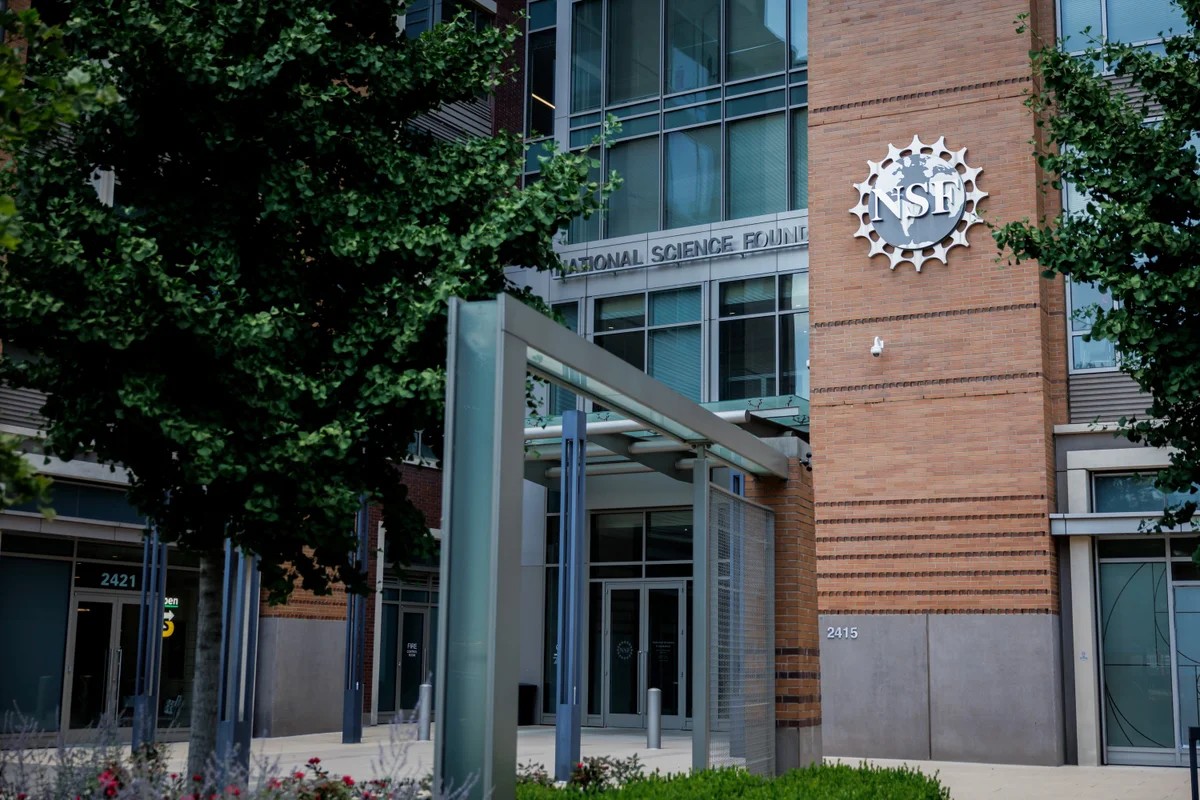
To understand the gravity of this dismissal, it is essential to look at what the NSB does. Since 1950, the National Science Foundation (NSF) has been the primary funder of U.S. basic research, supporting fields ranging from astronomy to vulcanology. The NSB serves as the agency’s governing body, composed of “eminent” scientists appointed by the president to six-year terms.
Key functions of the board include:
* Budget Approval: By statute, the board must approve the NSF’s budget, which stood at $9 billion in 2026.
* Apolitical Oversight: The board is designed to be non-partisan, ensuring that scientific merit, not political ideology, drives funding decisions.
* Strategic Guidance: It provides long-term vision for the agency, which has become a global model for science funding, cited even by nations like China.
However, the administration has signaled a shift in direction. Last year, the White House announced that research grants would henceforth be approved by political appointees rather than the expert board. Additionally, the administration has proposed cutting the NSF’s budget by approximately 50% in 2027 and dissolving its social sciences division.
A Broader Pattern of Removing Expertise
The ouster of the NSB is not an isolated incident but part of a wider effort to purge independent scientific advisory groups from the federal government. This trend raises significant questions about the future of evidence-based policy in the United States.
Recent moves include:
* Health Policy Overhaul: In 2025, Health and Human Services Secretary Robert F. Kennedy Jr. fired all members of an influential vaccine advisory committee. He has also indicated plans to overhaul the U.S. Preventive Medicine Task Force, which determines health insurance coverage for medical tests.
* Shift in Leadership: In March 2026, the White House revealed that the President’s Council on Science and Technology—historically staffed by academic experts—is now led by tech industry figures, including Meta CEO Mark Zuckerberg and Oracle’s Larry Ellison. Only one academic remains on the council.
“The dismissal of the board might seem like a bureaucratic move, but it is a bellwether of the administration removing expertise and independence from our democracy,” said Colette Delawalla of Stand Up for Science.
Impact on Research and Funding
The practical consequences of these changes are already being felt. Despite Congress overriding similar administrative calls in January, the NSF largely stalled grant distributions through April. According to anonymous civil servants at the agency, funding has been held up for most disciplines, with exceptions made only for favored areas such as artificial intelligence, quantum computing, and related technologies.
This selective funding raises concerns about the distortion of scientific inquiry. By prioritizing specific technological outcomes over broad basic research, the administration risks neglecting the foundational discoveries that often lead to unforeseen breakthroughs.
Legal Justifications and Leadership Concerns
The White House has justified the dismissal of all 22 NSB members (the board typically has 25 seats) by citing a 2021 Supreme Court ruling regarding federal officials who are not appointed by the Senate. However, the board had previously clarified that its positions were advisory recommendations, not binding orders. Furthermore, Congress removed the requirement for Senate confirmation of NSB members in 2011, noting that they work part-time and receive only minimal compensation.
Adding to the controversy, the Trump administration nominated hedge fund investor Jim O’Neill to lead the NSF in February. If confirmed, O’Neill would be the first non-scientist to head the agency.
Neal Lane, a physicist and former NSF director under the Clinton administration, criticized this choice:
“If, as I hope, Congress wishes to rebuild that NSF infrastructure, Jim O’Neill is not the person to do so, given his almost complete lack of scientific credentials.”
Lane urged the Senate to reject the nomination, calling for a leader with both scientific expertise and political acumen.
Conclusion
The removal of the National Science Board represents a fundamental shift in how the U.S. government approaches science. By replacing independent expert oversight with political appointees and industry leaders, the administration risks eroding the integrity and effectiveness of American research. As experts warn, this move could have long-lasting repercussions for the nation’s scientific leadership and innovation capacity.