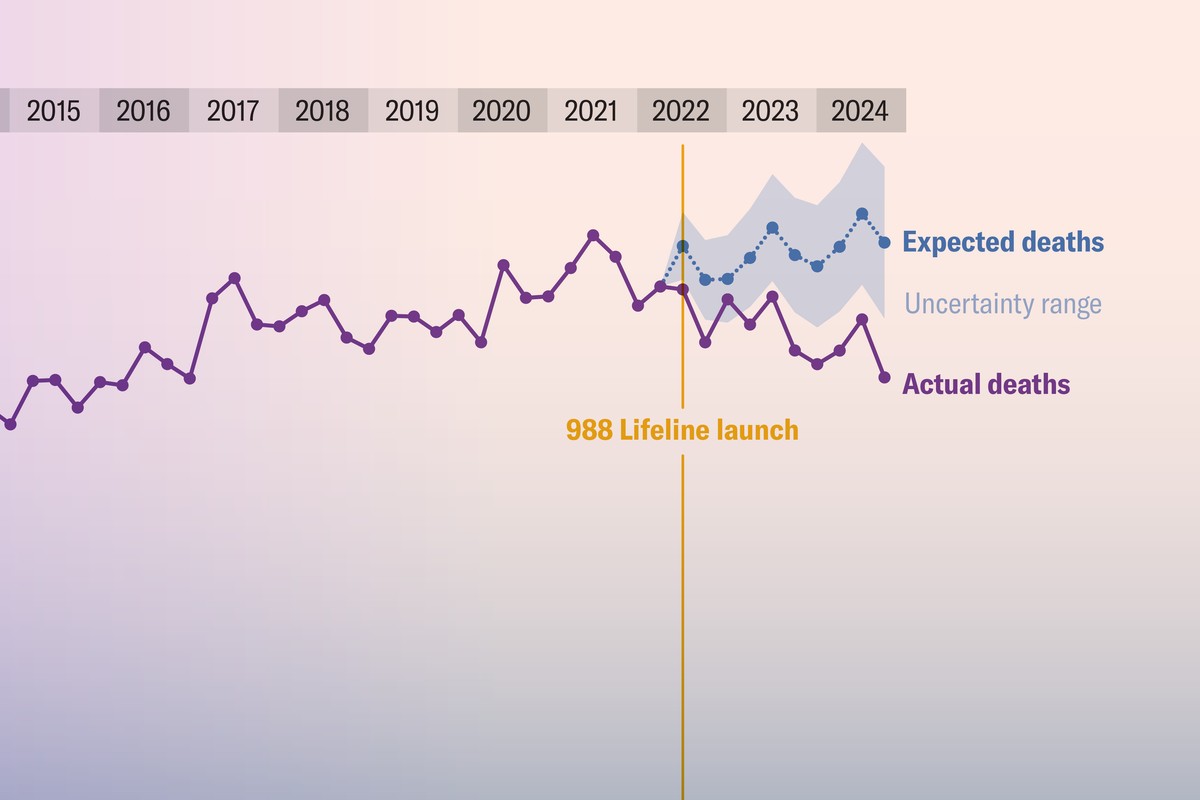
A recent analysis published in JAMA suggests that the transition to the easy-to-remember 988 Lifeline may be playing a role in reducing suicide mortality among young adults in the United States. Since the hotline was shortened from a traditional 10-digit number to the three-digit “988” in July 2022, researchers have observed a notable downward trend in deaths among those aged 15 to 34.
The Impact of Accessibility
The shift to 988 was designed to remove barriers to help. By making the number easier to memorize and dial during a crisis, authorities aimed to increase “uptake”—the rate at which people actually use the service.
Data shows that calls to the hotline more than doubled following the change, with the highest engagement seen among adults under the age of 30. According to the study, led by Vishal Patel of Brigham and Women’s Hospital and Harvard Medical School, the real-world impact is significant:
- Lower than expected mortality: Researchers compared actual suicide deaths to a statistical model of what deaths would have been if the 988 launch had not occurred.
- The Numbers: The actual death rate was 11% lower than expected, representing more than 4,300 lives saved among adolescents and young adults.
- State-level correlation: In the 10 states where 988 usage increased most significantly (including New York, Virginia, and North Dakota), suicide deaths dropped by 18%. In states with much smaller increases in usage, the decline was closer to 11%.
Complexity in Proving Causality
While the correlation is striking, experts caution against claiming that the 988 number is the sole cause of this decline. Establishing a direct “cause-and-effect” relationship in public health is notoriously difficult due to several overlapping factors:
1. Broader Prevention Efforts
Michiko Ueda-Ballmer of Syracuse University notes that states with high 988 usage might also be the same states investing heavily in other suicide prevention programs. It is possible that the hotline is simply one part of a larger, more robust mental health infrastructure in those regions.
2. The “Post-Pandemic” Factor
Critics might argue that the drop in suicides is simply a return to pre-pandemic levels. However, the researchers accounted for this by recalculating their models to exclude pandemic-era data. Even after removing those years, death rates remained lower than expected, suggesting a genuine downward trend rather than a mere stabilization.
Challenges and the Future of Crisis Support
Despite the promising data, the 988 system faces significant hurdles regarding sustainability and public perception.
- Funding Instability: Many mental health crisis centers rely on state funding, which is often temporary. As call volumes rise, the need for permanent, stable federal and state support becomes more urgent.
- The Trust Gap: A significant barrier to use is the fear of “involuntary emergency rescues.” While research shows that forced hospitalizations are rare, many people avoid calling because they fear losing their autonomy.
- Competition for Attention: In a rapidly changing digital landscape, the hotline is no longer the only option for support. Recent surveys indicate that many young people are more aware of generative AI as a potential mental health resource than they are of the 988 Lifeline.
“988 will need to compete not just for attention but for trust and positive perception,” says Ueda-Ballmer.
Conclusion
The data indicates that the 988 Lifeline is a vital component of the U.S. mental health response, potentially saving thousands of young lives. However, for the hotline to reach its full potential, policymakers must address funding gaps and work to build greater public trust in the service.