Symmetry is the exact correspondence in form, size, and position of an object’s parts. Think of it as a geometric mirror image. If you split a shape down the middle, both sides match perfectly. This isn’t just about looks. It’s a structural rule.
You see this principle everywhere. From the wings of a butterfly to the columns of a cathedral, symmetry creates order. It appears in geometry, drafting, and graphic design. Architects rely on it for stability and aesthetics. Artists use it to guide the eye.
But it doesn’t stop at art. Biology is full of symmetrical structures. So are physics and chemistry. Even mathematics defines symmetry as a type of invariance under transformation. It is a universal concept.
Why Does Symmetry Matter in Art and Science
Why do we care about balanced shapes? Because the human brain finds them pleasing. Symmetry signals stability and health. In nature, asymmetry often means damage. In design, it means chaos.
Students often ask, how do I apply symmetry in my projects? Start with a center line. Draw one half. Then mirror it. This simple step creates instant balance. You don’t need advanced tools. A ruler and a pencil work fine.
This concept also helps in learning. When you understand symmetry, you see patterns faster. It connects different subjects. You learn one rule, and it applies to multiple fields. That makes studying more efficient.
Symmetry is not just a visual trick. It is a fundamental law of nature and design.
Where to Find Symmetry in Everyday Objects
Look around your room. Most doors are symmetrical. So are windows. Coins are perfectly circular, which is a type of rotational symmetry. Even your face has bilateral symmetry, though rarely perfect.
If you are a parent, you can teach this easily. Fold a paper in half. Draw a shape on one side. Fold it back. Cut it out. Unfold it. You have a symmetrical object. This hands-on method helps children grasp the idea quickly. It turns an abstract concept into something tangible.
Which objects in your home show clear symmetry? Think about it. The answer is usually more than you expect.
Symmetry in geometry: types and definitions
In the world of math, symmetry isn’t just about looks. It’s a precise correspondence. When points or parts of a figure mirror each other around a center, axis, or plane, you have symmetry. It’s a structural rule, not a guess.
Geometry breaks this down into four main categories. Each one works differently.
- Spherical symmetry: This one is the most flexible. It stays the same under any type of rotation. No matter how you spin it, it looks identical.
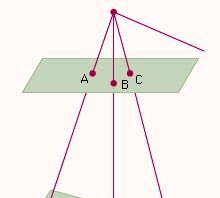
- Axial symmetry: Also called rotational, radial, or cylindrical symmetry. Here, the object pivots around a specific axis. If you rotate it around that line, the position in space doesn’t change.
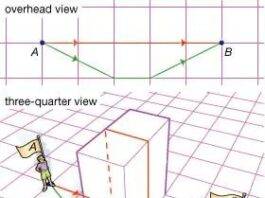
- Reflective or specular symmetry: Think of a mirror. A single plane divides the object. One half is the exact reflection of the other.
- Translational symmetry: This is about repetition. The pattern repeats at identical distances along a line. That line can be anywhere, and it can go on forever.
Symmetry in biology and living organisms
Biology applies the same logic to living things. Whether it’s a plant or an animal, their bodies organize parts around a center, axis, or plane. Organs and equivalent parts line up in an orderly way.
Most multicellular organisms display some form of this balance. It usually shows up in two distinct ways.
- Radial symmetry: These creatures can be divided by two or more planes. Their body parts are arranged around a common central axis. Sea stars and sea urchins are the classic examples here.
- Bilateral symmetry: This is what you see in humans and dogs. The body divides into two equal halves. Each side forms a matching image of the other.
The difference between symmetry and asymmetry
Asymmetry is the opposite. It’s the lack of correspondence. When the form, size, or position of parts don’t match up, you get asymmetry. There is no equivalence in the features that make up the object’s appearance.
It’s not just a flaw. It’s a specific state where balance is absent. Whether in a geometric figure or a biological organism, the distinction comes down to whether the parts reflect, rotate, or repeat in a predictable, balanced way.